
15 Easter Bible Verses to Center Your Heart on Christ’s Resurrection

Related Posts


Subscribe To Our Weekly Newsletter
Sign up for our weekly newsletter, Jesus Film Project News, to receive encouraging stories, videos and resources in your inbox.
How do you celebrate Easter?
Easter has always been a busy and exciting holiday for me. As a child, my family usually attended at least two churches (ours and my grandmother’s) for Easter productions and hosted family meals. I’d participate in overly competitive Easter egg hunts with my cousins and compare prizes with them afterward. As I grew older and became an active part of those traditions—serving in Easter services, cooking a dish for the family lunch, hiding eggs for the younger cousins to find—I often got swept up in the busyness around the season rather than its wonder.
Beyond traditions like egg hunts and bunnies, Easter is a celebration of the greatest moment in history: the moment Jesus conquered death, granting us eternal life in Him. Christ’s death and resurrection are a cornerstone of our faith as Christians, and while this season is absolutely worth celebrating, it also warrants sincere reflection.
The following Easter Bible verses are meant to help you reflect on the true meaning of Easter: the reason Jesus came to earth, the reality of His miraculous resurrection and what it means for us today.
My prayer is that you will read these verses, reflect on them and share them, and in doing so, center your heart on the wonder of Christ’s resurrection.
Why Was Jesus Crucified?
When the first man and woman (Adam and Eve) chose to disobey God’s command in the Garden of Eden (Genesis 3), sin (what happens when we “fail” or “miss the goal” of God’s standard) became a part of the world, bringing with it the consequence of death. Sin marked humanity and separated us from our perfect Creator. But in His goodness, God had a plan to redeem His creation: He sent Jesus, who never sinned, to lay down His own life for the sins of humanity.
1. He was pierced for our transgressions… (Isaiah 53:5-6)
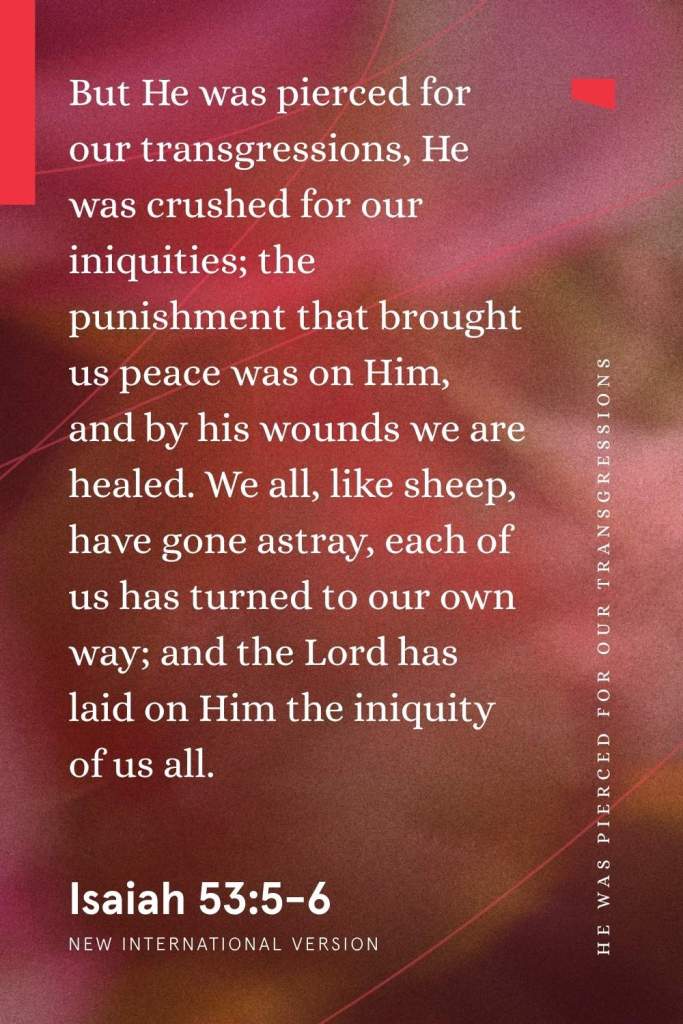
The language of this verse reminds me of the cruel manner in which Jesus died—He was pierced and crushed for the sin we committed. And though we have strayed from the way we ought to live (according to God’s law), in exchange, we receive healing and wholeness.
2. For God so loved the world… (John 3:16-17)
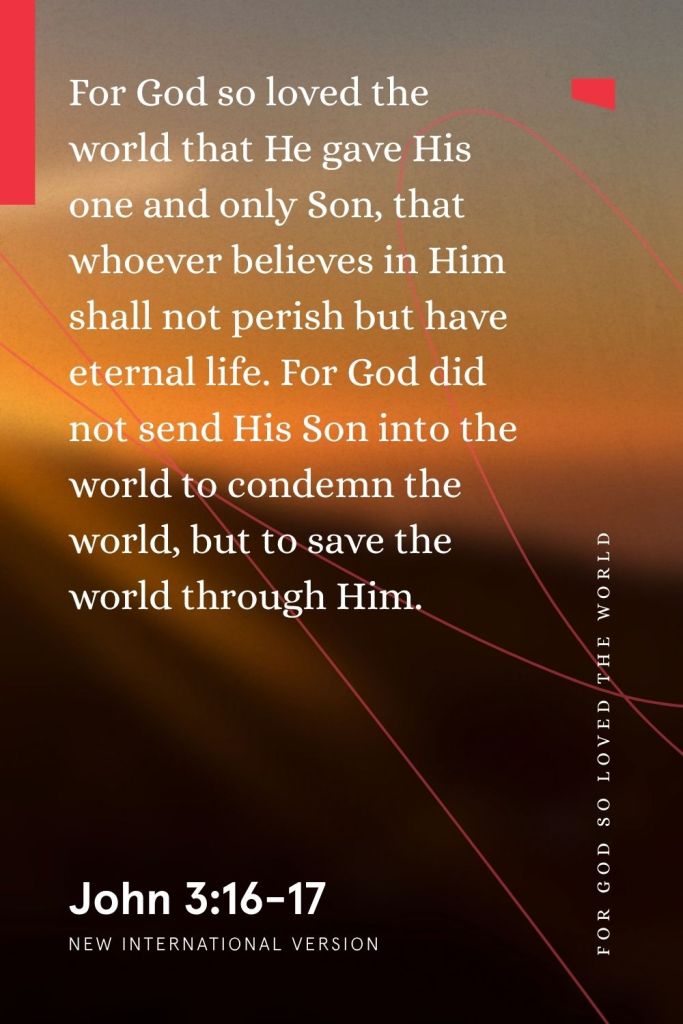
We may see John 3:16 quoted often and in many places. The temptation can be to overlook it because we’ve been exposed to it so often. But God’s word, no matter how often we may hear it, remains powerful and useful. John 3:16-17 tells us why Jesus came and why He was crucified—it tells us the reason we celebrate Easter.
Even the Scripture we’re exposed to often brings life and healing to those who don’t yet know Jesus.
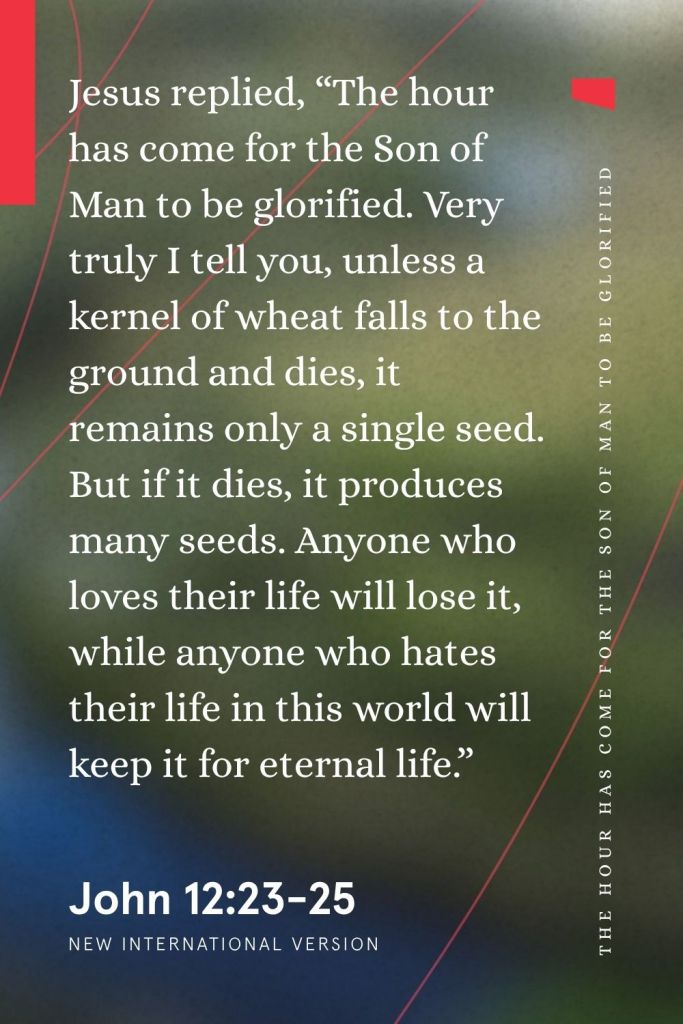
3. “The hour has come for the Son of Man to be glorified.” (John 12:23-25)
Here, Jesus is explaining the need for His death to His disciples. Essentially, He tells them that His death will be like a kernel of wheat that spreads many seeds, multiplying its impact after its death. Ultimately, this will be a good thing, although His followers do not yet know it. The verse also predicts the sacrifices the disciples and future believers would have to make to follow in His footsteps.
These are good verses to reflect on in the days leading up to Resurrection Sunday, observing and honoring the grief that death brings, even when we know new life will follow.
4. While we were still sinners, Christ died for us. (Romans 5:8)
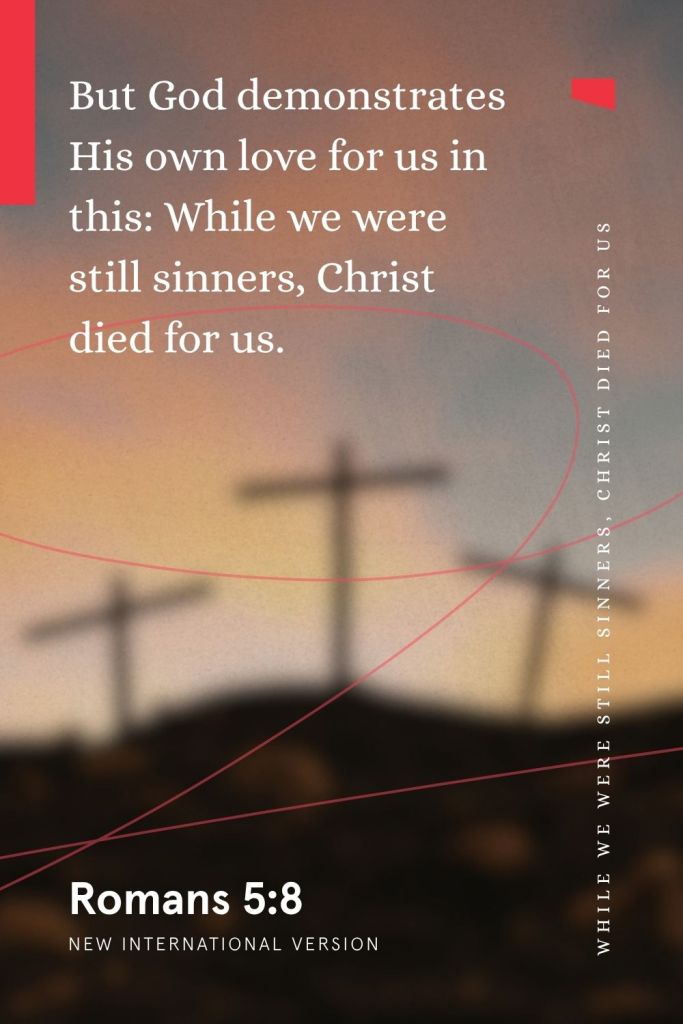
Paul includes this in his letter to the Roman church, explaining to those early Christians, and to us today, that the ultimate reason behind Jesus’ death was love. Our Heavenly Father’s love for us, even while we were still living in our sin, drove Him to send Jesus, His Son, to death on the cross. But His death was not the end, as we observe and celebrate on Easter.
5. …The resurrection of the dead also comes through a man. (1 Corinthians 15:20-21)
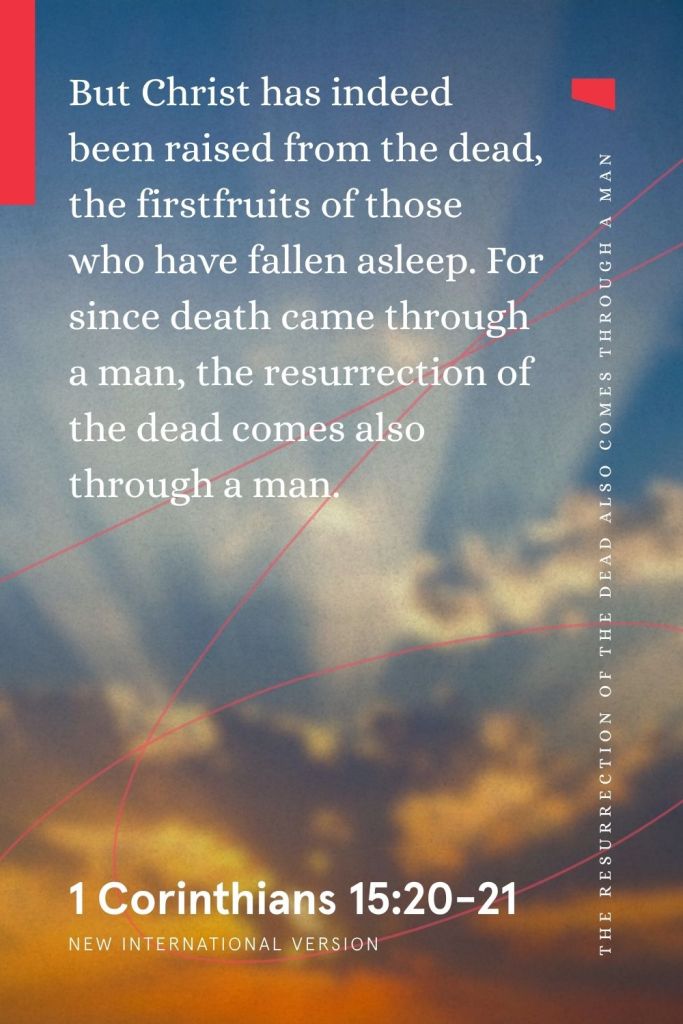
To me, this verse is a beautiful mystery: Jesus, who is God, was fully human during His time on earth. He remained sinless even in His humanity and was therefore able to usher in redemption for the sin that came through the first man.
6. “He Himself bore our sins…” (1 Peter 2:24)
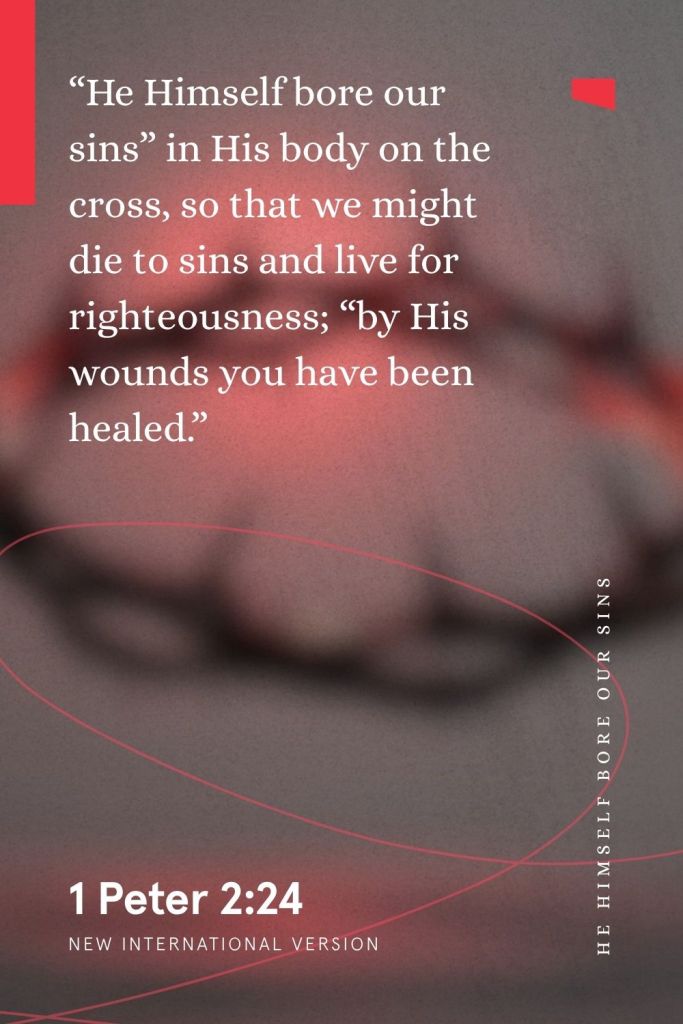
In this passage, Peter references the prophecy of Isaiah about the Messiah’s death. In doing so, Peter points to the fulfillment of prophecy in Jesus’ crucifixion. The practical application of Isaiah’s prophecy and Jesus’ death for us? That Jesus bearing our sins means we who follow Jesus can and should die to (turn away from) our own sins and aim to live righteous lives.
Jesus’ Resurrection in the Gospels
The first four books of the New Testament—Matthew, Mark, Luke and John—give us four accounts of Jesus’ life. They paint a picture of the Savior’s birth, ministry, death, resurrection and His ascension back to the Father. Although each book tells the same story, they do so from different points of view. The following verses are the Gospel’s accounts of what happened when Jesus’ followers first discovered He had risen from the dead.
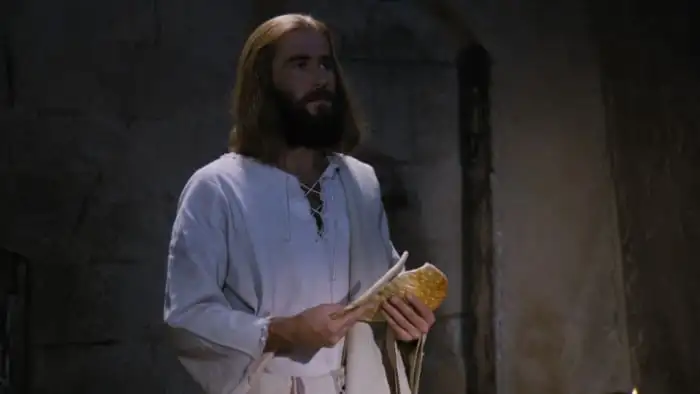
This clip from The Gospel of John shows us this powerful moment as told by John the disciple.
7. “He is not here. He is risen, just as He said.” (Matthew 28:5-8)
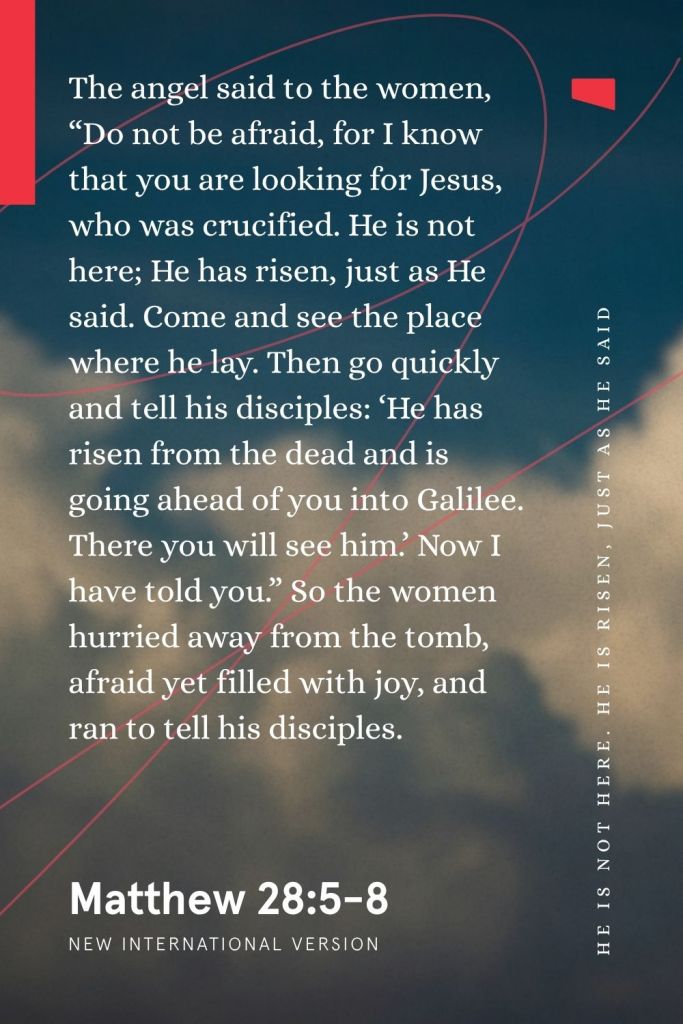
To me, this verse is the most important and exciting part of Easter. It’s the plot twist we’ve been waiting for: Jesus, whom everyone believed to be dead, has come back to life. And this is the first mention of the resurrection in the Bible after it has happened. Jesus said it would happen, and it did happen. Now his disciples get to share the good news (that He is alive) with everyone.
8. “He has risen!” (Mark 16:6)
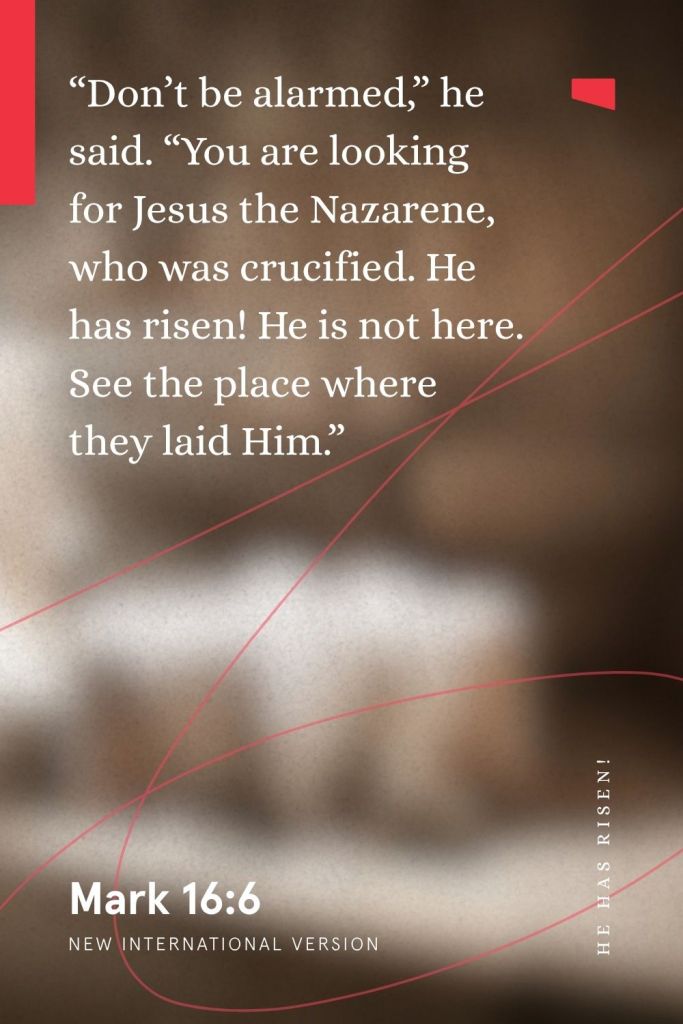
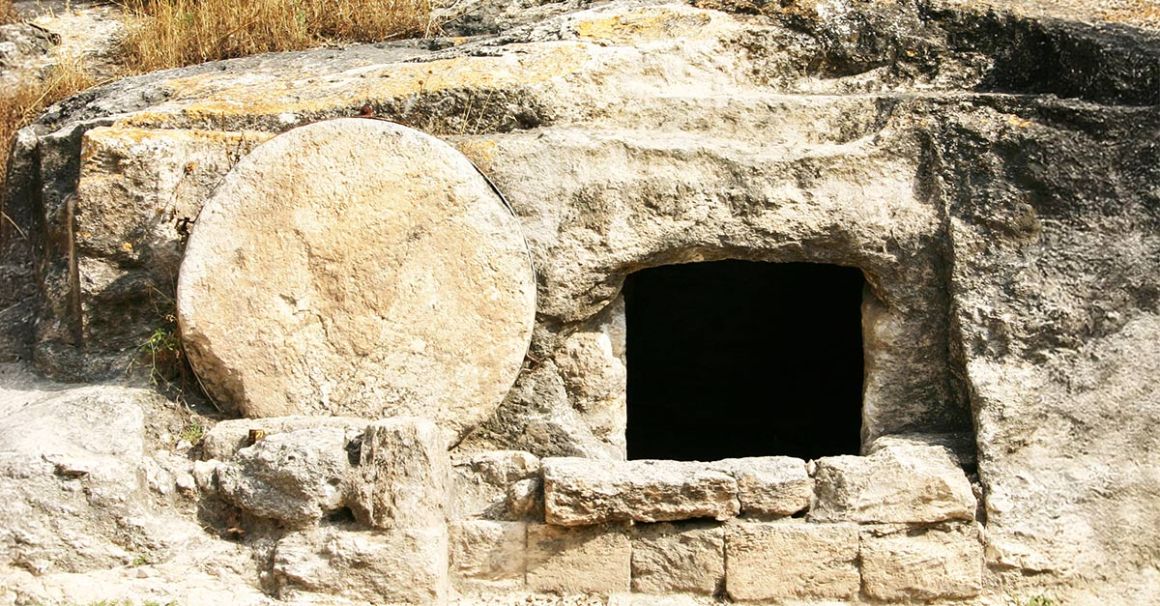
This is Mark’s account of the women’s encounter with the angel at Jesus’ tomb. The angel tells Mary that Jesus is not there because He is alive (risen), and offers her a glimpse of the empty grave where Jesus’ body once lay. Like the account in Matthew 28, this verse is the source of my joy on Resurrection Sunday.
9. “The Son of Man must be delivered over to the hands of sinners…” (Luke 24:6-7)
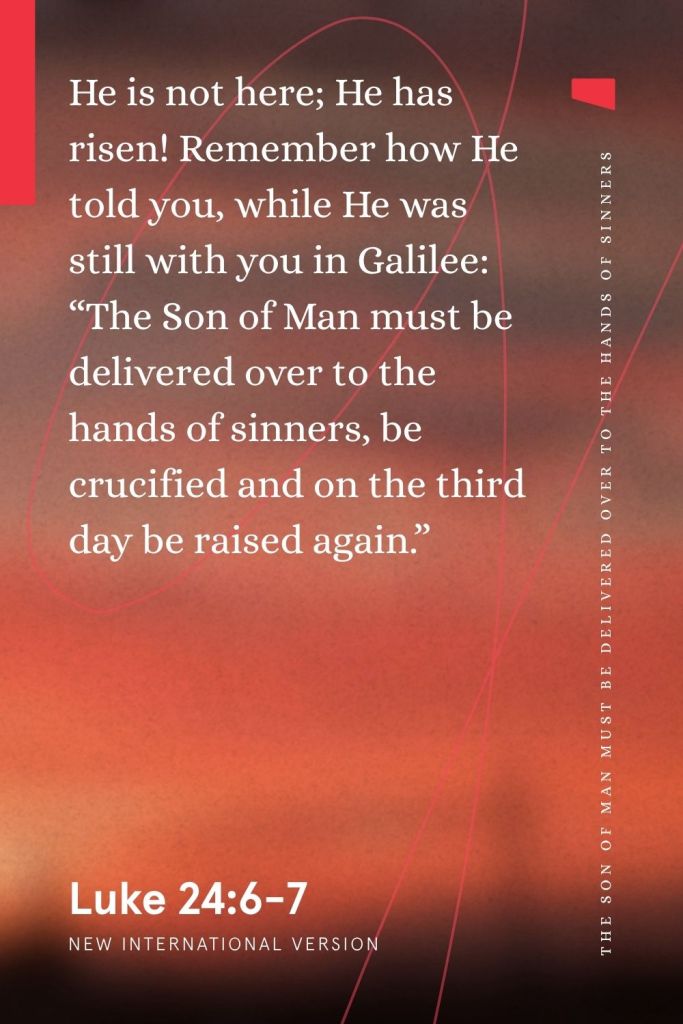
I love how the JESUS film depicts this moment—specifically the way the women reacted to the angels’ words. You can scroll down to see the clip, or watch it from our media library in your heart language (just click on the globe icon in the bottom right corner of the video to select your language).
10. “They have taken the Lord out of the tomb…” (John 20:1-2)
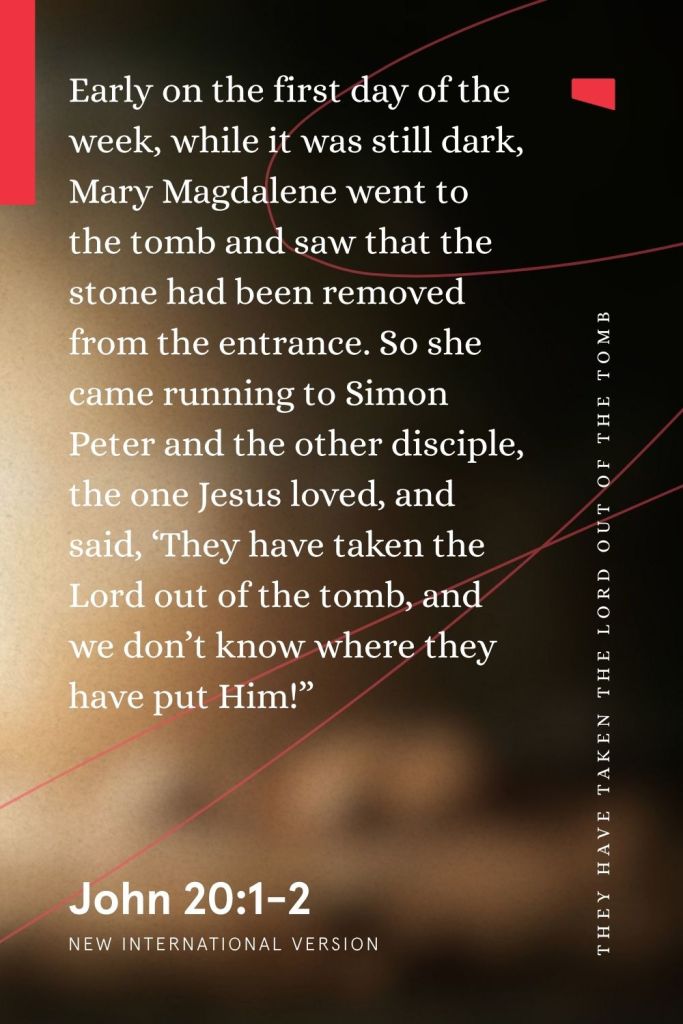
John’s account of the resurrection is one of my favorites. It follows Mary Magdalene, who was the first to see Jesus after He rose from the dead. Her words when she reaches the tomb and realizes the stone is rolled away give us a glimpse at how much she loved Him. And later, when Jesus reveals himself to her, her reaction reveals her surprise and joy.
I invite you to imagine yourself in Mary’s place. She is deep in grief for her rabbi (teacher) and dear friend—the man she believed to be the Messiah. When she goes to His tomb to honor Him, she finds He is not there. Imagine her mourning turned to joy when He calls her name. To me, this passage represents the heart of Easter.
Jesus’ resurrection is the main event we celebrate and reflect on during Easter.
What the Resurrection Means for Us
Easter is extremely significant for us as Christians. We know that Jesus came to earth, lived a sinless life, was crucified and then rose from the dead. But what do we do with that knowledge?
The following verses help explain what Jesus’ resurrection meant for the early Christians, and what it means for us today.
11. “I am the resurrection and the life…” (John 11:25-26)
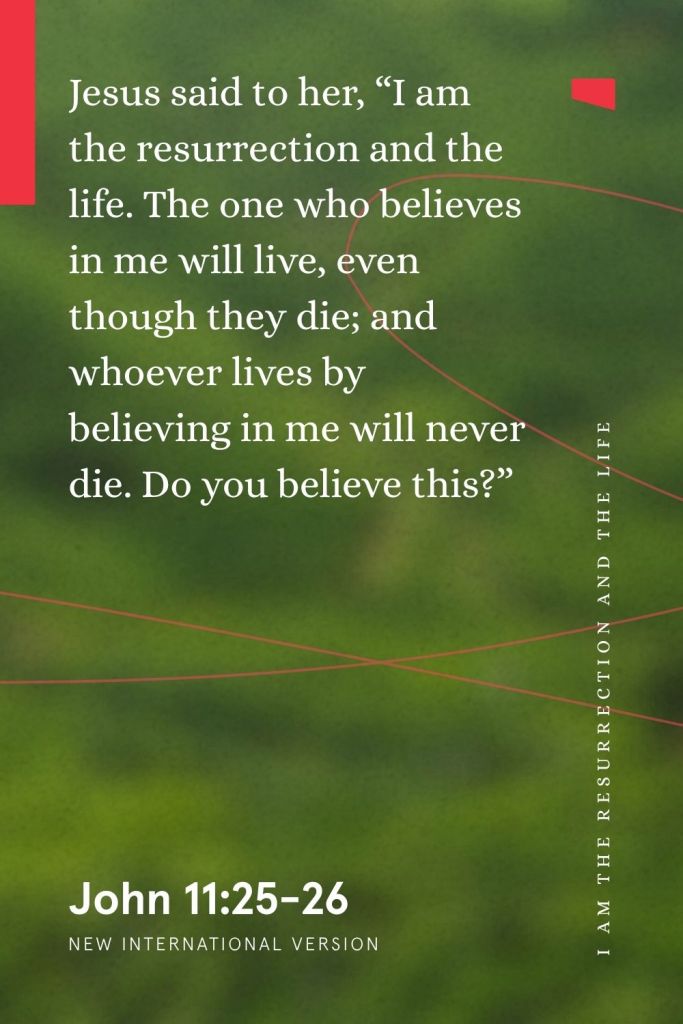
In this passage, Jesus is speaking to Martha, who is grieving the death of her brother Lazarus. In her pain, she tells Jesus that He could have prevented her brother’s death because of who He is and the power He has. Jesus replies that He Himself is resurrection and life. Later, he would prove this by coming back from the dead three days after being crucified. We who believe in and follow Jesus can rejoice—death no longer holds power over us, because it holds no power over Him.
12. We were therefore buried with Him… (Romans 6:4)
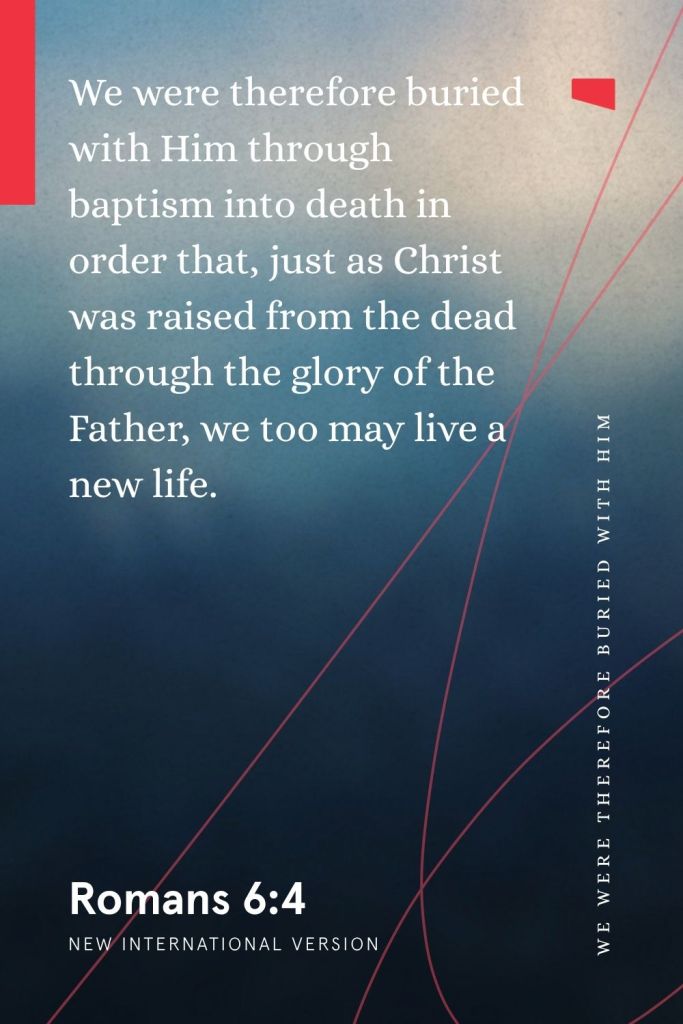
Paul’s letter to the church in Rome explains what it means for us to partake in Jesus’ death and resurrection. When we choose to follow Jesus, it is an expression of our dying and being raised again with Him, so that His new life becomes ours. And we can celebrate that this new life is not just for after our earthly bodies pass away, it’s for right now!
13. …Count yourselves dead to sin but alive to God in Christ Jesus. (Romans 6:8-11)
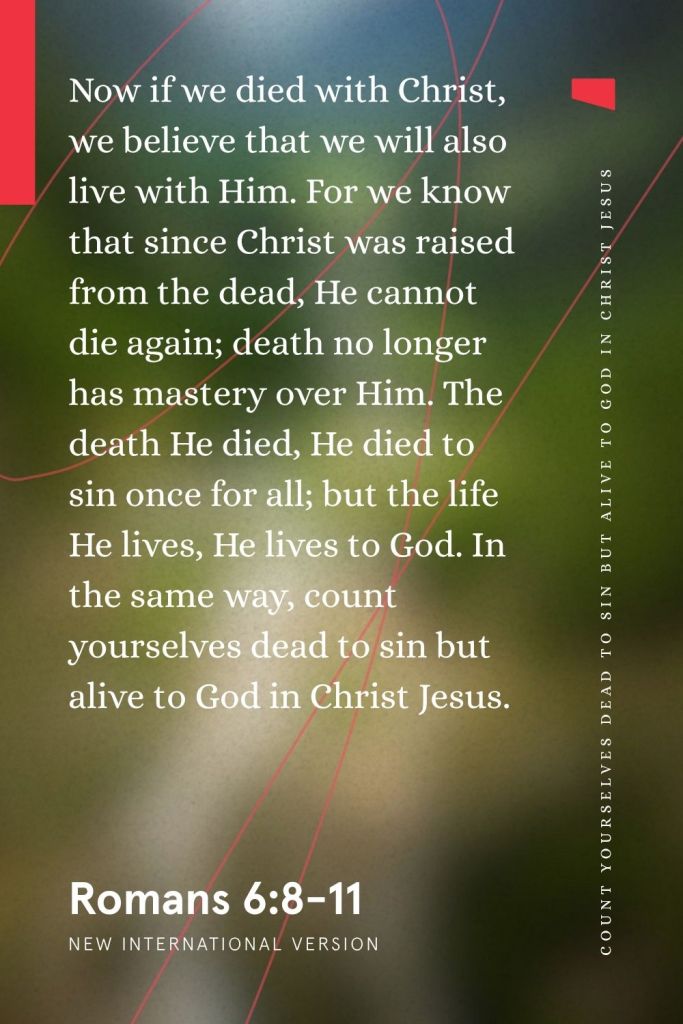
Paul reiterates here for the Roman church what Jesus’ resurrection means for them—and for Christians today. Christ’s rising from the dead redeems us forever—today and for eternity!
14. Christ… is at the right hand of God… (Romans 8:34)
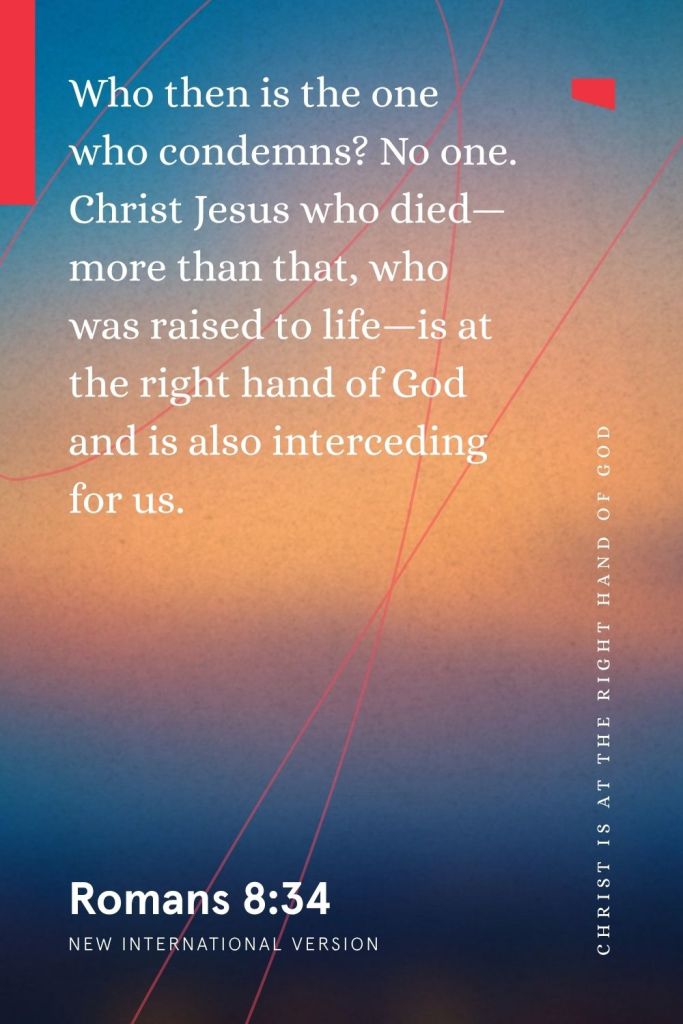
This reminds me of John 3:17, which says that Jesus came to save the world, not to condemn it. I also love this verse because it gives us a glimpse at what Jesus is doing right now—He’s interceding (talking to the Father) for us! What an amazing and caring God we serve.
15. If you declare with your mouth, “Jesus is Lord,” and believe in your heart… (Romans 10:9)
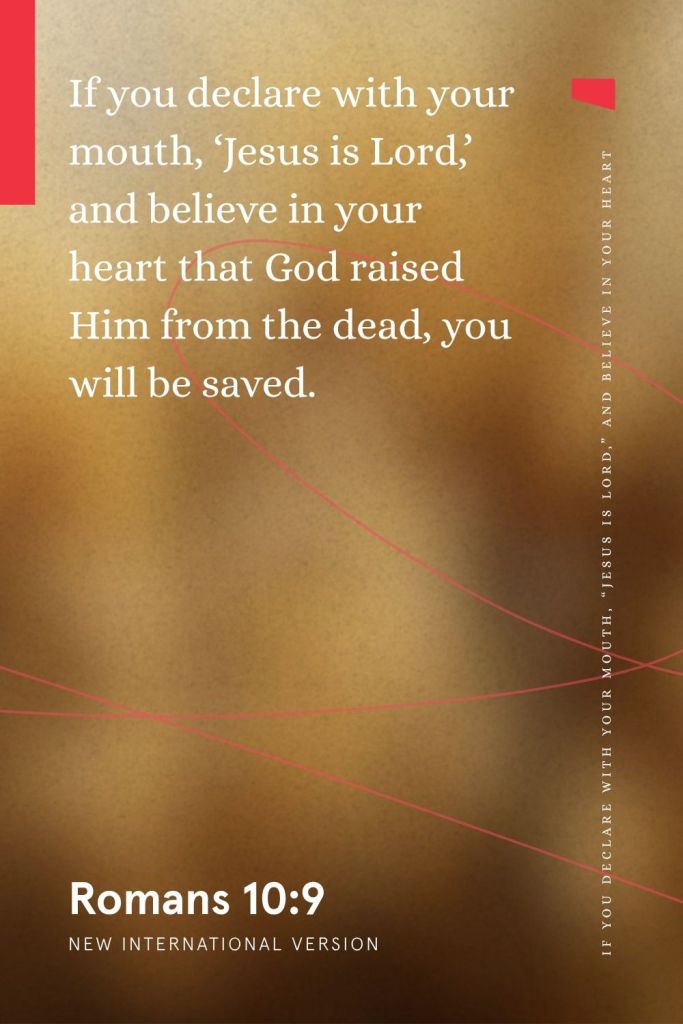
We have encountered the good news of Jesus… Now what? I love that this verse explains exactly what to do with this good news:
- Declare that Jesus is Lord
- Believe that God raised Him from the dead
He has done the rest, and this truly is a reason to celebrate!
What’s Next
These are just some of the many Bible verses about Easter. I hope that they encourage you to explore the Bible for more verses to reflect on this Easter season. I pray they lead you to praise God in gratitude for what Jesus did for us.
Jesus’ resurrection is the main event we celebrate and reflect on during Easter, but there are plenty more aspects to the Easter season than the resurrection. You can find tools and resources about Lent, Holy Week, Good Friday, the Crucifixion and more on the Cru Easter page. If this post inspired you, I encourage you to dig deeper into these parts of Easter and to continue to fix your eyes and heart on Jesus—the One at the center of it all.
Share the good news with others, or continue reflecting on Jesus’ resurrection and what it means for us with our Easter video collection.

About the Author