
Jesus and the Outcasts: 5 Groups Who Felt God’s Love

Related Posts
Subscribe To Our Weekly Newsletter
Sign up for our weekly newsletter, Jesus Film Project News, to receive encouraging stories, videos and resources in your inbox.
Updated on November 4th, 2025 by Connie Thomson.
I remember in elementary school, there was a boy named Roman who was often picked on at recess. The other kids would call him fat, and he always looked so sad.
At night, I would pray for Roman. I’d turn on my little music box that played a melancholy tune and cry, thinking about how he must have felt.
Looking back, I wonder, “Why didn’t you stand up for him? Why didn’t you tell those kids to stop?” The truth is, I just didn’t have the confidence back then. To be fair, I was only six years old.
That memory of Roman has stayed with me. It reminds me that being an outsider can shape someone’s whole world. The Bible is full of stories about people who were pushed to the margins—people Jesus noticed, loved and restored.
When you think about Jesus and the outcasts in the Bible, you might ask: who were the outcasts in Jesus’ time and why do their stories matter?
The stories of outcasts in the Bible help us understand how Jesus loved the outcasts and how grace brings hope to hurting people. They teach us that compassion heals and justice restores. Many are familiar with the stories of the woman at the well, the bleeding woman, and we also hear a lot about Jesus healing people.
As you read, you’ll see how outcast in the Bible is defined and how Jesus and the outcasts share a close, real connection. You’ll watch Him break barriers and heal wounds. You’ll find ways to serve people who feel overlooked today.
Understanding Outcasts in Biblical Context
Outcasts in the Bible were people living at the margins of daily life—excluded from worship, social ties and economic participation. Some stayed outside town limits to avoid shame. Others were barred from temple worship or shared meals. Many lacked legal protection and trusted relationships.
Their isolation often came from status, sickness, ethnicity or moral judgement. Honor and purity shaped belonging in the ancient world. Communities prized lineage, land and ritual cleanliness more than personal dignity. Those who lacked those markers lived under fear and scorn.
Five groups stand out repeatedly in Scripture.
- Women faced limits on voice and public honour.
- The poor had little land or savings and suffered during famine or loss.
- The unclean were blocked by purity rules, unable to join normal life.
- Oppressors were shunned for harming others through unjust systems.
- Racial enemies carried deep hostility across ethnic divides.
Each carried heavy burdens that cut them off from hope and community. Yet God spoke comfort to each group through law, story and promise. He called His people to remember outsiders with dignity. If you’re wondering who were the outcasts in Jesus’ time, these groups offer a clear picture.
Jewish Covenant law drew boundaries around purity, worship and community life. The Torah (the first five books of the Old Testament) set rules about disease, death, and bodily discharges. These protected health and holiness but also created strict social lines.
People with leprosy lived outside the camp, warning others away. Women with ongoing bleeding were considered unclean and kept apart. Foreigners had limited rights unless welcomed through hospitality laws. Widows and orphans lacked male advocates and lost property easily. Honor–shame culture viewed visible suffering as divine judgement.
Yet Scripture reminded Israel they were once slaves in Egypt—memory meant mercy, humility and hospitality.
Old Testament Outcasts
The Old Testament provides vivid pictures of God’s care for the outcast in the Bible.
- Ruth, a Moabite widow, faced danger and hunger in a foreign land, yet found welcome and became part of Israel’s story—leading to King David and, eventually, Jesus.
- Hagar, an enslaved woman and single mother, met God in the wilderness and received a promise for her child.
- Prophets like Isaiah, Micah, and Amos condemned neglect and called leaders to defend widows, orphans, and the poor.
- Exiled Israelites became national outcasts, yet God promised restoration and new hearts.
These stories show God dignifying the displaced and restoring the broken.
New Testament Outcasts
The New Testament draws this thread forward powerfully. Jesus loved the outcasts. He moved toward those sidelined by law and stigma. He touched lepers, crossed ethnic lines and spoke to women with respect. He ate with tax collectors, welcomed sinners and announced good news to the poor.
Jesus gave dignity and belonging by grace and truth. The early church followed His pattern—welcoming Gentiles (those not of Jewish descent), remembering the poor, sharing meals and carrying burdens. If you’re exploringJjesus and the outcasts, the gospels offer a compelling, practical blueprint.
At Jesus Film Project®, we share stories that trace this biblical storyline. We highlight how God sees and restores people that society overlooks. Our films and resources invite communities to meet Jesus in accessible ways. Find our evangelism videos and tools to use in your church and neighborhood. Together, we can serve outcasts today with wisdom and hope.
Jesus’ Compassion for Outcasts
Jesus sought people others avoided. He moved toward the hurting, the shamed, and the feared. The Bible has many places when Jesus ministered to the outcasts:
- He dined with tax collectors like Levi (Luke 5:27-32) and Zacchaeus (Luke 19:1-10).
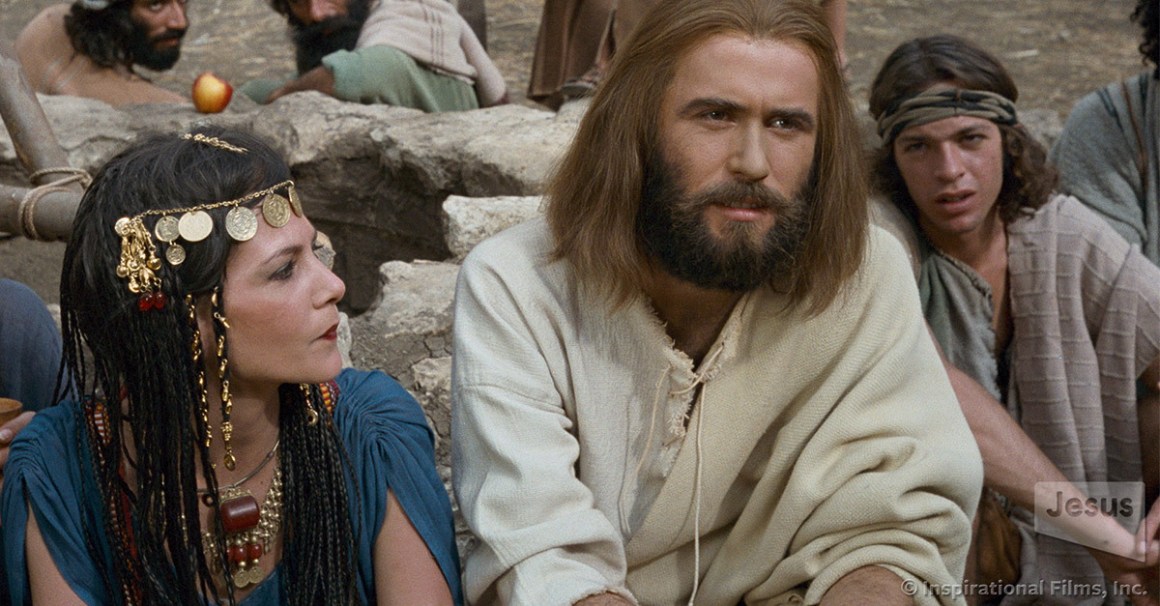
- He held a public conversation with the Samaritan woman, crossing ethnic and gender lines. (John 4:1-30)
- He stood up for a woman whose painful reputation had made her an outcast. When others judged her, He saw her heart, defended her actions and praised her faith. (Luke 7:36-50)
- He honored Gentiles, including a Roman centurion (Matthew 8:5-13) and the Syrophoenician woman (Mark 7:24-30).
- He touched lepers who had lived apart from family and community. (Luke 5:12-13)
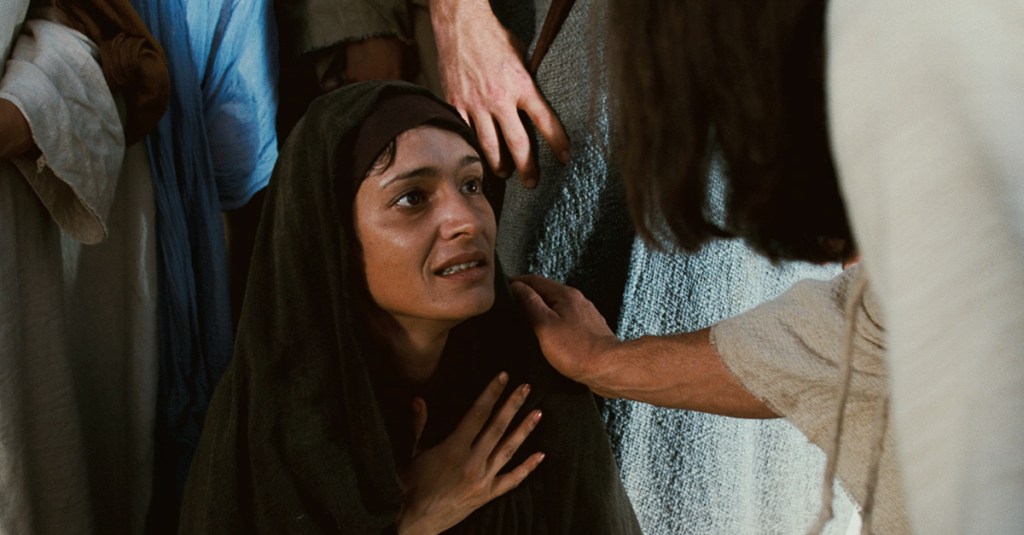
- He healed the hemorrhaging woman, addressing both her pain and isolation. (Mark 5:25-34)
- He restored sight(Matthew 9:27-30), strengthened the lame (Matthew 15:30-31), and set the demonized free (Mark 5:1-15).
- He raised the dead (John 11), revealing hope beyond loss.
Jesus’ miracles revealed God’s kingdom entering the very places marked by shame. Again and again, Jesus loved the outcasts in ways people could see and feel.
Outcasts in the Bible remind us that God sees the forgotten and welcomes the lost.
Jesus taught inclusion as a mark of true discipleship.
- He blessed the poor in spirit, the meek, and those who mourn.
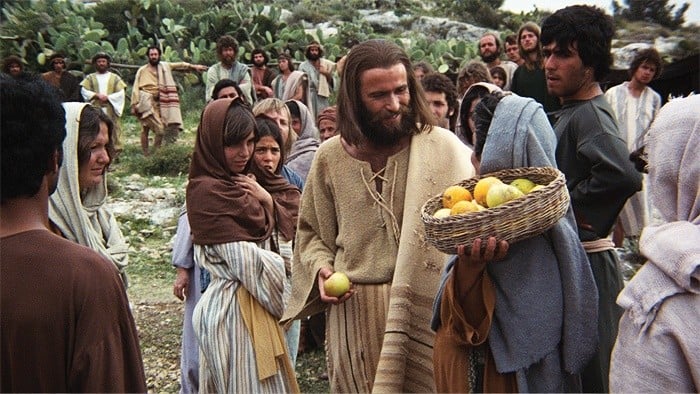
- He told stories with unexpected heroes—the Good Samaritan, the humble servant. The prodigal’s father welcomed a disgraced son with joy. A great banquet invited people from roads and hedges to the table.
- He confronted prejudice and hypocrisy among leaders and crowds.
- He called followers to love enemies, welcome strangers and serve the least. In His kingdom, the last become first and greatness looks like humble service.
To watch these scenes come alive, explore the JESUS film and short clips to share with others. Pair film moments with bible verses about outcasts for reflection.
Consider how Jesus Christ’s pattern challenges today’s assumptions about worth and belonging. Ask who might feel unseen in your community—and let His compassion guide your next step.
Stories of Notable Outcasts
Three encounters show how Jesus turns toward people society often turns away from. These stories help us answer who were the outcasts in Jesus’ time and how Jesus loved the outcasts beyond social labels—lifting people into new identity and mission.
The Samaritan Woman
The Samaritan woman carried multiple marks of exclusion—gender, ethnicity, and a painful personal history. She visited the well at midday, likely to avoid others. Jesus met her there and offered living water, speaking to her deepest longings. He invited her to worship in spirit and truth, beyond old divisions. He named her story without shaming her—and she became a bold witness to her town. This outcast in the Bible becomes a messenger of hope. (John 4)
Zacchaeus
Zacchaeus profited from an unjust system and was widely disliked. He climbed a sycamore tree just to see Jesus. Jesus invited Himself to Zacchaeus’s home for a meal, choosing fellowship over scorn. Zacchaeus responded with repentance and restitution—giving half his wealth to the poor and repaying fourfold where needed. Jesus declared salvation had come to that house. Mercy drew an oppressor into justice and new life. (Luke 19:1-10)
The Ten Lepers
Leprosy created a community defined by disease and isolation. Ten lepers called out to Jesus from a distance. He sent them to the priests, respecting the law—and as they went, they were cleansed. One returned—a Samaritan—to give thanks. Jesus commended his faith. Here, Jesus and the outcasts reveal a healing that restores both body and belonging. (Luke 17:11-19)
Theological Implications of Being an Outcast
Scripture shows that outcasts in the Bible are central to God’s story. Women, the poor, the unclean, oppressors, and racial enemies all appear—and God cares about each.
God protects the vulnerable and confronts injustice. Jesus loved the outcasts by touching the untouchable and eating with the disregarded. He welcomed those others considered unworthy to sit at table or pray. The church is called to see outcasts as neighbours to embrace.
Grace sits at the center of the gospel. It reaches everyone who turns to God in faith and repentance. No status or history limits God’s mercy. When Jesus protects a woman caught in shame, we see pure grace.
When Jesus welcomes Zacchaeus, grace leads to justice. When He heals the unclean, grace restores belonging. These bible verses about outcasts remind us that identity flows from God’s love, not human labels. What a powerful and enduring message!
The church’s calling is to mirror Christ’s hospitality and justice—listening without defensiveness, meeting needs with wisdom, advocating for the voiceless and building communities where everyone can flourish.
Embracing outcasts is a theological call rooted in who God is and what Christ accomplished on the cross. Jesus came to seek and save the lost and announce good news to the poor. As we serve outsiders, the church becomes a living sign of the kingdom—exclusion yields to belonging, shame yields to grace, and brokenness meets healing.
Five Groups of Outcasts and How Jesus Welcomes Them
If you’re asking who were the outcasts in Jesus’ time, start here—then notice how Jesus and the outcasts meet in moments that bring real healing and hope.
- Women
In first-century Palestine, a woman’s social sphere was only as large as her family. Jewish writings made it clear that “It is the way of a woman to stay at home and it is the way of a man to go out into the marketplace.” (Bereshit Rabbah)
While literacy was an important element in teaching young men to study the Bible, it was a luxury for women. Because the Old Testament was explicit about teaching Scripture to “sons” (Deuteronomy 4:9, New American Standard Bible), women were excluded from instruction in the Torah.
Women often carried shame and had limited public voice. Jesus honoured women as image-bearers and disciples. He spoke with the Samaritan woman and called her to worship with freedom. He healed women and called them “daughter,” restoring identity. He defended women before hostile crowds and entrusted resurrection news to them first. This affirms women as partners in faith and mission. - The Poor
The general attitude toward the poor seemed strange in a world where the vast majority of people weren’t particularly well off. By and large, the typical Jewish citizen in Roman-occupied Israel didn’t own much wealth. Perhaps that’s why it was so important for people to consider themselves better than the impoverished.
The poor lived at risk of hunger and exploitation. Jesus announced good news to the poor, fed crowds, and praised sacrificial giving. He warned the rich about greed and urged repentance. The early church remembered the poor with fairness and prayer, creating systems to serve widows and families. This is practical love that builds trust.
Jesus’ teaching humanized the poor and demonstrated God’s incredible concern for their well being and, in doing so, decried those who ignored or disenfranchised them:
“The Spirit of the Lord is on me, because he has anointed me to proclaim good news to the poor.” (Luke 4:18a, NIV)
“Looking at his disciples, he said: ‘Blessed are you who are poor, for yours is the kingdom of God.’” (Luke 6:20, NIV)
“But when you give a banquet, invite the poor, the crippled, the lame, the blind, and you will be blessed. Although they cannot repay you, you will be repaid at the resurrection of the righteous.” (Luke 14:13-14, NIV)
Read this blog for more quotes from Jesus.
- The Unclean
Much of the Old Testament was concerned with purity. One could become unclean through exposure to potentially contagious diseases (or body fluids that could carry disease) or from eating unclean foods. Once someone was unclean, they had to avoid sacred spaces and duties until they could be purified. To be unclean was to be socially ostracized.
The unclean were blocked by purity rules and lived in isolation. Jesus touched lepers, healed the hemorrhaging woman, and delivered the demonized. He sent the cleansed to priests to restore worship. He showed that true purity flows from God’s mercy. These bible verses about outcasts reveal outsiders becoming insiders by grace.
Lepers were one of the largest—and most stigmatized—unclean groups. It didn’t help that leprosy was a horribly disfiguring disease. They were cursed with a terrible disease and the loneliness of exclusion.
In Mark 1:40-45, Jesus is approached by a leper who wants to be healed of his affliction. The shock in this passage comes in Jesus’s response to this man’s request for healing. Jesus doesn’t just heal the man, He touches him! Holy people avoided lepers entirely lest they become unclean themselves.
Jesus’ response toward this man—who probably hadn’t known physical touch in a long time—displayed a humanizing kindness. We see the same kind of gentleness in the way Jesus responds to the woman who had been bleeding for 12 years. This bleeding would have made her unclean; yet she takes it upon herself to touch Him. His response isn’t to berate her for making Him unclean, but to complement her faith (Luke 8:48). - The Oppressors
The Jews had no love for Rome, and their desire for a messianic deliverer (a savior who would free them from oppression) was in large part to see their Roman oppressors defeated. Those Jews who decided to make the best of a bad situation by gathering taxes for Caesar were lumped in with the worst kinds of sinners.
Oppressors harmed others through unjust systems. Jesus didn’t excuse their sin; He called them to repentance and repair. Zacchaeus’s restitution shows what justice looks like in public. Jesus taught leaders that greatness looks like humble service. This invites anyone with power to repent and reimagine influence.
When a certain centurion sends some Jewish elders to request that Jesus come to heal his dying servant, He doesn’t show contempt of any kind. While Jesus is on His way, the centurion dispatches friends to tell Jesus that he’s not worthy to have the teacher in his home, but if Jesus would simply say the word, he knows his servant would be healed.
Jesus looks around Him and makes the most provocative observation, “I tell you, I have not found such great faith even in Israel.” (Luke 7:9, NIV) - Racial Enemies
Racial enemies lived under suspicion due to long-standing division. Jews and Samaritans avoided each other. Jesus engaged Samaritans with honour, praised Gentile faith, and crossed borders to welcome outsiders into God’s family.
The early church welcomed Gentiles, learned to eat and worship together, and broke down dividing walls. Jesus loved the outcasts across ethnic lines, forming one new humanity.
The well-documented hatred between the Samaritans and the Jews dated back for centuries. That’s why the authors of the Gospels and Acts were so enamored with documenting Jesus’ discussions about this group and their exposure to the gospel itself.
When Jesus told a teacher of the law that loving his neighbor as himself was an important part of fulfilling the law, he asked Jesus who was his neighbor. Christ’s response was a completely startling parable with a Samaritan as the hero (Luke 10:25-37).
In another story that pits Jesus against both racial and gender discrimination, Jesus ends up alone with a Samaritan woman at the local watering hole (John 4:4-42). The discussion covers some of the misunderstandings that exist between Jewish and Samaritan worshipers, while displaying a sincere concern for this woman. In the end, this discussion results in the conversion of many in Samaria.
How to Support People on the Outskirts Today
Jesus moved toward the margins with compassion and practical care. We can follow His example with small, intentional steps each week. Start by noticing who feels overlooked—
- neighbours facing homelessness, addiction or immigration challenges
- elderly people living alone
- teens without supportive adults
Offer simple help: a meal, a ride, assistance with forms or job applications. Listen without judgement. When people feel seen, they recognise their God-given worth. This is one way jesus and the outcasts inspires daily practice.

Grow empathy with humility. Seek trauma-informed training and cross-cultural learning. Ask local leaders about real needs and serve responsibly.
Partner with trusted organisations that protect safety and provide accountability. Commit to prayer for those at the margins—let prayer shape budgets and pace. Share uplifting resources and avoid labels that harm. Set healthy boundaries to prevent burnout—consistent small actions often outlast big, irregular efforts.
Faith communities can build sustainable programs:
- Weekly community meals
- ESL classes, homework help for children and students
- Study spaces with snacks for youth
- Support for job seekers and parents
- Benevolence funds with clear guidelines
- Shelters, food banks, and refugee resettlement agencies
- Legal clinics with vetted professionals
- Transport networks for medical appointments and interviews
- Facilities during extreme weather
Let neighbours shape programs, not just receive them. Invite advice and leadership from those served. Co-create solutions that respect dignity and strengths. Build feedback loops to improve systems. Celebrate progress with humility.
Encourage giving of time, skills, and funds. Make the church a safe place to ask for help. There are many ways church-based evangelism can connect with these communities spiritually.
Inclusivity takes intentional cultural change. Teach God’s heart for the marginalised clearly and often—highlight stories of women, the poor, the unclean, oppressors and racial enemies. Train greeters and small-group leaders to recognize bias and serve well. Review accessibility for visitors with special needs.
Above all, center the gospel. Jesus loved the outcasts and calls His followers to love without partiality and pursue reconciliation. As churches and individuals commit to this vision, communities form a welcoming space. Outcasts in the Bible remind us that when mercy and justice meet, people flourish.
Common Barriers and How to Overcome Them
Serving outcasts often faces resistance. Fear rises in unfamiliar places. Bias limits welcome. Fatigue drains volunteers. Misunderstanding sparks conflict. Safety concerns emerge. Funding feels tight. These barriers are real—but not final. The witness of outcasts in the Bible shows that prayerful wisdom can overcome obstacles.
Name fears and ask God for courage. Teach on God’s heart for outsiders and Jesus loved the outcasts as a core theme. Here is what this could look like practically:
- Start with pilot efforts before large programs. This is a great place for small groups to get involved together.
- Build diverse teams with shared values of humility and care.
- Set clear policies for safety. This could include something as simple as always serving in pairs or groups.
- Share work across partners to avoid burnout. This is something we are doing together.
- Provide mentors and regular check-ins.
- Track progress, gather feedback, and adjust plans.
- Invite prayer partners to cover the work.
- Celebrate faithful steps and trust God to multiply impact. Don’t forget to celebrate and give praise to God!
Encouragement and Call to Action
Outcasts in the Bible remind us that God sees the forgotten and welcomes the lost. Jesus loved the outcasts—women, the poor, the unclean, oppressors, and racial enemies—and brought dignity where shame took root. He invites us to join His mission with humility and courage. He gives wisdom to serve and strength to persevere.
Take one step today: choose one story, one verse, and one act of love. Invite a friend to join and pray with you this week.

About the Author