
How AI and Evangelism Work Together to Reach Every Nation


Related Posts


Subscribe To Our Weekly Newsletter
Sign up for our weekly newsletter, Jesus Film Project News, to receive encouraging stories, videos and resources in your inbox.
Recently, my colleague Aaron and I were in California for a strategy meeting about how artificial intelligence (or AI) is shaping modern ministry. Afterward, we called an Uber to head back to our hotel.
When our driver arrived, I noticed something: a small Coptic cross hanging from his rearview mirror.
“You have a Coptic cross,” I said.
He smiled shyly. “My sister sent it … I’m Armenian. Christian.”
I wanted to know his story, to understand his faith journey, but his English was limited. The conversation stalled after just a few exchanges. We sat in awkward silence as California traffic inched forward.
Then I had an idea.
I pulled out my phone, opened ChatGPT, and asked it to interpret in real time. Suddenly, we were speaking heart to heart. He spoke in Armenian. We spoke in English. ChatGPT translated both ways, instantly. This was the first time I had used AI in evangelism.
His story poured out. He’d left his family behind in Armenia to find work in America. Faith was something cultural he’d inherited, not something personal he’d chosen. He believed in God, but he didn’t really know Jesus.
I shared how knowing Jesus as a living friend, not just a cultural tradition, had changed my life.
At a stoplight, Aaron pulled up My Last Day, Jesus Film Project’s animated short film, and switched the language to Armenian. Right there in traffic, this man watched the crucifixion and resurrection of Jesus in his heart language.
I shared how knowing Jesus as a living friend, not just a cultural tradition, had changed my life.
By the time we reached our destination, tears were in his eyes. He thanked us, downloaded the Jesus Film Project® App on his phone, and asked if we could pray together.
Three men—one from Ethiopia, one from New Zealand, one from Armenia—prayed together in a California Uber. Our words were translated instantly by AI. The gospel crossed a language barrier in seconds.
As we stepped out of the car, I couldn’t stop thinking: God is using technology built for commerce to reach hearts for Christ.
The Magnitude of the Need
That encounter in the Uber showed me something bigger than one conversation. It was a window into what God is doing globally and the urgency of this moment.
Recently The Lausanne Movement released its 2024 State of the Great Commission report, along with their 2025 Global Voices survey, which gathers insights from 1,030 mission leaders across 119 countries.
The reports tell us that today more than five billion people don’t know Jesus. About three billion have never even heard His name.
The studies also revealed that while there is growing hope for the church’s future, ministry leaders also identified “unreached and unengaged people groups” as one of the most neglected areas of gospel work. Despite decades of focused mission emphasis, reaching these populations remains one of our greatest challenges.
The scale is staggering. Language barriers, geographic isolation, political restrictions, and cultural differences have created walls that traditional missions approaches struggle to overcome.
God is providing new tools for this generation. One of these tools is AI, and specifically AI for evangelism. The question is: How will His church respond?
God’s Pattern: Redeeming Technology for the Gospel
Here’s what fascinates me: God has always used the roads available in every generation to carry His message forward.
In the first century, the Apostle Paul didn’t hesitate to use the tools of his day. He wrote letters using the Roman postal system, technology that had been built for Caesar’s empire but was repurposed by God to spread epistles that would change the world.
He traveled Roman roads built for military conquest, using them to plant churches across the Mediterranean. He leveraged his Roman citizenship, a legal status, to gain access to audiences and secure protection for the gospel message. If Paul had a smartphone, can you imagine how many followers he would have had? But instead of Instagram, he had Roman roads. And he used them well.
When Johannes Gutenberg invented the printing press in 1440, he created it for commercial purposes. But within decades, Scripture could be mass-produced for the first time in history. The Reformation exploded across Europe not just because of theological conviction, but because printed Bibles and tracts could reach ordinary people. Technology that was built for commerce became the engine of the greatest spiritual awakening in Western history.
God doesn’t just permit us to use the tools of each era. He designs history so these tools arrive precisely when His mission needs them.
Radio waves were developed for military and commercial communication in the twentieth century. Yet mission organizations quickly recognized their potential. By the 1950s, radio was carrying the gospel to closed countries, over mountain ranges, and into homes where missionaries could never physically go. Today, organizations like FEBC, Trans World Radio (TWR), and others reach hundreds of millions through broadcasts in hundreds of languages.
The pattern is undeniable: God doesn’t just permit us to use the tools of each era. He designs history so these tools arrive precisely when His mission needs them.
AI as Today’s Roman Road
Just as God once used the Roman roads to carry the gospel, today He’s given us digital highways that can carry the good news at the speed of light to places we could never reach before.
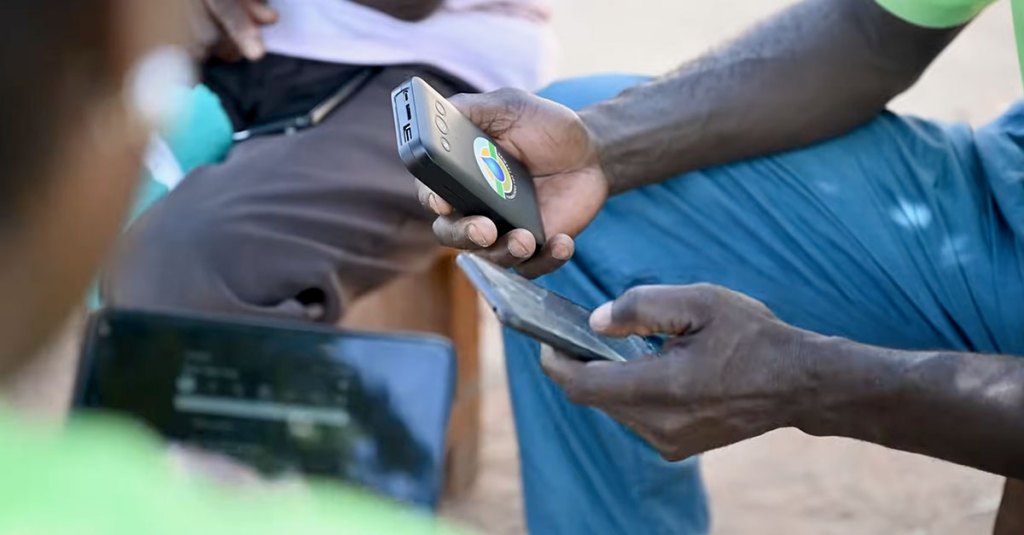
Out of 8 billion people on earth, over 5 billion use a mobile phone. In many countries, people own two or three devices. It’s how they live, work, and connect. Even my 96-year-old grandfather in Ethiopia has one. He lives in a remote village with no paved roads and no electricity grid. Yet somehow he has a phone that connects him to the world.
The world is connected. The mission field has never been more open.
And people aren’t just connected. They’re searching.
According to Lee Strobel’s book Is God Real?, every second, 200 people go online asking questions like “Is God real?” “Who is Jesus?” “Can I be forgiven?” That’s 17 million people a day searching for truth.
People are already searching. The question is, will they find truth, or confusion when they do?
Like Roman roads built for Caesar’s armies but used by God to spread the gospel, today’s AI translation infrastructure is being built for global commerce, but God is using it for His purposes.
At the 2024 Global Missional AI Summit, Biblica reported that AI has reduced the Bible translation process by up to 25 years in some languages. AI technology now supports translation work in many languages, a scale that would have been impossible just a decade ago.
AI for Evangelism: Moving from Fear to Faithful Use
I understand some Christians feel uneasy about AI. In 2023, Barna research showed that over half of Christians (51%) disagreed that AI and the church should intersect, and 52% said they’d be disappointed to learn their own church was using AI.
But something is shifting. By 2025, research by Frontier Ventures with mission leaders across Africa reveals that while only 12.5% describe themselves as “highly eager” about AI, 37.7% are now actively using it, and 45.3% believe AI will positively impact mission work when used correctly.
A bishop in Africa captured the tension perfectly when he asked: “If I use AI to write my sermon, where is the Holy Spirit?” That’s exactly the right question.
Here’s what I’ve learned: AI removes barriers; it doesn’t replace the Holy Spirit. When I used AI translation in that Uber, the technology didn’t replace our conversation; it enabled it. The Armenian driver, Aaron and I still looked each other in the eyes and prayed together. The AI simply removed the language wall that would have kept us in silence.
As one African mission leader put it: “AI is an enabler of our mission work; we should use it and not let it use us.”
At Jesus Film Project, we’re seeing this pattern firsthand.
Translation at scale
Our NextSteps platform enables ministries to create interactive gospel journeys in one language, then instantly translate them into about 80 languages with AI capabilities. What once required months of work per language now happens with just a few clicks.
This has already proven incredibly effective for our Jesus Film Project partners around the world. Leaders can create contextualized “choose your adventure” journeys that help seekers discover and follow Jesus, complete with videos, surveys, text, and images.
Then, with AI-powered translation, that same journey becomes accessible to speakers of dozens of other languages almost immediately.
You can learn more about NextSteps here.
Breaking geographic barriers
In parts of the world where traditional methods of evangelism—like using the Bible or giving out gospel tracts—face restrictions, AI image generation capabilities allow local ministry leaders to create contextualized gospel content safely and creatively.
We’ve seen leaders in secure locations use NextSteps to develop complete gospel-sharing journeys that include AI-generated images, videos, and interactive survey cards.
These visuals help them illustrate biblical truths in ways that connect authentically with their audiences, something that would have been impossible or dangerous using traditional methods.
Accelerating software engineering
AI has also boosted our software engineering and product team’s productivity, helping our staff members involved in research save time from redundant work. This means we can build better tools faster and reach more people with the resources we have.
AI serves to remove obstacles that once kept people from hearing about Jesus, amplifying human connection and the Holy Spirit’s work.
Just as Paul used Roman roads, just as reformers used the printing press, just as twentieth-century missionaries used radio waves, we can leverage the AI infrastructure of our time to fulfill the Great Commission in our generation.
AI is accelerating evangelism and this is the way forward for missionary work today.
Real Stories: Partners Using These Tools
Let me tell you about Rahman. He lives in South Asia, in a region where openly following Jesus can cost you your family, your job, sometimes your life.
One day, Rahman stumbled across a Jesus Film Project video on YouTube. He watched it late at night on his phone, alone in his room. Something stirred in him. He had questions, but no one he could safely ask.
Through the comment section and eventually through encrypted messaging, Rahman connected with a digital ministry team. They sent him links to Scripture in his language, answered his questions, and walked with him as he began to follow Jesus. He’s never met these people face-to-face. But through digital tools, he’s studying the Bible, growing in faith, and now quietly sharing what he’s learned with trusted friends.
Having a traditional missionary presence in his region is impossible. But the gospel reached him anyway.
This story is happening over and over. We’re only hearing some. AI translation, digital video platforms, and secure communication tools are creating pathways to Jesus in places where traditional missions strategies face significant barriers.
The technology works alongside the careful work of Bible translation societies and linguists. It creates additional access points: audio Bibles, video content, interactive tools that can introduce people to Jesus while more comprehensive translation work continues.
Three Principles for Sharing Jesus in the Digital Age Through Technology
So how do you begin? Whether you’re a pastor, a marketplace professional, a student, or simply someone who wants to share Jesus more effectively, here are three principles to guide you.
Principle 1: Make prayer for the harvest your daily habit
Jesus told His disciples in Matthew 9:37-38, “The harvest is plentiful but the workers are few. Ask the Lord of the harvest, therefore, to send out workers into his harvest field.”
He didn’t just suggest prayer. He commanded it. Before strategy, before tools, before any method, Jesus said: pray for the harvest.
What if your daily routine included a simple whisper to God: “Help me shine Your light for someone today”?
Not a long, elaborate prayer. Just a moment in the morning as you’re getting ready. A breath prayer as you walk into work. A quick ask before you open your laptop or step into a meeting.
“God, use me today. Open my eyes to see who needs You. Give me courage to share.”
He didn’t just suggest prayer. He commanded it. Before strategy, before tools, before any method, Jesus said: pray for the harvest.
The Armenian driver in the Uber wasn’t just a random encounter. God orchestrated that moment. But it started with prayer. Before I ever got in that car, I’d been praying that simple prayer: “Help me shine Your light today.” The AI translation was useful, but it was prayer that opened the conversation and the Holy Spirit who touched his heart.
Make it a habit. Pray for the harvest. Ask God to use you. Then watch what He does.
Principle 2: Explore available tools
You don’t need to build something from scratch. There’s already a library of digital tools designed to help you share the gospel effectively.
Explore resources like:
- The Jesus Film Project app: Full films and short clips in over 2,000 languages, ready to share
- NextSteps platform: Tools to create personalized gospel journeys and discipleship paths
- AI translation tools: Experiment with ChatGPT to see how real-time translation works. Try having a conversation in another language, or ask it to translate a simple gospel explanation into a language someone you know speaks. Test it. See what’s possible.
- Your church’s digital presence: Many churches already have resources you can share via social media, email, or text.
Start simple. Download the Jesus Film Project App. Share a video with a friend. Try using AI translation in a conversation with someone who speaks another language. Experiment with what works.
Principle 3: Trust God with the results
People are open to hear about Jesus. Whether in digital spaces or offline conversations, the responses after sharing the gospel are remarkably consistent: yes, maybe, no, I’m interested, I have a question.
What’s our role in all of this?
As Dr. Bill Bright, founder of Cru®, famously said: “Effective evangelism is taking the initiative to share about Jesus in the power of the Holy Spirit and leaving the result to God.”
Whether in digital spaces or face-to-face conversations, the message is the same, the reason we share is the same. Technology simply becomes the medium.
You’re not responsible for converting anyone. That’s the Holy Spirit’s work. You’re simply responsible for faithfully sharing, loving well, and trusting God with what happens next.
The Armenian driver may not have prayed to receive Christ that day in the car. But he downloaded the app. He has access now. The seed was planted. God will bring the growth in His timing.
The Call is Clear
When I look at stories like Rahman’s and that conversation with the Armenian driver in California, I’m reminded of Luke 11:9-10: “Ask, and it will be given to you; seek, and you will find; knock, and the door will be opened to you. For everyone who asks receives; the one who seeks finds; and to the one who knocks, the door will be opened.”
God is still opening doors—digital, cultural, and linguistic—for the gospel to reach people who’ve never heard His name.
That Armenian driver now has the Jesus Film Project app on his phone. He can watch Bible stories in his language whenever he wants. He can share them with his family back home. One conversation, made possible by AI translation, opened doors that might have stayed closed forever.
Rahman in South Asia can study Scripture secretly, ask questions digitally, and lead friends to Jesus without ever meeting a foreign missionary.
Millions watch the story of Jesus on YouTube every month, many in countries where traditional missions work is restricted or impossible.
Rahman in South Asia can study Scripture secretly, ask questions digitally, and lead friends to Jesus without ever meeting a foreign missionary.
The pattern is undeniable: God has always provided the technology each era needs to advance His mission.
The question is not whether these tools are biblical. History proves they are.
The question is: Will we use them?
Pray. explore. trust. share.
The next great story of how AI and evangelism work together might be yours.
About Jesus Film Project
For over 45 years, Jesus Film Project has been sharing the story of Jesus in every language and every format possible. From film reels in remote villages to apps on smartphones, from YouTube channels to virtual reality experiences, we’re committed to one mission: helping every person on earth encounter Jesus in a way they can understand. Learn more about our work and explore tools for your own ministry at jesusfilm.org.

About the Author