
Jesus and the Woman at the Well


Related Posts


Subscribe To Our Weekly Newsletter
Sign up for our weekly newsletter, Jesus Film Project News, to receive encouraging stories, videos and resources in your inbox.
Updated on November 13, 2025 by Alex Rodriguez
One of my favorite stories in the Bible is in John 4. It’s likely you’ve read it or have at least heard a sermon about it. It’s the story of Jesus’ encounter with the woman at the well, and scholars and Bible experts have been studying it for centuries.
What if the woman at the well wasn’t who we thought she was?
This one encounter Jesus has with an unnamed Samaritan woman gives us so much insight into who Jesus is, what His mission is on earth and who He came for. That’s one of the reasons I love it so much.
I’ve heard this story preached countless times, as I’m sure many Christians like us have. And all the messages I’ve heard on this passage have painted this woman in the same light: she was a sinner, an adulterer, a social outcast. Yet she is the woman Jesus used to first spread the news of His arrival as Messiah to the Samaritans.
Up until now, I had always accepted this version of the story. But recently, I discovered that there is a different view of the woman at the well— that she may not have been the serial adulterer that many claim she was. I began to wonder: What if the woman at the well wasn’t who we thought she was?
Let’s explore this story a little more deeply. We’ll examine the biblical context and some outside sources to piece together a fuller picture of the woman many call the first evangelist.
Where is the biblical account of the woman at the well?
The story of the woman at the well appears in John 4:4–42. For context, Jesus decides to leave Judea for Galilee, likely to avoid an encounter with the Pharisees (John 4:1–3).
But Jesus and the disciples take an unusual route—they travel through Samaria. On a map, Samaria is right between these two regions, which makes it a natural place for travelers to stop. But most Jews at that time so strongly resented Samaritans that they would take a longer route around Samaria, rather than travel through it.
Jesus instead led the disciples straight through this land, and His decision set the stage for the life-altering encounter that becomes our “woman at the well” story.
Who was the woman at the well in the Bible?
The woman at the well isn’t named in the Bible. Even Jesus, who reveals Himself to her as the Messiah by telling her the details of her past, does not call her anything other than “woman.”
Some people mistakenly associate the Samaritan woman with Mary Magdalene, but they are different women who have different encounters with Jesus. There are some similarities between the two women, namely that their meeting with Jesus completely changes their lives. But the woman at the well is not Mary Magdalene.
The Bible does not mention the woman again outside of this story in John’s Gospel. Some traditions, namely Eastern Orthodox tradition, venerate her as Saint Photini. The name, meaning “Enlightened,” was allegedly given to her by the apostles at baptism. According to the tradition, she became a well-known evangelist and was eventually martyred by Nero in 66 AD.
Although we only read about this unnamed woman in John four, we know that her influence spread throughout her town of Sychar in Samaria, and that many believed in Jesus as Messiah because of her testimony.
Why is the woman at the well important?
The story of the woman at the well is significant for many reasons, and we can draw many lessons from it.
Most of all, the account of the woman at the well shows us that the gospel is for everyone.
First, the woman’s blunt, pointed questions invite Jesus to articulate who He is and give us the memorable image of “living water.” Their conversation also leads Him to share that God’s dwelling place—the place where people are commanded to worship Him—is going to change. And for the first time, Jesus reveals plainly that He is the Messiah.
The story also teaches us the power of giving your testimony when sharing Jesus with others. Immediately after she speaks with Jesus, the woman at the well runs into town and tells anyone and everyone who will listen that the long-awaited Messiah has come at last.
But most of all, the account of the woman at the well shows us that the gospel is for everyone.
“This nameless woman, who lacks wealth and power, engages in the longest conversation Jesus has with anyone in the Bible. It teaches us about who gets to be God’s people,” says Caryn Reeder. In her book The Samaritan Woman’s Story, the author and New Testament professor examines this story from a biblical and historical perspective.
Was the woman at the well a social outcast?
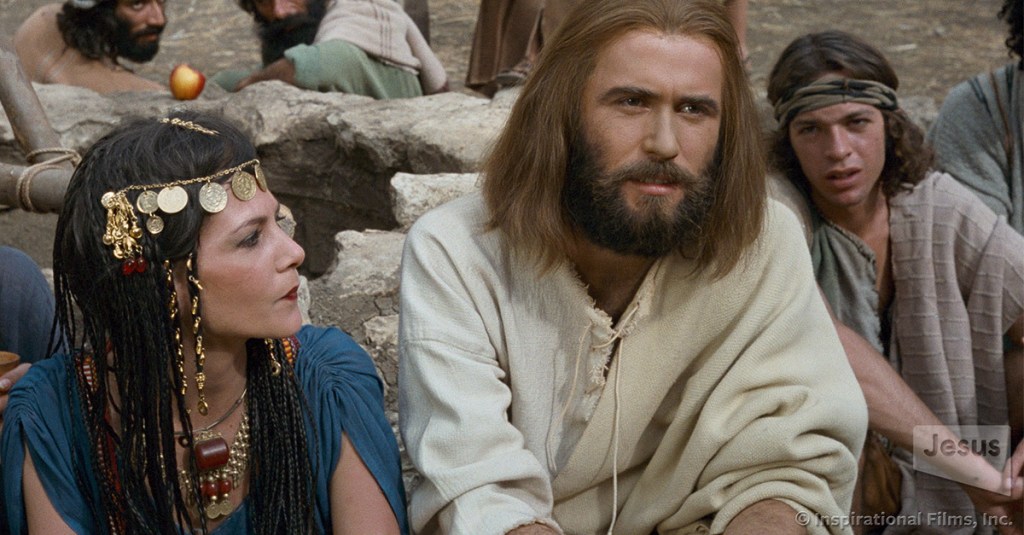
In the sermons I’ve heard on this passage, and even in films and media like The Chosen, the woman at the well is usually portrayed as a social outcast. There are a couple of reasons for this viewpoint. But looking closer at Scripture in its cultural context, it’s just as likely that she was not an outcast.
First, Scripture tells us that it’s the middle of the day, and Jesus is tired and thirsty. The passage notes that Jesus’ encounter at the well occurs around noon.
This is not a time people typically go to the well to haul water.
Most women would travel together to draw the water they need in the cool of the morning. This was an important social time when they could catch up and share local news. The fact that this woman is heading to the well in the hot afternoon suggests that she may not have been welcome with the other women of the village.
Second, Jesus points out that she has had multiple husbands and that she is currently living with a man she is not married to. That must mean that she is a sinner, at least in regards to her marital relationships, right?
Actually, the Bible doesn’t tell us why this woman was married five times, or what her current relationship is like—just that she is currently living with a man who is not legally her husband.
Jesus brings up the Samaritan woman’s marital status in order to reveal Himself to her, not to condemn her.
While it’s often assumed that she was an adulterer, that’s not the only possibility. In fact, it may be unlikely, as multiple men in that time would not marry a known adulterer. It’s probable that she may have been divorced or widowed, and left with no choice but to remarry in a world where a woman could not provide for herself.
We should also note that Jesus does not call her a sinner, nor does He call her to repent and turn away from her sin, as He does with another woman He encountered who was caught in adultery.
Again, Professor Caryn Reeder offers a different perspective from the traditional viewpoint:
“It was not uncommon for women to be married several times. In antiquity, women usually were married when they were fifteen years old or so; their husbands were generally ten to fifteen years older than them. It would be rather common for a woman to be widowed at a young age—and since society operated on the basis of male-centered households, she would need to remarry to gain access to legal, economic, and social connections.
“It was also not uncommon for men and women to live together without marriage. Official marriage was accompanied by legal restrictions: slaves could not legally marry, for instance; Roman citizens could not legally marry non-citizens; within Judaism, priests could not marry outside the priestly line. Economic reasons might also limit the possibility of an official marriage. Perhaps the man was wealthy but the woman was poor, or perhaps the man had grown children from an earlier marriage and therefore would not want to dilute the inheritance by adding in children from a second marriage. In these cases, instead of legal marriage, people could simply live together — what we might call a common law marriage today. It was not sinful; it was just another form of marriage without the legal or economic consequences of official marriage.”
Jesus brings up the Samaritan woman’s marital status in order to reveal Himself to her, not to condemn her.
There are several possibilities for this woman’s material history, and we should consider the cultural traditions and views of what defined a marriage in her time. Looking solely at the story from the Bible, we don’t know for sure that she was an outcast. Scripture doesn’t tell us enough for us to assume this woman was a serial adulterer, and neither Jesus nor the townsfolk refer to her as a sinner.
Instead, Jesus approaches her as someone who is spiritually curious. He speaks to her as an equal, challenges her beliefs and reveals Himself to her as the One she’s been seeking.
Theology professor and author Sandra L. Glahn highlights this in her blog on the woman at the well: “He (John) presents her as an inquisitive religious seeker who is trusted—perhaps even admired—by her fellow townspeople.”
And when she runs back to town to tell the people about her encounter with Jesus, they do not turn her away or shun her as they would an outcast. Instead, they listen to her story and respond by going out to seek Jesus.
Was the woman at the well an evangelist?
Jesus brings up the Samaritan woman’s marital status in order to reveal Himself to her, not to condemn her.
Many scholars do consider the Samaritan woman the first evangelist. John’s gospel tells us that her encounter with Jesus radically changed her. She ran back to town and immediately began evangelizing—telling anyone and everyone who will listen that she has found the Messiah. And the people listen to her.
She was the first person to hear Jesus refer to Himself as the Messiah, and then she immediately shared this information with others.
“Then, leaving her water jar, the woman went back to the town and said to the people, ‘Come, see a man who told me everything I ever did. Could this be the Messiah?’ They came out of the town and made their way toward him. … Many of the Samaritans from that town believed in him because of the woman’s testimony, ‘He told me everything I ever did.’ So when the Samaritans came to Him, they urged Him to stay with them, and He stayed two days. And because of His words many more became believers. They said to the woman, “We no longer believe just because of what you said; now we have heard for ourselves, and we know that this man really is the Savior of the world.” — John 4:28-30, 39-42
She is certainly the first female evangelist mentioned in the Bible. Her testimony began spreading the good news of the gospel throughout this little corner of Samaria, leading others to believe in Him and causing them to seek Jesus for themselves.
Five things the woman at the well can teach us today:
- Salvation through Jesus Christ is for everyone.
In the Great Commission, Jesus tells His followers that they’re to spread the gospel throughout the world, and He mentions Samaria by name (Acts 1:8). It’s easy to gloss over this, but it’s important to remember that from an early age, Jesus’ disciples had been taught that Samaritans were excluded from God’s covenant and that they were worse than Gentiles.
And yet Jesus not only told the disciples to bring these people into the fold, but modeled it Himself with the woman at the well and the people who responded to her testimony in Sychar.
There is no group, class, or race of people the gospel excludes. It’s for every person. This is one of the reasons Jesus Film Project® exists. We bring the gospel to many of the most remote, isolated communities in the world, allowing people to hear the story of Jesus in new languages and sharing the good news with people who, like the woman at the well, have never heard it before.
- Jesus is pro-women.
Jesus lived in a time when even the most respected women were considered second-class citizens. They did not have the same rights as men in those days, and even their words and testimonies needed the corroboration of men to be valid. Still, Jesus chose women time and again to bring forth His message of hope and salvation.
I love how Christian novelist and journalist Jessica Brodie puts it in this article from Christianity.com:
“Representing the lowest of the low—a female in a society where women are both demeaned and disregarded, a race traditionally despised by Jews, and living in shame as a social outcast—she not only has a holy encounter with Christ but also receives eternal salvation. And her testimony convinces an entire town to believe, too.”
Jesus knew her testimony would be powerful, and He knew her encounter with Him would change her life and the lives of many others. And so he chose that particular well, during that particular time of day just to meet with her. He spoke with her even though it would not have been considered proper for Him, a Jewish Rabbi, to speak with her, a Samaritan woman.
- Jesus alone is the source of eternal life.
Jesus’ decision to meet the Samaritan woman at a well is important. As in many other instances and parables, Jesus uses physical objects—a well and water— to point to a deeper spiritual truth: He is the living water. By this, He means that He alone is the source of eternal life and we can access eternal life through Him alone.
- Because of Jesus, you can worship God anytime, anywhere.
“‘Woman,’ Jesus replied, ‘believe me, a time is coming when you will worship the Father neither on this mountain nor in Jerusalem. You Samaritans worship what you do not know; we worship what we do know, for salvation is from the Jews. Yet a time is coming and has now come when the true worshipers will worship the Father in the Spirit and in truth, for they are the kind of worshipers the Father seeks. God is spirit, and his worshipers must worship in the Spirit and in truth.’” — John 4:21-24
But what does it mean to worship in Spirit and in truth? I really like the way Pastor Kenneth Ortiz explains it in his article on the woman at the well: “To worship in spirit means that we can worship God at anytime, anywhere, because we have the Holy Spirit with us, God’s very presence. Worship doesn’t have to be solely in a tabernacle or temple anymore.”
- Your testimony plays a key role in evangelism
Many people who heard the testimony of the woman at the well believed Jesus was the Messiah. Her story was compelling enough for them to believe she had encountered the promised Savior of the world. The Bible doesn’t tell us that she debated theology, pressed people to change their behavior, or preached. She simply told them about her experience: “He told me everything I ever did” (John 4:39, NIV).
But her testimony wasn’t only valuable because some people believed it. Her story ignited people’s curiosity about Jesus. They wanted to see and hear from Him themselves, and as a result, more of them believed (John 4:41–42). For additional powerful quotes by Jesus, see this post.
The power of your story
I hope diving deeper into this passage helped paint the woman at the well in a fresh light. If you’re still curious to learn more, then I invite you to do your own digging into this story. There’s so much we can learn and apply from this story as Christians today, but for me, the biggest one was the power of your testimony.
Like the woman at the well, you don’t need to wait to tell others about how Jesus has changed you. You don’t need to study theology or have the answers to every potential question others may ask you. All you need is your story and a heart that’s willing to invite others into their own encounter with Jesus.

About the Author