
What Language Did Jesus Speak?

Related Posts


Subscribe To Our Weekly Newsletter
Sign up for our weekly newsletter, Jesus Film Project News, to receive encouraging stories, videos and resources in your inbox.
Updated on September 23, 2025 by Jeannette Melvin
I’ve always enjoyed watching movies in their original language. As a native-Spanish speaker, I appreciate a well-dubbed film, and I don’t mind subtitles. I enjoy seeing how the characters express themselves in their native language when I can.
The first time I watched The Passion of the Christ, I remember being thrilled to see Jesus not speaking English, a language that He likely didn’t speak. Instead, in the film, Jesus spoke mostly in Aramaic, and very sparingly in Hebrew and Latin. His words were subtitled in English with the option to dub in a few different languages.
I appreciate this level of authenticity in filmmaking. But it got me wondering, “What language did Jesus speak 2,000 years ago?” Was I actually hearing what Jesus may have been speaking when He was on Earth?
Looking at the evidence––the host of scholarly research on the subject––tells me that Jesus did indeed speak a mix of Aramaic, Hebrew and Greek.
But I think the reasons why He chose to speak these languages are more important and more poignant for you and me as Christian believers. Knowing what Jesus spoke and why He chose to speak in the languages He did across the New Testament tells me about the character of Jesus and the gospel itself more than anything else.
In the end, what He spoke isn’t as important as why He spoke it.
In looking at the answer to the question “What language did Jesus speak?” we rediscover a Jesus that is personal and loving. We see a Jesus that is interested in heart language as a way to reach everyone with the redeeming message of the gospel––salvation and peace with God through Him alone.
What Language Did Jesus Speak?
Many scholars believe the primary language that Jesus spoke was Aramaic. And indeed, there’s strong evidence that most Jews (Hebrews) commonly spoke this Semitic language throughout Palestine and modern-day Israel in the first century. But there’s also reason to believe Jesus was familiar with a few languages. In fact, most scholars agree that Jesus was multilingual.
How many languages did Jesus speak or understand? At least three: Aramaic, Greek and Hebrew.
Jesus spoke each one of these languages (all of them instead of primarily one) throughout His ministry. What He spoke depended on the situation and the person he was speaking to (more on that later).
But why do people seem to think that Jesus spoke Aramaic, or mostly Aramaic? Jesus speaking in Aramaic shows up several times in Scripture. Beyond that, it was probably the language He needed to speak the most as He ministered to the people and made a living where He lived and preached. Aramaic was one of the most commonly spoken languages in the region.
The Languages Spoken in the Time of Jesus
Let’s take a closer look at all of the languages that were popular in Jesus’ time and region, and some of the best evidence for the languages Jesus spoke.
Aramaic, Greek, Latin and Hebrew were the languages spoken in Jesus’ day in the region, so Jesus was likely at the very least familiar with them as the people of the region were.
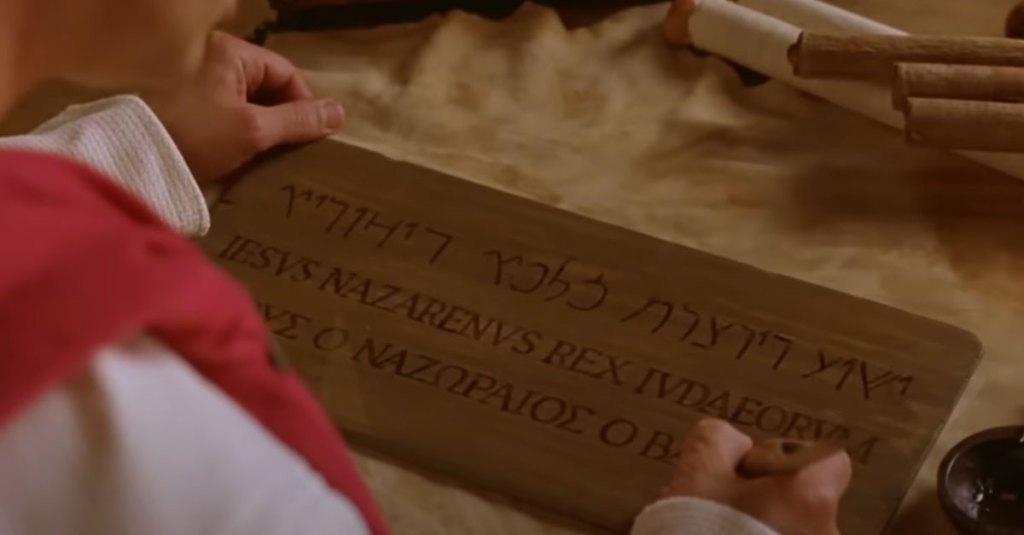
One of the clearest sources showing us the languages spoken in Jesus’ day is the Bible. The Bible tells us in John 19:19-20 that the sign above Jesus’ cross–– ”Jesus of Nazareth, King of the Jews”––was written in Aramaic, Latin and Greek. This is because several languages, but most specifically the ones listed in John 19:19-20, were spoken in close proximity to large cities like Jerusalem.
Jesus’ time on earth followed the spread of the Roman and Greek empires. Their influence was strong among the people they conquered and those in surrounding areas. One of those conquered cities was Jerusalem, and its surrounding area was Galilee, where Jesus grew up and where the bulk of His ministry took place. Latin was spoken by the conquering Romans. Greek was spoken by the Greeks as well as other nations in the vicinity. As Jesus traveled and preached, it makes sense that He would’ve encountered both Latin and Greek.
But what about Aramaic? And what about Hebrew, the Jewish language?
The Jewish people, of which Jesus was one, spoke both Hebrew and Aramaic in Jesus’ day, but for very different reasons. And the two languages, Aramaic and Hebrew, were very much related and intertwined.
The Languages Most Commonly Spoken by the Hebrews (Jews)
What language did the Hebrews speak in the time of Jesus?
Growing up in the Christian church, any time I read the Bible and thought back to the original language Jesus was speaking, I naturally assumed that Jesus only spoke Hebrew. After all, most of the Old Testament is written in Hebrew. We associate Hebrew with the Jews and it is the official language of Israel today.
Here’s what I learned. Throughout the Old Testament, Israel was a nation with a clear identity and purpose. They were set apart from (and often at odds with) the nations around them. They were the only people speaking Hebrew while other languages developed in surrounding nations. Aramaic was one of those languages. But it turns out that Hebrew and Aramaic are both Semitic languages with a common ancestral language. And though the Hebrew people were known to stick to their culture, their people and their language, even they weren’t immune to its influence and that of the other languages in the area.
When did the Jews begin to speak the Aramaic language?
There was a time when very few Israelites spoke Aramaic.
Both 2 Kings and Isaiah tell us about a time when the king of Assyria sent some officers to threaten Israel. When they got to the walls of Jerusalem and called for Hezekiah, the king of Israel sent out Eliakim, Shebna, and Joah to speak on his behalf.
The Assyrian field commander wasn’t interested in having a private discussion with Hezekiah’s men. Instead, he made threats loudly enough in Hebrew for the Jewish citizens on the wall to hear. The author of 2 Kings tells us what happened next: Then Eliakim, son of Hilkiah, and Shebna and Joah said to the field commander, “Please speak to your servants in Aramaic, since we understand it. Don’t speak to us in Hebrew in the hearing of the people on the wall” (2 Kings 18:26).
Hezekiah’s men didn’t want the Jewish people listening to understand what the commander was saying, so they asked him to speak Aramaic. This tells us that well-educated Israelites spoke Aramaic at least by the time Israel had their 13th king (Hezekiah) in the late 8th and early 7th centuries BC. This was 700-800 years before Jesus’ time on earth.
How did the Jews begin to speak the Aramaic language more commonly?
Over time, Aramaic began to replace Hebrew as the common, everyday language for Israelites. While Hebrew was tied to Israelite identity, Aramaic was an international language of trade throughout Asia Minor during the Assyrian and Babylonian reigns.
All Jews, including Jesus, had to adapt and began using an Aramaic/Hebrew hybrid. This evolved into a universal acceptance of Aramaic for day-to-day living. Aramaic became the “lingua franca” or “the common language.”
The Israelites held onto Hebrew as a religious language used in liturgy and observance. But it’s important to note that the people most well-versed in Hebrew were the religious leaders of Jesus’ time, like scribes, teachers of the law, Pharisees and Saducees––the “religious elite.”
If the Jews were in a religious setting, like a synagogue, where the Scriptures would be read and discussed, they were likely listening to Hebrew. Outside of the synagogue and Temple, the Jews were surrounded by Aramaic, which means many of them would’ve had to speak it often.
Languages of Jesus: Hebrew, Greek, Latin and Aramaic
Did Jesus speak Hebrew?
Jesus’ education would have involved a familiarity with Hebrew for the purpose of learning and reciting Scripture. As a Jewish person attending Temple, Jesus would’ve had to know Hebrew (at least on a basic level) to understand the Scriptures.
We hear about Jesus reading Scripture on two occasions in the New Testament––in the temple when he was 12 and in the synagogue at the start of His ministry.
Luke tells us the story of a 12-year-old Jesus sitting at the Temple asking and responding to Jewish teachers, who were amazed at His understanding and answers (Luke 2:41-47). Impressing these teachers would have required a familiarity with the law and the prophets, which suggests a working knowledge of Hebrew.
Jesus later inaugurates His ministry this way:
“He went to Nazareth, where he had been brought up, and on the Sabbath day he went into the synagogue, as was his custom. He stood up to read, and the scroll of the prophet Isaiah was handed to him. Unrolling it, he found the place where it is written:
‘The Spirit of the Lord is on me, because he has anointed me to proclaim good news to the poor. He has sent me to proclaim freedom for the prisoners and recovery of sight for the blind, to set the oppressed free, to proclaim the year of the Lord’s favor.’
Then he rolled up the scroll, gave it back to the attendant and sat down. The eyes of everyone in the synagogue were fastened on him. He began by saying to them, ‘Today this scripture is fulfilled in your hearing’ (Luke 4:16-30, ESV).”
Watch a clip of Jesus preaching in the synagogue from the film LUMO – The Gospel of Luke on the Jesus Film Project website.
Now, is there any reason to believe that Jesus read the Tanakh (Old Testament in the Hebrew Order) in Aramaic? We don’t think so. While the Septuagint (the Greek version of the Hebrew Bible) was available at this time, most synagogues would have prided themselves on using Hebrew scrolls. Jesus likely read these words in their original Hebrew.
Did Jesus speak Greek?
The Bible doesn’t show us Jesus speaking Greek, but theologians and historians can piece together that He likely did based on a few historical facts.
The spread of the Greek Empire and Hellenism
In Jesus’ day, the Greek empire was spreading quickly and so was their influence. The spread of this influence is expressed neatly in one word: Hellenism.
As Alexander the Great’s armies moved East in the 300s BC, Macedonia paved the way for the expansion of Greek thought and culture. Greek culture was at its zenith, while nations like Egypt and Israel were waning. Greek literature and philosophy (along with the Greek tongue) were fused with these cultures. This process came to be known as Hellenism.
Hellenism is what eventually led to the translation of Hebrew scriptures into Greek. But these cultural changes didn’t come without static. Many Jews were resistant to Hellenism on principle. So while many countries used Greek as a common linguistic thread between nations, some Jews refused to learn the language.
So you might hear Greek spoken by Jews in Judea and Jerusalem, but you weren’t likely to hear it in Capernaum or other Galilean areas. That means that Jesus would’ve spoken in Aramaic in these regions. But we know that Jesus does make His triumphant entry into Jerusalem, where He is eventually crucified (Luke 19:28–38). Could He have spoken Greek there? Perhaps.
The language of the Bible and the New Testament
By the time the New Testament manuscripts started to come together, Greek had gained larger acceptance everywhere. By this point, the number of people who spoke Greek now far outnumbered Aramaic speakers.
This might explain the New Testament in Greek.
A large portion of the New Testament was written by Jesus’ disciples and apostles who had contact with Jesus’ disciples. An easy connection to make is that the New Testament was written in Greek because the disciples spoke Greek.
They were common men––fishermen––with no special education, just like Jesus. Could Jesus have communicated with them in Greek as well? I would assume yes, when necessary.
Communicating with government leaders (Romans)
Jesus might have spoken Hebrew in the synagogue and the temple, and Aramaic in His everyday. But if Jesus spoke only Aramaic (or only Aramaic and Hebrew), how did he speak to the Romans?
He probably spoke Greek to religious and government leaders, especially once He arrived in Jerusalem. Most Romans spoke Latin, so when they had to speak with Jews, they would use Greek. Consider this passage from Luke:
And they began to accuse him, saying, “We have found this man subverting our nation. He opposes payment of taxes to Caesar and claims to be Messiah, a king.” So Pilate asked Jesus, “Are you the king of the Jews?” “You have said so,” Jesus replied. Then Pilate announced to the chief priests and the crowd, “I find no basis for a charge against this man.” But they insisted, “He stirs up the people all over Judea by his teaching. He started in Galilee and has come all the way here” (Luke 23:2-5).
What language was Pilate speaking here? He couldn’t have been speaking his native Latin because the audience wouldn’t have understood. In the same way, he probably didn’t know Hebrew. The chance that a noble Roman leader would stoop to speak (let alone learn) Aramaic is small. After all, Romans would have considered it an uncultured language that was beneath them. It’s a pretty fair guess that Pilate was speaking Greek to this audience.
What language might Jesus have replied to Pilate in? My guess is He would’ve spoken in the language they most commonly spoke in the presence of others’––foreigners like Pilate. That would’ve been Greek in this case, not Aramaic.
Did Jesus speak Latin?
It makes sense to wonder if there’s any chance Jesus could’ve replied to Pilate in Latin, or what about the Roman centurion (Matthew 8:5-13)? There’s no evidence, Biblical, historical or circumstantial, to indicate Jesus would have spoken Latin.
Perhaps because of the Roman presence, Jesus, like other Jews, could’ve been familiar with a few words overheard in passing or in Latin signage, should there have been any nearby. But without any proof, it’s a long shot to assume Jesus spoke Latin, especially when Greek would be more natural and accessible as a language to speak with non-Jews.
Did Jesus speak Aramaic?
Most Israelites would have spoken Aramaic in their own dialect, and their dialects would’ve given them away. For instance, the Gospels demonstrate that Peter had a Galilean dialect that would have been easily identifiable by people in Jerusalem.
After a little while, the bystanders came up and said to Peter, “Certainly you too are one of them, for your accent betrays you.” Then he began to invoke a curse on himself and to swear, “I do not know the man.” And immediately the rooster crowed.”
–– Matthew 26:73-74, ESV
This comes up again in Acts 2:5-12 on the day of Pentecost when all who had gathered began speaking in tongues. Those who witnessed it were amazed. After all, they asked, “Aren’t all these who are speaking Galileans?” The disciples weren’t wearing name tags that would identify them as Galilean, so their dialect likely gave them away. By the way, Jesus was not born in Galilee. He was born in Bethlehem of Judea (Luke 2:4-7) but after His birth He did travel with his family to Nazareth, a town in Galilee, where He spent most of his life (Matthew 2).
The nail on the coffin that Jesus largely spoke Aramaic? Most of the non-religious documents and inscriptions discovered in the area where Jesus lived, traveled and preached were in Aramaic. And this is a critical point. When contracts, invoices, and other normal communications are in a particular language, it’s a strong sign that this was the region’s primary language. Jewish people like Jesus would’ve had to know and speak Aramaic to make a living.
Reasons to believe Jesus was multilingual
To be clear, although it’s likely Jesus largely spoke Aramaic, we should continue to recognize that Jesus was multilingual.
In order to navigate their region, which had been conquered by the Romans and saw droves of people from other regions coming to trade, we’ve determined that Jews like Jesus would’ve had to speak Aramaic and Greek. The two languages would’ve accounted for the larger chunk of Jewish life, the everyday. Also, Jesus and the Jews would’ve spent a small portion of their lives speaking or listening to Hebrew in order to reflect on and memorize Scripture.
- As a trade language, Greek would’ve been incredibly important because He was a carpenter. Jesus would’ve spoken Greek to buy materials and sell His woodwork alongside His earthly father Joseph.
- Jesus would’ve spoken Hebrew when He read from the Bible in the synagogue.
- Jesus spoke Aramaic because it was the common language of the day, the lingua franca.
For Jesus, switching back and forth between several languages would’ve been vital.
The Importance of a Multilingual Jesus
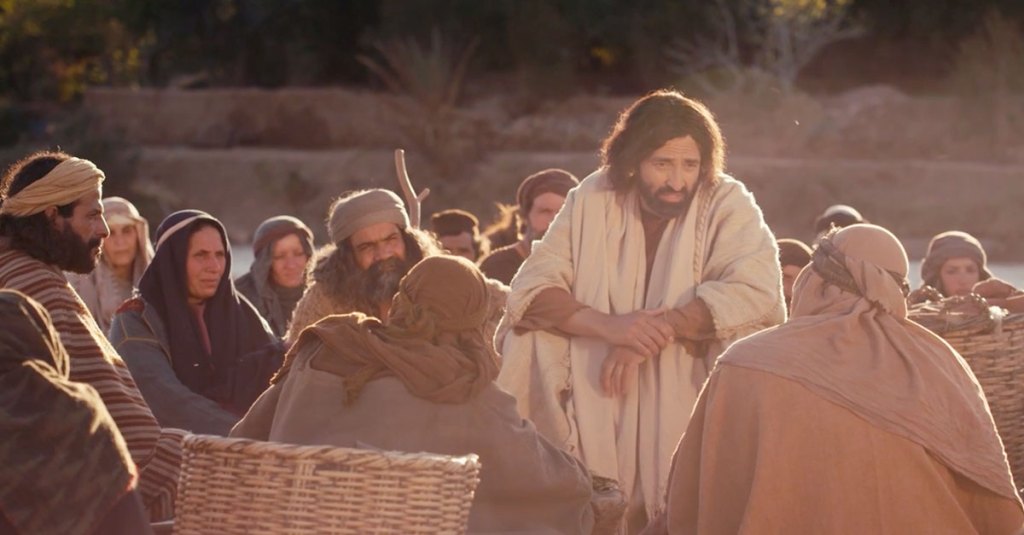
His background as a Jewish man and His carpentry aside, for Jesus, knowing several of the languages of the day would’ve been an enormous boost to His ministry and a benefit to His audience. I think knowing several languages could’be been at least one of the keys to Jesus reaching as many He did in the crowd, and to His message spreading across the region later widely through the work of His disciples.
Following His death, the Bible itself would be a testament to Jesus’ diversity of language. A lion’s share of the Dead Sea Scrolls––one of the oldest manuscripts of the Bible––were written in Hebrew with a few Aramaic, Greek, and Arabic texts––and even some Latin fragments.
But let’s be clear: Jesus wasn’t multilingual simply because being from the area meant He could speak many of the languages of the area. As God incarnate, He could’ve spoken any language He chose. But Jesus limited Himself to the languages spoken in the culture, time and region where He lived, and the languages appropriate to His audience.
As Christians, knowing what languages Jesus spoke and why He spoke them when He did, gives us a better understanding of Jesus––who He showed Himself to be while on earth.
When I think of the disciples’ Galilean dialect of Aramaic, I’m reminded that Jesus cared to select fishermen from what people considered the poorest and lowliest of regions. Their heart language—the language they heard on their mother’s knee––was the same language and dialect Jesus spoke growing up. But also, it tells me dialect matters. It mattered to Jesus.
As God incarnate, He could’ve spoken any language He chose. But Jesus limited Himself to the languages spoken in the culture, time and region where He lived, and the languages appropriate to His audience.
Following in Christ’s footsteps, it makes sense for us as Christian believers today to ensure the gospel is available clearly in many of the world’s languages as well as dialects––no matter how small. That’s why our mission at Jesus Film Project is to translate the JESUS film into all of the world’s languages, including minor languages and dialects spoken around the world.
Jesus spoke the people’s heart language whenever He could––the language that was most critical to their very lives. In the Bible, though Jesus speaks multiple languages, we see that the language of most importance to their lives was Aramaic.
Times in the Bible When Jesus Spoke Aramaic
Going back to the main language of the film Passion of the Christ, I suppose the director chose correctly in having Jesus speak mostly Aramaic.
But what is the evidence that Jesus spoke Aramaic? The best evidence, once again, is the Bible itself. Below are just a few instances in which the Bible highlights Jesus’ use of Aramaic. As I read the passages in light of my questions around language, it was important to consider why He used the language in that instance (or at least why the original Aramaic was retained in the manuscript). I also made it a point to consider what it would’ve meant for the hearer, and what it could mean for us as Christians today.
Jesus called God “Abba” in Aramaic
In Mark 14:36, we read Jesus cry out to God in the garden of Gethsemane before being taken by Roman soldiers:
“Abba, Father, all things are possible for you. Remove this cup from me. Yet not what I will, but what you will.”
Abba was the Aramaic word for father. And it is significant that Jesus places Abba in front of the word “Father.” He’s not just saying father but using a personal, intimate way of addressing God in prayer. This wouldn’t have been common for the time.
In addressing God as Abba, Jesus emphasized God’s loving, nurturing and personal nature. He modeled for the disciples and for us today the closeness we can have with God in prayer.
We see it come back up again in Romans 8:15-16:
“For you did not receive the spirit of slavery to fall back into fear, but you have received the Spirit of adoption as sons, by whom we cry, ‘Abba! Father!’ The Spirit himself bears witness with our spirit that we are children of God.”
Jesus cried out to His Father, His Abba. Today, as children of God, we can do the same through the work of the Holy Spirit.
Jesus spoke Aramaic in the Sermon on the Mount
In the Sermon on the Mount, Jesus says this: “But I tell you that anyone who is angry with a brother or sister will be subject to judgment. Again, anyone who says to a brother or sister,
“Raca,” is answerable to the court” (Matthew 5:22, ESV).
Raca is an Aramaic word that means “empty one” or “empty-headed.” The word sounds like an insult. Was Jesus telling the crowd they should not insult each other? It goes deeper than that.
Anyone calling his brother or sister “raca” likely looked on them with contempt and scorn. This judgment said more about the state of the heart of the “name caller” than the person doing the seemingly foolish thing that warranted the name.
Jesus is asking us to look within before judging others and to understand that sin isn’t purely external. The anger leading to the name-calling is the problem. It festers and keeps us from God. That’s why in the following verses Jesus says to reconcile with one’s brother before offering a gift at the altar of God.
Jesus pointed to the heart issue, the need to examine not just our actions but our thoughts.
Jesus spoke Aramaic when healing a deaf man
In Jesus’s healings, the Gospel writers sometimes use Jesus’ exact phrasing.
One time when Jesus was healing a deaf man, He looked up at the sky and said, “Ephphatha” (Mark 7:34). This is Aramaic for “be opened.” And at another time when He raised a young girl from the dead, we’re told that He said, “Talitha koum!” which means “Little girl, get up” in Aramaic (Mark 5:41).
Why does it matter that Jesus’ healing words for the deaf man and His resurrection words for the little girl were in Aramaic? The words held no additional special power in Aramaic. Their power lay in the deaf man and the little girl understanding what was happening. They understood, in their heart language, that Jesus was the one causing change and life in their lives.
In the same way, we hope hearing Jesus speak their heart language makes for irrevocable transformation for those around the world who don’t yet know Him.
Is Aramaic Still Spoken Today?
There have been proposed resolutions to keep Aramaic––what some might call “the language of Jesus Christ”––alive. One of these motions was presented by the Council of Europe Parliamentary Assembly in 2004. In their motion, they note that Aramaic has declined, its popularity replaced by Arabic.
They argued that we should strive to preserve Aramaic wherever it exists, and in whatever form it exists. As of 2004, languages that evolved from dialects of Aramaic had roughly 3,000,000 speakers. One is the language of Maaloula, spoken in Syria. Although some linguists say that Maaloula (as it’s spoken today) would be too different for speakers of Aramaic in Jesus’ day, it’s the closest language to the original Aramaic left standing.
A professor at the University of California is also determined to save Aramaic. In 2018, Professor Yona Sabar was among the few people in the world who claimed they could understand Jesus if they heard Him speak today. So he took it upon himself to log as many Aramaic phrases in the New Testament as he could! You can learn more about the state of Aramaic and efforts to preserve it here.
With many of these tribal groups small in size, today the greatest significance of Aramaic is in the story of linguistics, literature, philosophy and history. And that’s no small thing.
For Christians like you and I, Aramaic matters because Jesus spoke Aramaic. Much like the Aramaic language, His story of love and redemption has no specific home or people group.
The Language Jesus Speaks Today
What language does Jesus speak today? All of them.
As I think about the mission of Jesus Film Project, I find this comforting. At the end of the day, knowing what language Jesus spoke doesn’t compare to helping those speaking these languages and many more meet Jesus.
There is a question that’s even more critical than what language Jesus spoke, and that is, “How can we get Jesus’ words to more people around the globe who have yet to hear about Jesus?”
The story of Jesus, in the language that matters to our hearts, is for everyone and belongs to everyone. And heart language, a person’s primary language, is important to Jesus.
Through the JESUS film, we’ve been able to share Jesus’ words in over 2,000 heart languages, leading to more than a million decisions to follow Jesus. Today, you can watch and share the JESUS film, as well as our films and short films) in thousands of languages. You can do that on our website or on the free-to-download, free-to-watch Jesus Film Project app.
Explore our resources page for additional tools, equipment and strategies to help you share the message of Jesus in almost any language.

About the Author