
Jesus Washes the Disciples’ Feet—Its Significance for Christians Today

Related Posts
Subscribe To Our Weekly Newsletter
Sign up for our weekly newsletter, Jesus Film Project News, to receive encouraging stories, videos and resources in your inbox.
Updated on November 13, 2025 by Jeannette Melvin
When I’m asked my favorite quality about my husband, I often say it’s his capacity for showing others––even strangers––sacrificial love with tremendous humility and selflessness. He is a regular reminder to me as a Christian to follow Jesus as well as imitate Him in my relationship with everyone.
To imitate Christ feels like a tall order, doesn’t it? My husband isn’t perfect. But I find He strives to understand and remember not just the words of Jesus but the example Jesus set on earth. And with the help of the Holy Spirit, he tries to emulate that example every chance he gets. And that’s the key.
We find one of Jesus’ best models of sacrificial love and humility on display in His final evening with the disciples before His death, when Jesus washes the disciples’ feet at the Last Supper in John 13. Like most practices from the Bible that are no longer common (at least in larger Western societies), we might wonder about their relevance today. Are Christians supposed to do things like wash each other’s feet to imitate Jesus’ love and humility?
My husband doesn’t wash my feet, and yet I see flickers of Jesus’ love and humility in Him in his words and actions.
When we reflect on John 13 and the story of Jesus washing the disciples’ feet, there is both a symbolic and spiritual significance we’re meant to take away from Jesus’ act––an invaluable lesson in service and servanthood that can help us model Jesus well to our families and the world.
Jesus Washes His Disciples’ Feet
Let’s take a closer look at this important passage. While all four gospels tell us about the Last Supper, John is the only writer who includes this powerful moment:
“It was just before the Passover Festival. Jesus knew that the hour had come for him to leave this world and go to the Father. Having loved his own who were in the world, he loved them to the end.
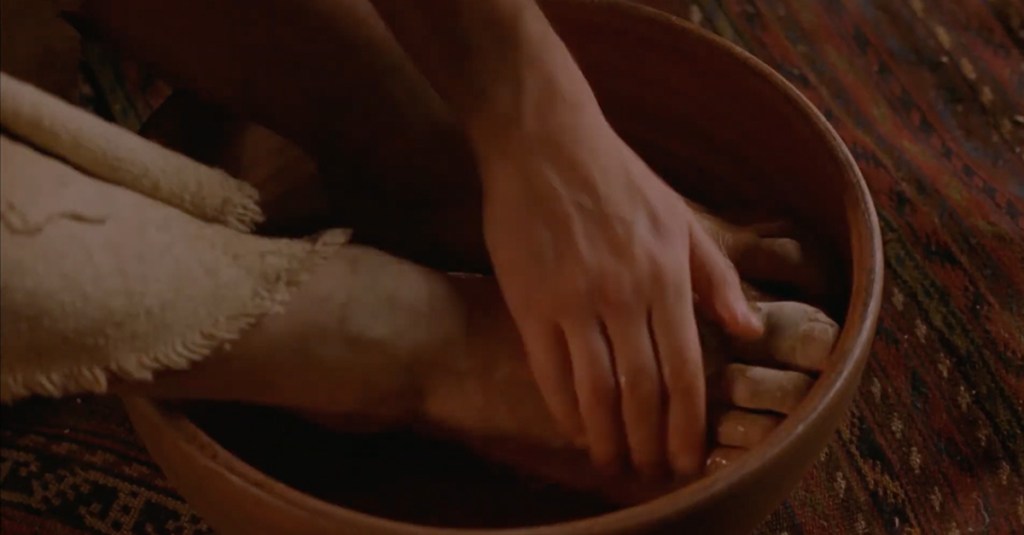
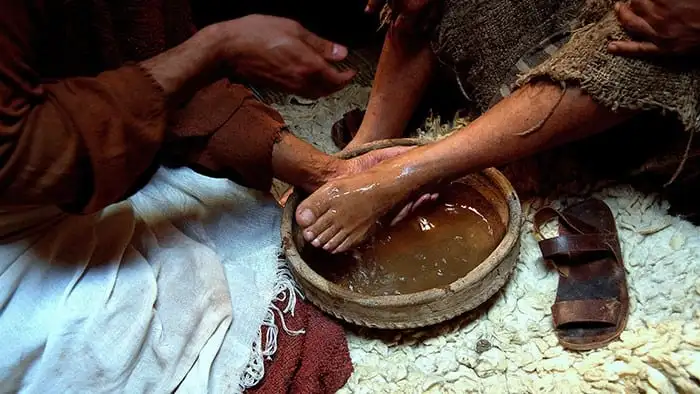
The evening meal was in progress, and the devil had already prompted Judas, the son of Simon Iscariot, to betray Jesus. Jesus knew that the Father had put all things under his power, and that he had come from God and was returning to God; so he got up from the meal, took off his outer clothing, and wrapped a towel around his waist. After that, he poured water into a basin and began to wash his disciples’ feet, drying them with the towel that was wrapped around him” (John 13:1–5).
Understanding the Context of Foot Washing
Was foot washing common in ancient times?
In Jesus’ day, foot washing was a cultural custom and it had cultural importance. It was an actual practice, not a symbolic ritual. Due to the warm climate of this area, it was normal for people to wear sandals or go completely barefoot every day. Foot washing kept homes clean from the mud and dirt outside and became a symbol of hospitality throughout the region.
When you entered someone’s home, there would be a basin to wash your feet, and when multiple people gathered, a servant would be there to wash the feet of guests.
Foot washing was a common practice before a meal. It was customary for a host to have a servant wash the feet of the guests before eating or at least have water available for foot washing. In light of this, it would’ve been a sign of thoughtfulness and respect on behalf of the hosts to set the scene for foot washing before they ate together.
The cultural significance of foot washing was that it marked the sign of both a good host and a clean home.
Other instances of feet washing in the Bible
Foot washing in the Old Testament
We see hints of foot washing in Genesis 18:1-6, when the Lord appears to Abraham, and in Genesis 19:1-2, when the two angels arrive in Sodom to rescue Lot and his family from the city’s destruction. Both sets of visitors are offered water for foot washing as a welcome.
If you’ve read even a bit of Leviticus in the Old Testament, you know that cleanliness and hygiene were important commands from God to the Israelites. There were a host of laws around what was clean and unclean to eat (Leviticus 11), as well as cleansing rituals for women who gave birth and those with skin diseases (Leviticus 12-15).
So it’s not surprising that in Exodus 30:17-21 the Lord instructs Moses to make a bronze washbasin so that Aaron and his sons (the priests) could wash their hands and feet there before offering up special gifts to the Lord. But this particular instance of foot washing for ritual cleanliness is significant.
In the Old Testament, there’s almost always a dotted line between cleanliness in religious worship of God and holiness. If we don’t get caught up in all the detailed rules of Leviticus, we realize that the goal of these rituals and stipulations was holiness before God so He could meet with them. It was the only way the Jewish people could “be holy enough” to commune with God before Jesus became our path to righteousness before God. This tendency toward spiritual cleansing in the Old Testament is a preview of the spiritual significance of Jesus washing the disciples’ feet.
Foot washing in the New Testament
The Bible records two instances in which women washed Jesus’ feet with expensive ointment and their hair; one of these women was Mary.
- In John 12:1-8, Mary, the sister of Martha and Lazarus, anoints Jesus’ feet with costly nard and wipes them with her hair.
- In Luke 7:36-50, a sinful woman (we don’t get her name) washes Jesus’ feet with her tears, dries them with her hair, and anoints them with ointment.
These two passages are separate accounts of two different women performing similar acts. But they center more on the anointing and honoring of Jesus versus the washing of His feet.
When Judas complains in John 12:7 that the expensive perfume should’ve been sold to give to the poor, Jesus notes that the perfume is meant for the day of His burial. Soon after, He enters Jerusalem, holds the Last Supper and predicts His death. While Jesus does point out in Luke 7:44-45 that the host (Simon) gives Him no water for His feet and the sinful woman uses her tears to wash them, we get the sense that her actions are more about a response to His forgiveness.
Why did Jesus wash the disciples’ feet at the Last Supper?
A borrowed room
In the foot washing story in John 13, there was an obvious need. Jesus and their disciples needed to wash their feet, as was tradition, to cleanse their feet before they ate. But there was no host. And there was no servant.
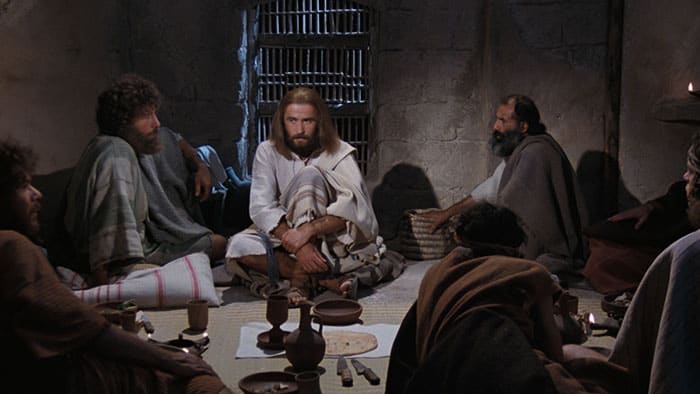
Mark’s Gospel tells us why. The Last Supper, where Jesus washes the disciples’ feet, was a borrowed room furnished for this gathering:
So he sent two of his disciples, telling them, “Go into the city, and a man carrying a jar of water will meet you. Follow him. Say to the owner of the house he enters, ‘The Teacher asks: Where is my guest room, where I may eat the Passover with my disciples?’ He will show you a large room upstairs, furnished and ready. Make preparations for us there” (Mark 14:13–15).
In this borrowed and prepared room, the omission of a servant to wash their feet would have been obvious, and there would have been an uneasiness about sitting down to have a meal without having everyone’s feet washed.
It wasn’t an oversight. But it would have been a glaring issue that everyone was thinking about. It was an immediate, practical need that had to be met before they could celebrate the Passover meal together.
A significant experience
Since we know foot washing was a regular custom in Jesus’ day, what stands out from the foot washing in John 13 was not that it was occurring. What stands out is that this time, a servant wasn’t doing the washing of feet.
The washer was not someone like Mary or the unnamed sinful woman, one of whom had seen Him bring the dead to life and the other grant forgiveness to the unforgivable. It wasn’t even the disciples.
Jesus, the disciples’ teacher––whom many called Master and others recognized as the blameless Messiah––was doing the washing of feet this time. Why? Why then and why there?
Let’s look again at the foot washing event in John 13:1-5:
“It was just before the Passover Festival. Jesus knew that the hour had come for him to leave this world and go to the Father. Having loved his own who were in the world, he loved them to the end.
The evening meal was in progress, and the devil had already prompted Judas, the son of Simon Iscariot, to betray Jesus. Jesus knew that the Father had put all things under his power, and that he had come from God and was returning to God; so he got up from the meal, took off his outer clothing, and wrapped a towel around his waist. After that, he poured water into a basin and began to wash his disciples’ feet, drying them with the towel that was wrapped around him” (John 13:1–5).
John points out a few important contextual details here. Jesus knew that:
- These were some of His final moments with the disciples.
- Judas was about to betray Him.
- He had total authority from God.
It seems to me it was an experience He wanted to leave them with, and in many ways, it was a culmination of so many of the things He’d taught them. It’s clear to me that if Jesus took the time to do this before His death, it meant something.
Spiritual Significance of Jesus Washing the Disciples’ Feet
Jesus washes the disciples’ feet: a picture of salvation
As is often the case in the Gospels, Peter is the first to speak out, likely sharing what some of the others were feeling. He was uncomfortable with what was happening, and Jesus uses the moment to hint at a greater significance—one which they would understand better after His death and resurrection.
“He came to Simon Peter, who said to him, ‘Lord, are you going to wash my feet?’ Jesus replied, ‘You do not realize now what I am doing, but later you will understand.’
‘No,’ said Peter, ‘you shall never wash my feet.’ Jesus answered, ‘Unless I wash you, you have no part with me.’” (John 13:6–11).
Jesus isn’t literally saying, “If you won’t let me clean your feet, you can’t be my disciples.”
As Bible commentator Colin G. Kruse puts it in his commentary, “Such a response by Jesus makes no sense if all that was involved was footwashing.” Like most scholars and theologians, Kruse argues that washing the disciples’ feet was a symbolic act, pointing to a spiritual cleansing that would come later, as the result of another display of humility.
Jesus’ self-humiliation in washing His disciples’ feet symbolized His self-humiliation in accepting death upon the cross to bring about their cleansing from sin.
That’s why Peter had to accept Jesus’ humility. “In this respect, Peter and the rest of the disciples must accept what Jesus did for them, for if they did not, clearly they could have no part with him,” Kruse remarks. “Jesus was saying to Peter that unless he was prepared to accept what he would do for him on the cross, there could be no relationship between them.”
Joseph Dongell puts it another way, connecting the foot washing to the entire purpose of Jesus’ ministry:
“The foot washing first signified salvation offered through Jesus’ death. As Jesus explained to Peter, Unless I wash you, you have no part with me (13:8b). At issue was more than an attitude adjustment for a stubborn disciple; it was acceptance or rejection of Jesus and His redemptive mission as a whole.” —John: A Bible Commentary in the Wesleyan Tradition
Jesus washes the disciples’ feet: a call to sacrificial love
Washing the disciples’ feet was a precursor to the sacrificial love He would soon model on the cross. And Jesus goes on to say that He intends for the disciples to display this same humility and self-sacrifice to others.
While His position made this act of service shocking, it’s also what made it such a powerful model. His parables offer a wealth of wisdom, but His life provides a powerful model of sacrificial love. If Jesus is willing to humble Himself so low for others, how could His followers possibly be above doing the same?
“When he had finished washing their feet, he put on his clothes and returned to his place. “Do you understand what I have done for you?” he asked them. “You call me ‘Teacher’ and ‘Lord,’ and rightly so, for that is what I am. Now that I, your Lord and Teacher, have washed your feet, you also should wash one another’s feet. I have set you an example that you should do as I have done for you. Very truly I tell you, no servant is greater than his master, nor is a messenger greater than the one who sent him. Now that you know these things, you will be blessed if you do them.” — John 13:12-17
Later in the meal, Jesus tells the disciples that displaying this humble, self-sacrificing love is how people will recognize His followers. “A new command I give you: Love one another. As I have loved you, so you must love one another. By this everyone will know that you are my disciples, if you love one another” (John 13:34–35).
Jesus isn’t saying, “Now, go wash everyone’s feet.” He’s saying, “Now, go love people by putting them above yourselves.”
Jesus washes the disciples’ feet: a challenge to love our enemies
Jesus included Judas, His enemy, in this act of love.
Think about it. The entire time Jesus is washing the disciples’ feet, He’s fully aware that Judas is about to betray him (John 13:11). And still, Jesus washes his feet like everyone else’s. He shows the same love and humility toward an enemy—His betrayer—as He does toward His closest friends. Why? Why did Christ wash Judas’ feet in John 13:5?
Earlier in His ministry, Jesus told His followers to love their enemies (Luke 6:27, Matthew 5:43–44). Jesus modeled this love in the way He treated Samaritans (who the Jews would have considered enemies), but in His treatment of Judas here, Jesus shows love toward a much more personal enemy. It’s the embodiment of His words in Luke 6:32–36:
“If you love those who love you, what credit is that to you? Even sinners love those who love them. And if you do good to those who are good to you, what credit is that to you? Even sinners do that. And if you lend to those from whom you expect repayment, what credit is that to you? Even sinners lend to sinners, expecting to be repaid in full. But love your enemies, do good to them, and lend to them without expecting to get anything back. Then your reward will be great, and you will be children of the Most High, because he is kind to the ungrateful and wicked. Be merciful, just as your Father is merciful.”
As we seek to follow Christ’s example, we need to extend our humility toward those who will never return our acts of service, will take advantage of us, and never thank us.
We also need to extend this type of humility to those we don’t agree with or who strongly disagree (sometimes hate) us. We respond with love and humility, not hate or anger. The point is how we treat one another, including those with whom we have differences.
Symbolic Significance of Jesus Washing the Disciples’ Feet
What is the symbolic meaning of the washing of the disciples’ feet? In terms of spiritual cleansing, there’s certainly a clear through line between Old Testament cleansing and feet washing in the new Testament. Can you visualize it?
It’s the thread woven through the cleaning rituals of the Old Testament, to John the Baptist’s call to be baptized with water for repentance (Matthew 3:11-12), and finally to Jesus, the embodiment of every promise to have our sins washed away once and for all. The fact that Jesus washed the disciples’ feet the night before He would wash away the sins of the world is poetically symbolic to me.
Alongside the spiritual connections to the Bible’s main story––redemption through Jesus alone––the foot washing story symbolizes a shift in how the Jewish people thought about themselves in relation to the world and the law.
As with most of Jesus’ teachings, this event asked them to consider the state of their hearts before their status or place in society, their place in God’s eyes when compared to Gentiles, or even how closely they had met the letter of the law.
Jesus’ loving act was a symbol of the posture He wanted His followers to have.
Jesus washing the disciples’ feet: an upending of social status
Throughout the Gospels, we’ve seen the disciples jockeying for positions of importance, and we have watched Jesus remind them that the greatest among them would be a slave (Matthew 20:20–28).
I wonder if the disciples may have been silent about the foot washing (the fact that there was not already a servant there to do it) because they were afraid Jesus would ask them to do it, making them look like the lowest of the disciples.
Jesus lets this tension hang in the air for a while before He quietly begins stripping down to perform the act Himself.
To modern readers, it seems strange that Jesus would strip down to wash people’s feet. But removing His outer garments and wrapping Himself in a towel added greater symbolism and humility to what was already an extraordinary act.
In first-century Jewish culture, it represented a complete reversal of status.
The act of washing someone’s feet had significant implications about the status of the people involved. There were cultural expectations about who would wash whose feet and what that indicated about their relationship.
Bible commentator Colin G. Kruse elaborates on how foot washing traditionally worked:
“Jesus’ action was unprecedented. A wife might wash her husband’s feet, children might wash their father’s feet, and disciples might wash their master’s feet, but in every case it would be an act of extreme devotion. Footwashing was normally carried out by a servant, not by those participating in the meal, and certainly not by the one presiding at the meal. According to later Jewish tradition, a Jewish slave would not be asked to wash people’s feet. That task was assigned to a Gentile slave.” — John: An Introduction and Commentary
In John: A Bible Commentary in the Wesleyan Tradition, biblical scholar Joseph Dongell remarks: “By each of these deliberate actions, Jesus adopted the look and role of a slave.”
Jesus washing the disciples’ feet: an example for leaders
Luke notes that during the Last Supper, the disciples had been bickering about who was the greatest (Luke 22:24–30). Every one of them would have considered Jesus to be the greatest. He was their rabbi, their Lord, the Messiah, and the Son of God.
For the act of foot washing, Jesus didn’t need to go through all the trouble of stripping down and wrapping Himself in a towel, but He was driving home the message. This was more than a lesson about doing nice things for one another. He intended to visually communicate how leaders were to see themselves and the lessons that applied and would apply in the disciples’ ministry as they began to spread the message of the gospel.
Jesus’ washing the disciples’ feet: lessons of servanthood and humility
Servanthood
Through this seemingly simple act, the most high took on the position of one of the most low. Jesus took on the role of a servant to clean the day’s filth from His followers’ feet—even from His betrayer, Judas Iscariot.
Jesus’ actions reveal the character of God and ultimately model servanthood.
I’m reminded of the verses in Matthew 20, just prior to Jesus’ triumphal entry into Jerusalem and ahead of the Last Supper. When the mother of Zebedee asks for her sons to sit at His right and left hand, Jesus is quick to dissuade her, citing that it would require great sacrifice and servanthood.
We read in Matthew 20:25-28:
“Jesus called them together and said, ‘You know that the rulers of the Gentiles lord it over them, and their high officials exercise authority over them. Not so with you. Instead, whoever wants to become great among you must be your servant, and whoever wants to be first must be your slave—just as the Son of Man did not come to be served, but to serve, and to give his life as a ransom for many.’”
The requirement for distinction and a place of honor beside the throne was to serve, not be served. Jesus modeled this for the disciples and us when He washed the disciples’ feet.
Humility
Jesus’ relationship to the disciples and His divine identity made this simple act a radical display of humility. The disciples wouldn’t have even thought to wash each other’s feet, let alone the feet of someone with a lower status than themselves.
In the context of a shared meal and these relationships, Jesus taking on this menial task represented a profound act of humility. Not only did He do work that would have been expected of the lowliest slave or servant, but He took on the appearance and posture of one as well.
Jesus goes the extra mile, which wasn’t out of character for Him. In the Sermon on the Mount, Christ prods us to do more. Jesus says: “And if anyone wants to sue you and take your shirt, hand over your coat as well. If anyone forces you to go one mile, go with them two miles. Give to the one who asks you, and do not turn away from the one who wants to borrow from you” (Matthew 5:40-42).
I might not have taken that extra step myself. This makes me consider that I should not only pursue humility. This tells me that the inklings within me to set myself and my desires aside are Christlike. I should listen and act on them more than I do.
Are Christians supposed to wash one another’s feet?
If you’ve been in the Catholic church, you know that traditionally the Pope washes and kisses others’ feet. Certain denominations practice this ritual today during Holy Week.
This may make you wonder: Is foot washing a sacrament? If so, why don’t most modern churches practice foot washing?
Dongell says in his Wesleyan commentary on John, “First, while little harm and much good may come from the practice of foot washing as a Christian sacrament or edifying symbol, the interest of Jesus clearly lay in the larger arena of life and service.”
Dongell remarks that foot washing is fine in itself, but as followers of Christ, we should really see this as a broader lesson on what Christian service looks like.
Jesus consistently challenged norms and revealed a better way to live. Every interaction He had with others helps us discover more about who He is, what He is capable of, what the kingdom of God looks like, and how we should live in light of that.
You could choose to wash your Christian brother’s or your Christian sister’s feet, and it would be a show of kindness, but it would not serve to symbolize what Communion might, for instance. Communion is a sacrament that Jesus asks us to do in remembrance of Him (Mark 14:22-25, Luke 22:18-20, 1 Corinthians 11:23-25).
What foot washing can look like today
Are we meant to wash people’s feet today to replicate what Jesus did?
In Dongell’s Wesleyan commentary on John, he reflects on Jesus’ intended message: “To do as I have done will take the disciple down unpredictable pathways where no water or towel will be in sight. Surely the Spirit of truth will guide the disciple in learning to develop the character and behavior which most beautifully embodies the example of our Lord.”
As modern-day followers of Christ, not only will we find ourselves in situations “where no water or towel will be in sight,” but the cultural significance of foot washing may not be there either.
Here’s what foot washing can look like today:
- Paying for a friend’s or a stranger’s lunch
- Allowing someone to pass through first on a crowded road
- Making a meal for a sick co-worker or a mother who has just given birth.
Simply put, acts of kindness can be our form of foot washing.
What does it mean to be a Christian servant today?
Following Christ’s example in John 13 requires us to recognize our modern social settings and place ourselves on the bottom rung, through our actions and our posture. To provide clear-cut ways for Christian servanthood is to restrict opportunities for servanthood, which will vary with our circumstances.
Our first steps should be to pursue an attitude of humility and positions where we can serve. For leaders, this means not always being the head, in the lead, or in the spotlight. For some of us, being a Christian servant is doing the small, menial tasks or the hard labor that often goes unseen or unrecognized, but that serves a greater objective.
What’s coming up for you as you think about what might be the best way for you to be a Christian servant today?
The Lesson of John 13:1-17
Jesus frequently demonstrated extraordinary humility and servant leadership. Washing His disciples’ feet was an example He expected His followers, us, to emulate.
We should humble ourselves to demonstrate His love. We should long to practice both servanthood and humility. His sacrificial love is unlike any we’ll ever be able to show or experience, though we can try. We’re meant to model it for others, but above all, point to that unmatched, sacrificial love as we share the message of the gospel with everyone, everywhere.

About the Author