
Evangelism and Church Planting: Holding Them Together

Related Posts


Subscribe To Our Weekly Newsletter
Sign up for our weekly newsletter, Jesus Film Project News, to receive encouraging stories, videos and resources in your inbox.
I have been involved in evangelism for many years as a staff member with CruⓇ and Jesus Film ProjectⓇ, including church planting on mission trips to other countries.
Even with those experiences, I know I am still learning how deeply evangelism and church planting truly belong together. I’m always eager to hear from leaders who have lived that connection in ways I haven’t.
Recently, I had the privilege of sitting down with Gabor Gresz to talk about his testimony, his life and his ministry. Gabor is the executive director of Cru Church Movements, as well as an author and speaker.
As we talked, it struck me how clearly his story reflects the deep connection between evangelism and church planting. What we as Christians often describe in theory, Gabor has lived in practice.
His journey reminds us that this work is not abstract. It is personal, powerful and exciting.
Understanding Evangelism
Evangelism is the intentional sharing of the good news about Jesus—His life, death and resurrection—with a loving invitation to respond in faith. Jesus calls us to make disciples, and we answer by telling people about forgiveness, new life and the presence of God.
Gabor Gresz shared some of his personal story with me. We talked about his testimony, his early years following Christ and the ministry journey. These are the moments that led him into evangelism and church planting. His experiences bring powerful clarity to the connection between gospel sharing and the formation of healthy, multiplying churches.
Gabor grew up in Hungary and had never heard the gospel as a child. At fourteen, he had his first encounter with a Christian. Soon after, Gabor trusted Christ and joined an underground church. Gabor’s life changed immediately when he encountered the love of Christ. He wanted to share that hope with everyone he met.
There were no Christian bookstores. Gabor used his typewriter to type and retype gospel materials. Due to government restrictions, he did this secretly and passed out the sheets to others discreetly.

Evangelism wasn’t an event. It was a passion and an act of courage.
At eighteen, missionaries trained Gabor to share his faith clearly and simply. He told me that training changed everything. He moved from honest belief to bold witness. He began sharing Christ even when it cost him. Authorities searched his home. He was kicked out of his school. And yet the gospel continued to spread. You can read more of his inspiring life story in his book The Outrageous Promise.
His story reminds us that evangelism is not about polished presentations. It’s about faithful people who love Jesus and love others enough to share the gospel.
In our own contexts, it may not look as dramatic—but the heart is the same. We fuel our own evangelism through prayer. We build trust with others by being hospitable, providing a listening ear and investing in everyday relationships. The personal conversations we have with others, our testimonies and the way we use Scripture all contribute to our witness for Christ.
- For this is what the Lord has commanded us: “I have made you a light for the Gentiles, that you may bring salvation to the ends of the earth.” Acts 13:47, (New International Version)
- For I am not ashamed of the gospel, because it is the power of God that brings salvation to everyone who believes: first to the Jew, then to the Gentile. Romans 1:16 (NIV)
- How, then, can they call on the one they have not believed in? And how can they believe in the one of whom they have not heard? And how can they hear without someone preaching to them? And how can anyone preach unless they are sent? As it is written: “How beautiful are the feet of those who bring good news!” Romans 10:14-16 (NIV)
We’ve also seen how God uses broader tools—events, films, social media, broadcasts—to reach people we may never meet otherwise. After the government in Hungary changed in 1989, Gabor and others were free to share their faith and be involved in Christian ministry. Gabor helped lead large-scale evangelistic initiatives in public schools. Over 700,000 students watched the JESUS film in classrooms! Many of them chose to put their faith in Christ.
But something quickly became clear.
Evangelism alone was not enough.
When Evangelism Leads to Church Planting
As Gabor described those years, he shared a turning point. New believers were responding—but most of them had no church home. Campus ministry and film outreach sparked faith, but people needed a spiritual family.
That’s when his focus began to shift toward planting churches.
What is church planting?
Church planting is the formation of new, Bible-centered, locally-led congregations that gather for worship, discipleship and mission. Evangelism gathers people to Christ. Church planting gives them a place to belong, be discipled, get baptized and eventually be sent out to reach others.
Gabor said something simple but profound, “Every ministry in the New Testament ends in a church.”
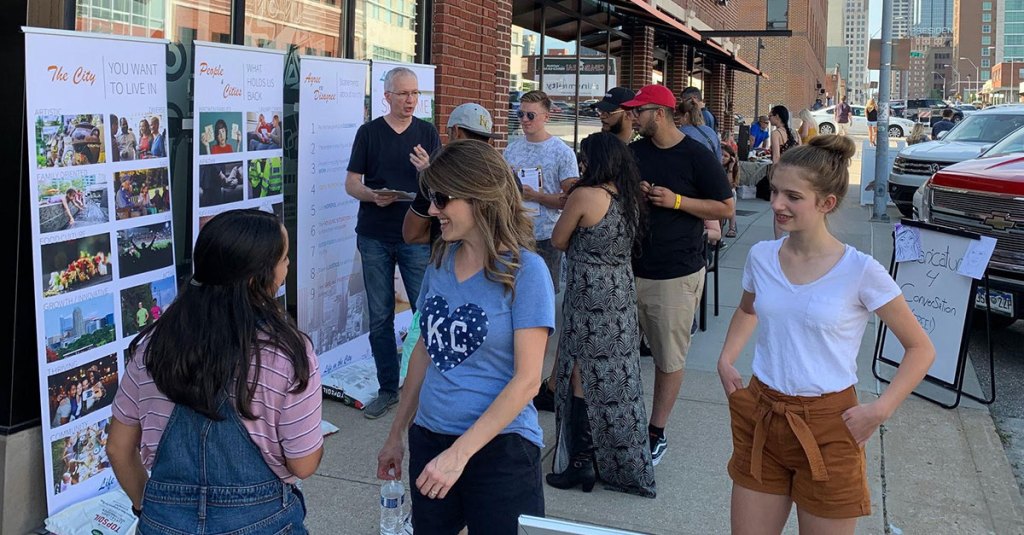
The more I reflect on that, the clearer it becomes. Outreach without community leaves people feeling alone. Community without outreach loses its purpose. We need both.
Healthy church plants grow through a thoughtful and wise process:
- We begin with prayer and listening. We try to understand the community and its needs.
- We gather a core team with a shared vision.
- We clarify our mission and values.
- We focus on evangelism and discipleship.
- We train leaders.
- We establish structures of care and multiplication.
- We keep Scripture and the needs of the community at the center.
None of this happens instantly. The process unfolds as we take each step–slowly, often imperfectly, but always in dependence on God.
Keeping Evangelism Central
One of the things Gabor has observed both internationally and in the United States is how easy it is for evangelism efforts to diminish once a church is established.
We often start excited and enthusiastic for outreach. But eventually, the needs inside the church demand more of our focus. While discipling and pastoring are vital, the church will cease to grow without a focus on reaching out and bringing more people in.
Gabor often talks about cultivating an “apostolic mindset.” By that, he doesn’t mean abandoning pastoral care. He means keeping our eyes on the people and places where the gospel has not yet taken root.
“Every ministry in the New Testament ends in a church.”
Gabor Gresz
He cultivates the partnership between evangelism and church planting. When he was talking about the churches he has planted, he said, “It’s in their DNA that they are going to plant another church and another church.”
As church planters, we might ask:
- Where are the spiritual needs in our city?
- Who remains unreached in our neighborhoods?
- Where is the gospel not spreading naturally?
When we hold those questions in front of us, church planting and evangelism stay intertwined.
Training Ordinary Believers
As we talked, another theme surfaced: most believers genuinely want to share their faith—but many feel unequipped.
Gabor told me about an elder who once said, “I have followed Jesus for thirty years, and no one ever showed me how to share my faith.” Gabor was the only person who ever took this man out to do some evangelism. It was life-changing for the gentleman.
We’ve probably met people like that. We may have even felt that ourselves.
So much of this work comes back to training and modeling. Gabor described what he calls a cojourner approach. We walk with people on their spiritual journey. We join with them as they walk their life of faith.
Gabor offered practical advice to leaders by saying:
- We explore by asking thoughtful questions and listening for longings and wounds.
- We guide by sharing the gospel clearly and simply.
- We build by helping address doubts and obstacles.
- We mentor by walking with new believers toward maturity and leadership.
It’s a movement from “lost to leader” where we walk with people through evangelism, into follow-up and into spiritual maturity. And when we see ordinary believers gain confidence, the “sleeping giant” of the church begins to awaken.
Community Engagement That Feels Natural
Both in Gabor’s experience and in mine, we have seen that we cannot rush community engagement. It grows as we show up and listen.
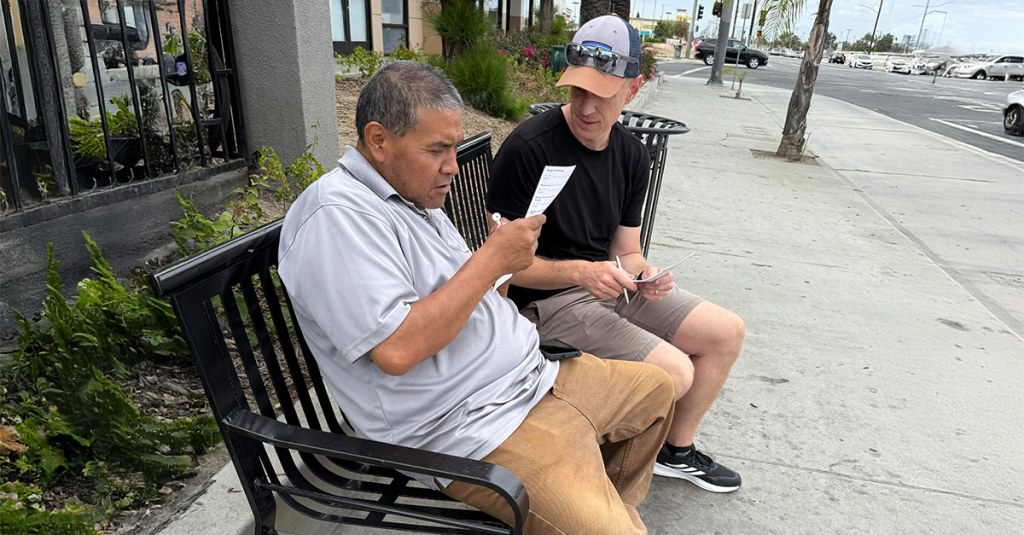
Some of the most meaningful moments in church planting come from paying attention. We can learn what programs and resources already exist in a neighborhood and partner with people who care deeply. Then we serve in ways that meet real needs.
- Mentoring
- Food distribution
- Language support
- Shared meals
- Community events
Gabor shared how each phase of the church plant has a life of its own. Evangelism sparks curiosity. Community creates belonging. Discipleship deepens faith. Multiplication extends reach.
He sees this pattern again and again. The focus on multiplication of faith is foundational to Gabor’s church-planting efforts. Spiritual multiplication is the process of making disciples who, in turn, make disciples. Then spiritual growth and gospel impact expand beyond a single person or ministry.
Facing Challenges Honestly
We don’t romanticize this work.
Resources can be limited and leaders can grow tired. Cultural misunderstandings happen. In some places, skepticism or restrictions slow progress. Urban and rural contexts bring different complexities.
Through it all, we find ourselves returning to prayer and dependence upon God. We pray through these trials to bring our needs and limitations honestly before Him. We ask for wisdom, endurance and faith when the work feels heavy.
Sometimes God changes the circumstances. Other times He strengthens those who are laboring in them. In every season, He provides what is needed. As we rely on Him, we are reminded that the work is not ours alone to sustain.
With God, even what feels impossible becomes possible through His presence.
Looking Ahead with Hope
Despite real challenges, Gabor is hopeful.
He sees spiritual hunger growing, especially among younger generations who are searching for meaning and authenticity. He believes smaller gatherings and home-based communities may increase. He sees believers waking up to their role as ambassadors for Christ.
When ordinary Christians are trained and encouraged, they begin sharing their faith naturally in workplaces, neighborhoods and friendships. When church plants are built with multiplication in mind, reaching out and discipling become parts of that church’s culture.
Church planting and evangelism are not two separate strategies. They are one shared calling. We reach out with the gospel. We gather people into our community. We disciple them. We send them. And by God’s grace, we begin again.
We’re in this together—learning, adjusting, praying and trusting that He will continue building His church.

About the Author