
Captivity, Courage and the Legacy That Followed. Meet St. Patrick the Evangelist

Related Posts


Subscribe To Our Weekly Newsletter
Sign up for our weekly newsletter, Jesus Film Project News, to receive encouraging stories, videos and resources in your inbox.
When I was a little girl, March 17 meant one thing at my school: if I wasn’t wearing green, I was getting pinched. St. Patrick’s Day never held much meaning for me—I’m not Irish, and it just felt like a fun tradition.
Looking back, I find it surprising that I attended Catholic school and don’t remember ever learning the story of St. Patrick. In hindsight, that feels like a missed opportunity.
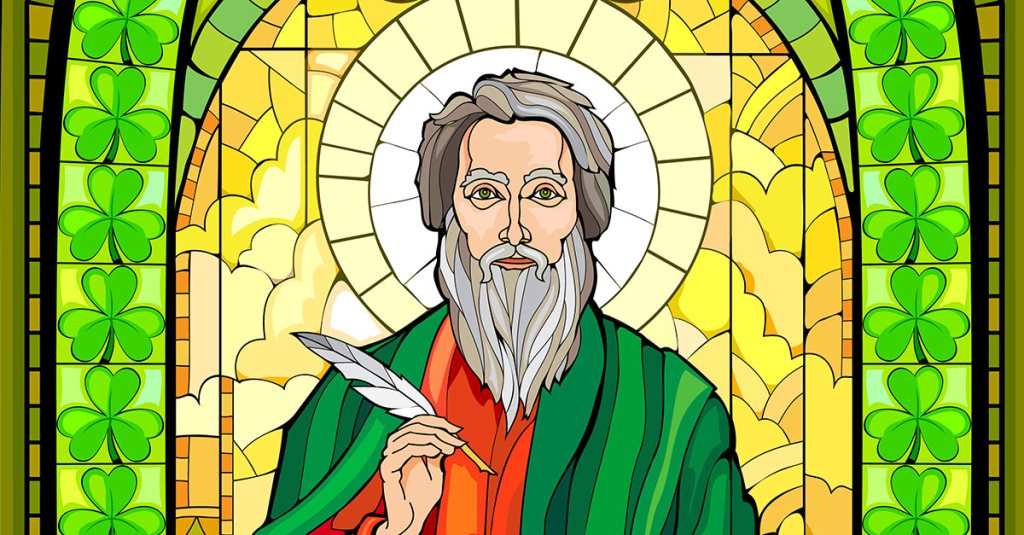
In the United States, when we hear the name St. Patrick, we often picture parades, shamrocks and the color green—because of the annual national holiday, St. Patrick’s Day on March 17. But there is a deeper Saint Patrick story that can help shape how we think about evangelism and mission.
St. Patrick the evangelist was a man who loved Jesus and brought the gospel to people with courage and clarity. St. Patrick’s story offers practical wisdom for evangelism, community building and expectant prayer. We also answer common questions like:
- Who was St. Patrick of Ireland and what did he do?
- Did St. Patrick bring Christianity to Ireland?
- Why is St. Patrick important to church history and evangelism today?
The Life of St. Patrick
To understand St. Patrick’s Christian witness, we start with his background. Behind every legend is a real person. St. Patrick was no different.
St. Patrick was born in Britain in the late fourth century. His Latin name, Patricius, tells us he came from a family with some status.
Early sources say his father served as a deacon and his grandfather as a priest. Patrick later described himself in his youth as spiritually indifferent. He knew the language of faith, but he did not live by it.
Many of us can relate to that kind of drift. We all have seasons when faith feels distant and routine. Yet God uses hardship to awaken us. Patrick’s life shows how suffering can cultivate a resilient, prayerful heart.
At sixteen, Irish raiders captured Patrick during an attack on coastal Britain. He was trafficked to Ireland and enslaved as a herdsman.
Those lonely years changed him. He spent his days hungry, thirsty, cold and alone in the wilderness as he herded the sheep.
During those trying days, he prayed often. He wrote that God softened his heart and opened his eyes. This reminds us that prayer often grows in places of fear and need. Patrick discovered dependence on the Lord.
After working in servitude for about six years, Patrick escaped. He described a dream that directed him to find a ship. The Torchlighters blog describes Patrick’s escape:
“Patrick escaped on foot, fleeing two hundred miles to the coast where the ship bound for his homeland waited. After persuading the captain to take him along, getting lost in the British wilderness, and convincing the crew to put their faith in God, Patrick finally returned home.”
When Patrick got off the ship, he didn’t return home right away. Instead, he made his way to a monastery in France. There he deepened his prayer and biblical study. He also joined a community of believers who helped him in his faith journey.
Later on Patrick reunited with his family. He described visions that called him back to Ireland—the land of his captivity. People encouraged him to be cautious, but he sensed a direct call from God to preach Christ to those who were largely outside the Christian faith.
St. Patrick prepared for ministry, listened to God’s leading and returned to Ireland not as a victim, but as a witness of Jesus. He went back as an evangelist.
Did St. Patrick bring Christianity to Ireland?
While he did not act alone, St. Patrick did play a decisive role in establishing and expanding Christian communities across Ireland. As a result St. Patrick’s ministry along with other missionaries, Ireland went from a pagan tribal culture to a predominantly Christian country.
As his next step, St. Patrick was ordained as a bishop. Then he returned to Ireland with a posture of reconciliation and humility. He went as an evangelist and a pastor.
St. Patrick soon began to preach the gospel publicly and form communities for worship, discipleship and service. From the very beginning, he made it a point to explain the message of Jesus in ways Irish people understood.
This is something that we can apply to our own lives. We can relate to people on things that are important to them, and connect those things to the message of Christ.
Patrick combined clear proclamation with cultural understanding and practical care.
Even in the early days of his story, in St. Patrick, we see a man transformed by grace and immediately living it out. God redeemed his past pain (his captivity) and turned it into a mission of love for the very people who once enslaved him.
In this way, St. Patrick’s life encourages us to see our own stories as places God can heal. When we share our faith, we can draw from both Scripture and our own story of God’s mercy. The story of St. Patrick shows that the gospel speaks into real lives and builds communities rooted in Christ.
Calling: Returning to the Place That Broke Him
It might be good to recall that St. Patrick was originally from coastal Britain. He lived in Ireland for six years as a result of his capacity. After being home for a time, he returned to Ireland—this time as a missionary.
The first time he went to Ireland, St. Patrick was herding animals as a slave. This time he chose shepherding people toward a love for Christ.
This is important, because even as an outsider, St. Patrick arrived in Ireland with courage and clarity.
The Fire that changed Ireland
According to tradition, Saint Patrick lit a fire on a hill to celebrate Easter, even though the king had ordered that no one light a fire before his own special one.
In that culture, lighting a fire was a big deal. It showed power and leadership. So Patrick was making a bold statement with his action. It showed that he believed God’s light was greater than any earthly ruler, and it became a turning point for Christianity in Ireland.
His focus on relationships and culture
Proclamation became St. Patrick’s primary mission in the first steps of his journey. Using a fire wasn’t the only way that he connected their cultural beliefs to this new faith in Christ.
Patrick spoke about the resurrection and its power to free people from fear, sin and death. He spoke plainly, trusted God’s presence and engaged people where they were.
In fact, as we study the St. Patrick story, we notice that he traveled across Ireland and focused on proclamation but lead with relationships and leaned into culture.
He met with chieftains and formed alliances with local communities. He preached in public spaces. He learned local customs and rhythms. He used familiar images to explain Christian teaching.
Through it all, he relied on Christ’s presence and protection. He strengthened new believers to stand firm. He refused to depend on charisma or force.
Through the shamrock tradition, Patrick connected doctrine to everyday experience. Britannica states that St. Patrick likely used the three-leaf clover, which was common to the Irish landscape, to describe the three persons of the Trinity—God, the Holy Spirit and Jesus Christ, the son.
This reminds me of how Paul used the “altar to an unknown God” to preach to the Gentiles in Acts 17:22-28. Like Paul, Patrick used contextual language to relate to his audience.
In doing so, St. Patrick was able to highlight the Trinity, the cross and new life in Christ in a way that was easy to understand.
Lastly, he treated people with dignity and served their needs. And it certainly paid off. His humble posture earned people’s respect. People listened, and many responded.
St. Patrick the evangelist—compassion and community
Wherever he went, St. Patrick used his sensitivity to people and culture as a stepping stone to building and multiplying communities of faith.
The story of St. Patrick the evangelist includes accounts of several people coming to Christ across regions. While later retellings added legend, the core themes remained consistent:
- St. Patrick preached Jesus,
- Many listeners believed,
- The new followers studied Scripture with Patrick,
- New communities prayed, worshiped and practiced mutual care.
One major key to this process is that St. Patrick emphasized compassion. He pointed people to repentance, baptism and daily discipleship. He built patterns for long-term growth by planting churches and training leaders all over the country.
We can encourage this type of community in our own churches. Just by staying after church and connecting with others, we build deeper friendships. We can encourage our fellow Christians to live more fully for God.
Why is St. Patrick important to modern-day Christians and Christianity?
When we answer the question, did St. Patrick bring Christianity to Ireland, we point to his strategy and it’s what leads us to a resounding “yes.”
St. Patrick brought a well-rounded version of Christianity to Ireland that closely resembled the model of the early church in the Bible, and the model most prevalent in modern-day Christianity today. He established churches, schools and monastic centers—local hubs of worship, teaching and outreach.
He appointed bishops and clergy to shepherd new congregations. He practiced evangelism and church planting across Ireland. Monks and nuns gave themselves to prayer, study and service. These centers copied Scripture and cared for the poor.
We see why St. Patrick is important, not just to history but to the story of Christianity. He helped shape an Irish Christian identity that valued community and mission.
Let’s be honest. St. Patrick’s drastic efforts to bring Christianity to the forefront in Ireland did not go unchallenged. St. Patrick reports in his writings that he received threats, was betrayed and faced resistance from spiritual and political powers. But he stayed rooted in prayer. When we read the Breastplate prayer associated with him, we sense St. Patrick’s posture of trust before God in the face of the trials that came his way.
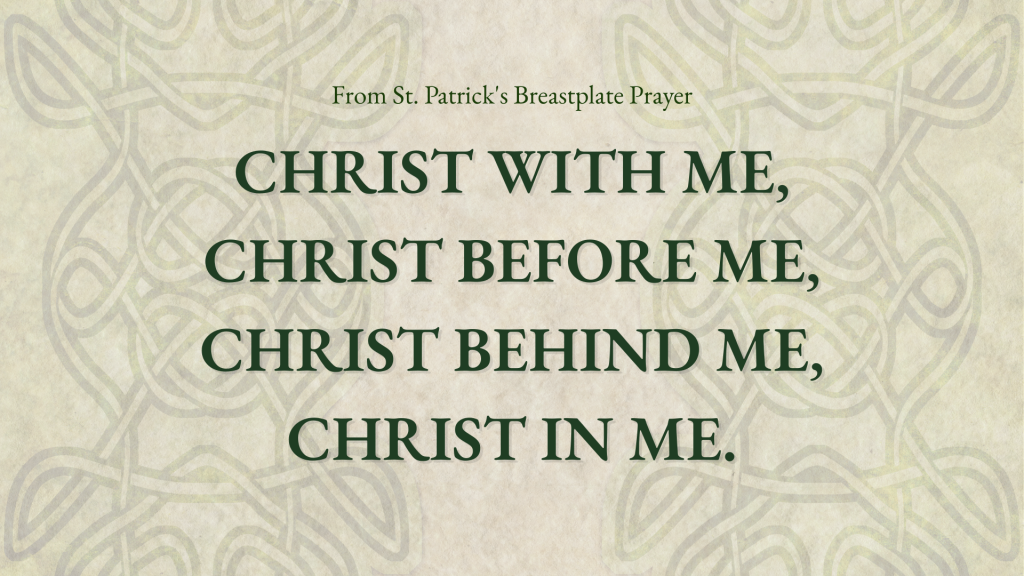
Through it all, he relied on Christ’s presence and protection. He strengthened new believers to stand firm. He refused to depend on charisma or force. He relied on God’s power.
As a follower of Christ today and as a Christian leader, this reminds me of all the ways I can emulate St. Patrick in my ministry:
- I want to stayed rooted in prayer.
- I want to maintain a posture of trust before God. I will rely on God’s power
- I will rely on Christ’s presence and protection.
- I want to build patterns for long-term growth rather than one-time events.
- I will strengthen new believers to stand firm.
Legacy: How One ‘Yes’ Reshaped a Nation
St. Patrick answered God’s call to return to a nation that had enslaved him. He said yes to the calling. This couldn’t have been an easy choice for him. But he chose obedience and it resulted in his Christian legacy.
We can trace St. Patrick’s enduring effect through the transformation of Ireland over subsequent generations. His understanding and expression of the Christian faith took root and shaped moral vision, education and social life. This occurred in quite a few ways.
During St. Patrick’s lifetime and long after, monastic centers preserved biblical texts and classical works, valuing these preservation efforts likely more than they had before. Irish Christians contributed to worship, art and mission. This Museum article explains that in the fifth century, the newly founded Irish Catholic Church had a strong influence on art. The church required skilled metalwork and beautifully crafted pieces to be used in worship, which helped shape the art of that time.
St. Patrick prepared for ministry, listened to God’s leading and returned to Ireland not as a victim, but as a witness of Jesus. He went back as an evangelist.
The Irish church sent evangelists to Scotland, northern England and continental Europe. This movement was outwardly focused and evangelistic.
We see Patrick’s principles reflected in modern evangelism. He communicated the gospel in ways people understood. This is a great need today and a common approach to evangelism, especially across cultures. He built communities rather than leaving new Christian believers alone, the idea behind a popular and important ministry strategy today: missional communities.
He soaked ministry in prayer and depended on the Spirit’s work. He lived with integrity and humility among the people he served. This is a good challenge to me in my Christian faith. I want to live a life like this, and to leave a mark like this. Who wouldn’t?
The History Channel says that while St. Patrick has been regarded as a saint since at least the 17th century, he was never canonized as a Catholic saint. This was simply due to the era in which he lived.
Here are practical ways we as Christian leaders can apply Patrick’s model of life and faith:
- Pray often. We seek God’s guidance and strength for conversations and decisions. We pray for protection and fruit.
- Lead with love and listening. We ask questions and hear stories. We respect people’s culture and experiences.
- Practice hospitality and compassion. We serve the poor, the lonely and the marginalized.
- Share the gospel clearly and courageously. We explain Jesus’ life, death and resurrection and invite thoughtful responses.
- Build communities. We connect new believers to local churches and small groups for worship, learning and service.
- Train and multiply. We teach Scripture and equip leaders to share their faith in their circles.
The Cultural Impact of St. Patrick
Over time, Patrick’s story grew beyond missionary testimony into a cultural symbol. St. Patrick’s Day, observed on March 17, began as a religious feast marking the day of his death. Later it became a celebration of Irish heritage.
According to the History Channel’s blog, the popularity of St. Patrick’s Day in the United States began with a large Irish-American parade held in lower Manhattan in 1762. The celebration grew even more in 1845 as a wave of Irish immigrants arrived in America.
By the 20th century, the holiday had evolved into a widely celebrated day of festivities embraced by Americans of all backgrounds. Nowadays, St. Patrick’s Day is all about wearing green, celebrating with friends and even getting your nails done in festive shamrock shades to join in the fun.

Churches use the day to worship and reflect on St. Patrick’s life and mission. Cities host parades and events. Music and food contribute to public festivity.
We often hear about symbols connected to Patrick. The shamrock, also known as the three-leaf clover, is the most familiar. Tradition says St. Patrick used the three-leaf clover to explain the Trinity—one God in three persons. Thanks to St. Patrick, we’re reminded that using familiar images makes biblical truths accessible and relatable.
Resources for Further Learning
We grow in our understanding when we combine history with practice. If you would liketo study Patrick’s life further and learn evangelism methods, these resources will help.
Books and Articles
- The Confession of St. Patrick. These are St. Patrick’s short writings —his theology, call and priorities. They show his dependence on God and pastoral care.
- St. Patrick of Ireland: A Biography by Philip Freeman. This is a reliable overview that evaluates sources and separates legend from probable history.
- Patrick: Son of Ireland by Stephen R. Lawhead. Enjoy this historical novel for emotional contours of St. Patrick’s life and mission and pair it with the primary, historical texts above for balance.
Why St. Patrick Still Matters
As followers of Christ, we can look to Patrick’s witness and find encouragement for ministry, especially if you’re a ministry leader who wants to serve with clarity and integrity. His life shows the power of prayer, the importance of clear teaching and the fruit of community formation.
His mission demonstrates how contextual communication and compassionate service support faithful proclamation.
We can use St. Patrick’s example to sharpen our faith. Let’s follow his example to pray often, speak clearly, serve our neighbors and build faith communities. We should also train leaders who multiply care and keep the focus on Jesus.
Patrick did not seek status but faithfulness. He spoke the gospel to a people who had once held him in bondage. He loved them. He built churches and centers of prayer and learning. He trained leaders to carry on the work.
I’m amazed when I consider that God transformed a captive slave into an evangelist and a builder of communities. This is so powerful when we think about follow-up in evangelism, and not just what pastors and evangelists do. Every Christian believer, from pastors to layleaders, to everyday churchgoers, should pray for and care about people, proclaim the gospel and follow up in community.
The story of St. Patrick invites us to step forward with courage and humility and trust God with the results.

About the Author