
Child and Youth Evangelism: Guiding Young Hearts Toward Christ


Related Posts



Subscribe To Our Weekly Newsletter
Sign up for our weekly newsletter, Jesus Film Project News, to receive encouraging stories, videos and resources in your inbox.
How old were you when you came to know Jesus? I was young. I was in my teens. God used that decision to trust Christ and has allowed me to leave a legacy in ways I never expected. That early beginning reminds me that faith planted young can grow into a life that influences many others.
Many great Christian leaders trusted Jesus when they were very young. James Dobson, a Christian psychologist and author, said yes to Christ at just three years old. Corrie Ten Boom, who helped Jews escape the Nazis, became an active believer when she was five.
Henrietta Mears was a Christian writer, speaker and teacher. She mentored Bill Bright, who went on to start CruⓇ (Campus Crusade for ChristⓇ), the parent organization of Jesus Film ProjectⓇ. Henrietta decided to follow Jesus at seven after attending an Easter church service.
Each of these powerhouse Christians started their faith journey at a very young age. Their faith in Christ began through child and youth evangelism. Their early choices show how powerful sharing Jesus with young people can be, and how it can shape a lifelong impact for God’s Kingdom.
Engaging Young People in Child and Youth Evangelism
If you’ve spent time in church, you’ve probably heard about sharing the gospel with the next generation. But what does that look like, practically, for kids and teens? Child and youth evangelism is simply helping young people encounter Jesus in ways they can understand and embrace.
I came to Christ as a teen through Cru High School. Stephanie Cooksey would invite students to Burger King after school and share the gospel with them. It was there, in those simple conversations, that I first began my relationship with Jesus.
At first, I didn’t get involved in the ministry. I was busy with gymnastics, cheerleading, and dance, and I didn’t make time to grow my faith right away. About two years later, a friend invited me to a Bible study.
There, a mentor named Kim Wanamaker (nee Duebber) encouraged me to read the Bible every day on my own—a practice I had never tried before. Spending time in God’s Word changed my heart and helped me fully commit myself to Jesus. My own journey shows how early guidance, patient mentors and small steps can help young people grow in faith.
In this guide, I’ll provide practical advice about this unique kind of evangelism, including youth evangelism strategies and child-focused resources. I’ll also share ideas for creating a safe, welcoming community where faith can grow.
Whether you’re a parent, volunteer, teacher or pastor, you can help create a place for youth and evangelism.

Understanding Child and Youth Evangelism
Evangelism is sharing the good news of Jesus with others. As Christians, we are all called in Matthew 28:18-20 to make disciples, or followers of Jesus. Evangelism is the beginning of that process.
When Christians like us engage in youth evangelism, we help young people meet Jesus. We can do this well through clear teaching and by building real relationships with the young people we are serving.
We can help children and teens grow in their faith by showing them how to participate in Christian community through listening, praying, learning and responding over time. Being an example to kids through our faith stories encourages young believers. Kids and teens grow when they see faith lived out consistently. God works through us when we focus our efforts on youth and evangelism.
With every Bible story I share at children’s ministry, I bring it back to Jesus.
Scripture shows us the importance of reaching the young with the gospel.
- Jesus welcomed children and blessed them (Matthew 19:14).
- Timothy’s faith was formed from childhood (2 Timothy 3:15).
- Jesus taught with stories and images that anyone could understand. This includes the parable of the Good Samaritan in Luke 10:25–37 and the parable of the sower in Luke 8:4-15.
These examples guide child and youth evangelism today. As we share the message of Jesus with young people, we should keep that message clear, relational and rooted in God’s Word.
Young people face constant noise—social pressure, identity questions and cultural change.
Effective youth evangelism helps students apply God’s truth to real-life choices. As young people become more like Christ, they can have a positive effect on their families, schools and communities.
Effective Strategies for Evangelizing Children and Youth
At my church, I serve in the children’s ministry. My fellow volunteers and I try to be caring, patient and rooted in Scripture. We have a lot of fun with the kids, while also connecting deeply and sharing the love of Jesus with them.
We invite children to explore faith questions and respond with honesty. This helps them see that the good news of Jesus speaks to their everyday lives. We help them see how faith relates to every part of their lives—their friendships, choices, fears and hopes.
Having served in children’s ministry myself, I’ve seen that the most effective way to share the gospel with young people is to start with a story.
Bible Stories
When sharing a story from the Bible, children don’t easily make the connection to Christ and the gospel. We try to focus on making that connection with them. At my church we share the overall biblical narrative of creation, fall, redemption and restoration. We bring the focus back to Jesus—His life, teachings, death and resurrection.
For example, when teaching young children the story of Noah (Genesis 6:9-9:28), don’t focus only on the ark and animals. Connect the story to salvation and Jesus. The ark shows how God saves and protects His people, pointing us to Jesus, our ultimate Savior.
Likewise, when sharing David and Goliath (1 Samuel 17), relate the excitement of the story to the saving truth found in Christ. David defeating Goliath reminds us that trusting God gives us strength to face challenges. Jesus also guides us through our life’s struggles. These are essential truths to share with children as we teach them what it means to follow Christ.
I give those two stories as examples. With every Bible story I share at children’s ministry, I bring it back to Jesus. This is how we share the gospel with young people. And of course we always use age-appropriate language, inviting questions and honest reflection.
Real-life Experiences
I try to connect the gospel to real-life experiences like friendship struggles, anxiety and fears. I’ve found this makes child and youth evangelism more relatable and memorable.
- Separate into small groups or mentoring pairs for further discussion.
- Initiate service opportunities so students can see faith in action.
- Invite parents and caregivers. Equip families to continue conversations at home with devotionals and prayer guides. When home and church partner together, youth evangelism strategies gain depth and durability.
Ensure a Safe Space
Creating a safe space for kids starts with careful volunteer screening and training. At my church, every volunteer undergoes a thorough background check. We also receive clear guidance on appropriate boundaries when working with children.
By equipping leaders with knowledge and accountability, we set them up for success. This helps ensure that kids can explore faith in a secure and nurturing environment.
Resources for Child and Youth Evangelism
Good tools and ministry resources can help make evangelism effective and relevant. Many ministries offer resources you can use for child and youth evangelism.
Cru offers help with high school ministries and more. Childrensministry.com offers Bible lessons, activities and resources. Lifeway has multiple online curricula offered for working with children.
Short Films and Clips
Jesus Film Project offers an array of ministry media to equip you to evangelize to children and young people. Explore films and video clips available on the Jesus Film webpage.
- StoryClub Lessons turn children into active participants in God’s Story, not just observers. StoryClubs use 13 Bible stories and video clips from The Story of Jesus for Children. They create an interactive space where kids can grow closer to Jesus.
- The Story of Jesus for Children is an hour-long film that can be used as a child evangelism resource. You can use this in classes, camps and outreach events. Use the discussion questions included on the page after the film.
- Short-form video series help leaders highlight themes like forgiveness, hope and resilience. This is perfect for evangelism youth discussions.
Technology Tips
Consider innovative ways of sharing with children through technology.
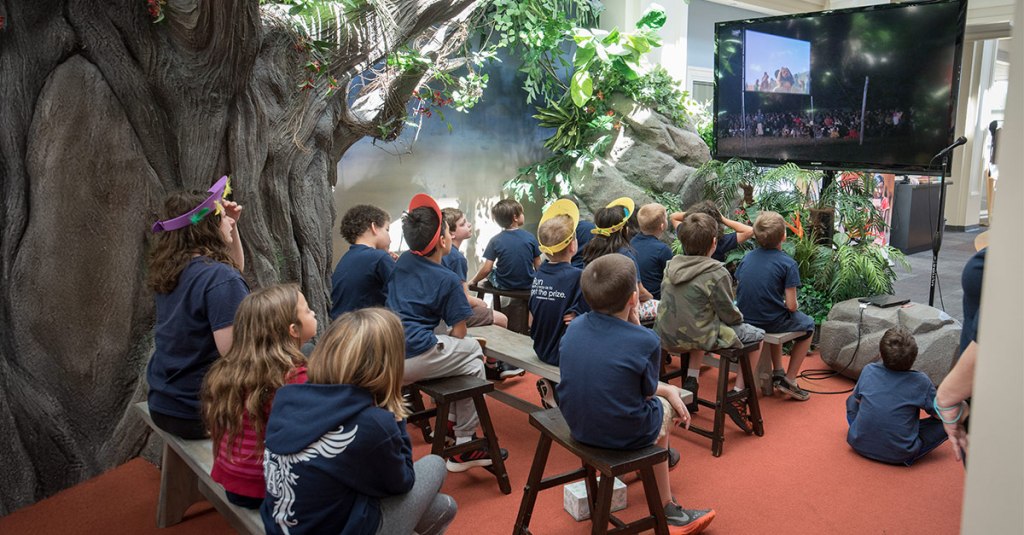
- Use a screen in the childcare room to play short films on faith.
- Use your smart phone or tablet to display images, play sound effects or play worship songs.
Child Evangelism Fellowship has a helpful article on using technology for children’s ministry.
Ministry Curriculums
There are many options for you to choose from when it comes to children and youth ministry resources. You can use curriculum that blend Bible study, creative arts, service projects and reflection. Most of these curricula allow you to choose age-specific plans for elementary, middle school and high school.
They also include leader guides, which provide structure, as well as parent tools to extend learning at home. Both of these are essential to support youth and evangelism efforts.
Vacation Bible School
Vacation Bible School (VBS) gives children a fun way to learn about Jesus and His love. VBS is usually a week-long day-camp that many churches host for local children during summer holidays. It creates a welcoming environment where kids can ask questions and explore faith.

VBS also helps build community by connecting families, volunteers and church members. An effective VBS program offers memorable lessons, activities and opportunities for children and young people to form friendships. This helps your church inspire a lasting faith in the next generation. If you’re looking for a place to start, Lifeway has VBS curriculum available for purchase.
Partnering with Others
If you want to reach the next generation for Jesus, it’s important not to do it alone. God works through your community to share His love with the next generation.
Partner with your community. Collaborate with schools and local centers for outreaches. Consider hosting film screenings, talks or seasonal outreach like holiday events. You could invite families to serve through food drives or neighborhood projects.
These activities can help young people connect faith with action. Ministries who want to encourage young people to grow in their faith can allow families and kids to take part in church-wide evangelism strategies.
Understanding What’s Making a Difference
As you implement these strategies, pay attention to what’s working and how people are responding. These insights will help refine youth evangelism strategies. Things you can track include:
- How many people attended the event or activity
- What questions did people ask
- Were there any decisions to follow Jesus
- Were there any steps toward a deepening understanding of Christ
By using trusted child evangelism resources, we open a way to share Christ with young people. This approach helps guide them toward a meaningful, lasting faith. As you see young people trust Jesus, remember that following up on their faith is the key to continued growth and relationship.
When you are serving children and young people, it’s important to keep the gospel message clear, invite real questions and build relationships that last. In time, your child and youth evangelism efforts will bear fruit.
Making An Eternal Impact
Think of the names I mentioned earlier– James Dobson, Corrie Ten Boom and Bill Bright. Each one shaped God’s Kingdom because someone shared the gospel with them as a child. When we invest in the faith of the next generation, we plant seeds whose impact may reach far beyond what we can imagine.

About the Author