
Church Evangelism: 7 Practical Outreach Ideas


Related Posts



Subscribe To Our Weekly Newsletter
Sign up for our weekly newsletter, Jesus Film Project News, to receive encouraging stories, videos and resources in your inbox.
Throughout my walk with God, my church leaders have encouraged and equipped me to share my Christian faith. They don’t just talk about sharing their faith, they do it.
I remember my senior pastor, Michael, telling our church a story during one of his sermons. While getting his hair cut, he shared the gospel with his barber. Little did Pastor Michael know that his barber would end up visiting our church the next Sunday, even though Michael had not invited him. He was pleasantly surprised. God had begun to work in his barber’s heart and draw him to Himself.
My church also creates an environment where I am more than happy to invite friends or neighbors to come along. We have a welcoming space with free coffee. Friendly faces greet you as you walk through the doors of the church.
Healthy church congregationsengage in evangelism and share the life-changing message of the gospel with others. As followers of Jesus, we spread the good news.
We all have the desire to provide places where faith can grow. But let’s be honest and note that sharing our faith isn’t easy. It requires courage, patience, and a willingness to step beyond what feels familiar. Most of all, it requires a dependence on God.
This blog post aims to help you understand church evangelism. It offers strategies for effective outreach and guides you in building a culture of evangelism within your congregation. I will also measure the impact of outreach efforts and share inspiring success stories. Let’s breathe life into your church’s evangelistic outreach and make a lasting impact.
If you would like to, you can jump straight to the 7 practical outreach ideas for your church.
Ministry programs for churches should aim to fulfill the call to reach others for Christ. The church encourages us to step beyond our comfort zones because it helps us build meaningful relationships with those who don’t yet know Christ.
This shared mission strengthens the church community. It adds to our faith and reliance on God. And when we stick to these biblical principles, evangelism and church growth click.
Understanding Church Evangelism
Church evangelism isn’t just about gospel-sharing events or community service. It’s about engaging local churchgoers to share the message of Jesus with people around them. After all, we are the collective church. So each individual should be equipped for and active in personal evangelism. Church and evangelism go hand in hand.
The Great Commission (Matthew 28:19-20), every Christian believer’s call to evangelism, serves as the foundation for the church’s purpose. It urges believers to share Christ and make disciples across all nations. Romans 10:14-15 reinforces this call, emphasizing the joy of preaching the Word of God and bringing good news. For more verses on evangelism, read this.
In The Company of the Committed, Dr. Elton Trueblood said, “Evangelism is not a professional job for a few trained men, but is instead the unrelenting responsibility of every person who belongs to the company of Jesus.”
Sharing Christ is a vital expression of our faith. It shows love for others and commitment to God’s mission. Read this for more on the meaning of evangelism.
In The Masterplan of Evangelism, Robert Coleman says, “Evangelism is not an optional accessory to our life. It is the heartbeat of all that we are called to be and do. It is the commission of the church that gives meaning to all else that is undertaken in the name of Christ.”
The first step in church evangelism is simple: prayer.
Prayer is the cornerstone of all church evangelism efforts. This includes prayer for both organized events and the individuals with whom church-goers are sharing the gospel. Only God can work in the hearts of people. Without prayer, our best efforts in organizing an event may not generate interest.
Strategies for Effective Church Evangelism
There are a few strategies for effective evangelism with and through your church: planning, storytelling and digital platforms, to name a few.
If we want to grow the church through evangelism, developing a plan is key. This planning helps kick off successful community outreach.
- Start by identifying the group of people you want to evangelize, your target audience.
- Then set clear, achievable goals.
- Evaluate your church’s resources, like volunteers and materials. Decide how to best make use of them in spreading Jesus’ message.
A structured plan provides direction for your outreach programs. It also helps you measure their impact once the outreach is completed. You’ll want to compare your outcomes to your initial goal to determine their success and whether you’d like to hold the outreach program again.
Sharing Christ is a vital expression of our faith. It shows love for others and commitment to God’s mission.
Storytelling
Storytelling is a powerful tool in church evangelism because personal stories and testimonies make the gospel relatable and memorable. Storytelling can bridge cultural gaps and foster real connections. Share personal experiences that illustrate God’s love and grace to engage your audience deeply.
Over the summer at our church’s youth group, each staff member shared their Christian testimony. The students were engaged and excited to bring friends. Stories work so well when interacting with children and youth in evangelism.
Digital Connections
Using digital platforms is essential in today’s connected world. Utilize social media, email newsletters, and podcasts to reach a wider audience.
Use Facebook to post Bible verses, videos, and stories of how Jesus changes lives. Members can “check in” at church on Facebook to let friends know they are there, which shows the community that church is a normal and welcoming place. Over time, these check-ins build trust and make people curious to visit. On Instagram and X, share short messages, photos, and events to tell others about Jesus in a friendly way.
Consider using a Christian streaming platform to stream church sermons.
The JESUS film, available online, is an excellent resource for visually sharing the message of the gospel. Try blending traditional methods with digital tools. This can amplify your reach and help you connect with those who might not visit a church setting. Read Alex Rodriguez’s blog on digital evangelism here.
Seven Practical Outreach Ideas for Church
There are many types of evangelism that the church can embrace. Here are seven effective church outreach ministry ideas:
1. Prayer-focused outreach
Churches should begin every effort with prayer. Here are some creative ways to engage your church congregation in prayer:
- Prayer walks. Plan group walks through neighborhoods, schools, or parks. Pray silently or quietly for the people, homes, and institutions as you pass.
- Drive-through prayer. Set up a station in the church parking lot or community space. People can drive in and receive prayer from a team—no need to get out of the car. Advertise this on social media. Have churchgoers share that it’s happening.
- Prayer booth at local events. Set up a simple tent or table at a farmers market or local festival offering free prayer and encouragement.
- Adopt-a-block. Encourage your church’s small groups to adopt a community street to pray for. They could pray from home, or walk that street together.
- School prayer partnerships. Pray for specific schools, teachers, and students by name. Offer to support schools with prayer during exam weeks or new school years.
- Blessing bags. Make and hand out small care packages to people without a home, and offer to pray with them when you deliver them.
2. Relational evangelism
To encourage relational evangelism, ask church members to build genuine friendships with neighbors, coworkers, and community members. Challenge your people to look for natural opportunities to share their faith.
You may need to meet with some congregants one-on-one or in small groups to help them consider all the places they have opportunities to share Christ. They do not need to pressure others; just be open to sharing their faith at the places they frequent. Encourage them to listen to God’s still small voice (1 Kings 19:12).

Here are some places they could consider sharing their faith:
- At the hairdresser
- In line at the bank or the grocery store
- In a waiting room
- In a rideshare vehicle
- At the gym, hiking club or running club
- At a school event or PTA meeting.
3. Personal testimony training
Equip members to share their own story of how they came to Christ in a clear and concise way. Their story is powerful and can help them connect with different audiences.
Encourage them to write out their Christian testimony, the story of how they met Jesus and how He’s transformed their lives, and ask them to practice sharing it with you or a trusted church leader. This will put them at ease when they share with someone in their own sphere of influence.
4. Community service as a bridge
Host service projects, food drives or community events. This helps meet real needs while opening doors for gospel conversations. Jesus had a heart to reach outcasts, and community service is a way we can do the same.
One fun event I attended at my church was a “blessing bag party.” We made blessing bags for unhoused people that included a water bottle, socks, deodorant, a toothbrush, toothpaste, a small comb, a lip balm and a hand-written Bible verse.
The event achieved two of the church’s objectives: we connected with our community, and we also got to do something meaningful for the people outside of our church walls. Pastor Skip, a pastor for unhoused people, handed out the bags to those in need.
5. Small group and home gatherings
Offer small, welcoming meetings during which churchgoers can ask questions, explore faith, and connect with each other. Encourage church small groups to host one small outreach-focused event per quarter in which they invite neighbors and friends to join their small group for the week. The small group could organize a fun evening of games that includes a segment for personal testimonies to introduce new people to the gospel.
6. Training and role-playing
2 Timothy 4:2 tells believers to “always be prepared” to share their faith. A basic role of the church is to help prepare its congregants to share Jesus with others.
Regularly train members to start spiritual conversations, answer common questions, and lovingly address objections. This will prepare them to share the message with others.
In training sessions, consider teaching some basic Christian apologetics for evangelism. This helps build confidence in Christians as they go to out to share their faith.
It may feel awkward to role-play, but this will make a difference when people are sharing with their friends later on. It allows them to feel more prepared and more confident during the conversation as they have already walked through the scenario.
7. Follow-up and discipleship
Have a clear plan to follow up with people after your outreaches. Connect newcomers into pathways toward discipleship, not just one-time events.
After someone meets Jesus, help them grow in their new faith. There are many ways a church could follow up with a new believer:
- Small group Bible study or class
- One-on-one mentoring with a mature believer.
- Serving on a ministry team to help others.
- New believer classes that explain the basics of faith.
- Prayer groups for encouragement and support.
- Online devotionals or Bible reading plans for learning at home.
- Retreats or workshops to grow deeper in following Jesus.
- Weekly text message Biblical devotionals.
- Evangelism course such as Alpha for believers to invite others.
Building a Culture of Evangelism in Your Church
Church evangelism should not be limited to organized events. Evangelistic preaching within the church walls remains a vital way the gospel is proclaimed and received. The church should also equip its members, as the body of Christ, to share the gospel with those around them.
Casting a vision within your church begins with personal experience. Church leaders should be active in sharing Christ with others. Sharing those stories encourages the congregation to do the same.
The next step in developing a culture of outreach is community involvement. The church needs a connection to the community around them.
Get involved in the community
Encourage your congregation to participate in local outreach, like serving at food banks or hosting free events. This builds relationships and creates opportunities for faith conversations.
Our church recently offered a marriage course, which my husband and I used as a way to invite our neighbors to encounter a Biblical approach to marriage. The course also allowed us to discuss our faith with our neighbors. Although Joe and Steph couldn’t attend in person, they completed the course online. We’ve been able to continue faith-based conversations with them.
Empower members and celebrate wins
Empowering individual member participation is important for an evangelistic culture.
Offer resources and training to help members share their faith confidently. Organize workshops on personal testimonies, gospel sharing, and using tools like the Jesus Film Project® app. Equipped members are more likely to engage in sharing Christ both inside and outside the church.
Churches can keep ministry exciting by celebrating their wins! During services, share stories of lives changed through evangelistic efforts. Urge people to share their testimonies on social media. Recognizing and honoring those who share their faith inspires others to participate.
Let’s create a supportive environment where the church celebrates steps of faith and growth.
Training and Resources for Church Leaders
Church leaders play a key role in ministry. Equipping them with the right tools and knowledge is essential.
Workshops and seminars designed for leaders and congregants provide a practical way of sharing the gospel. They foster collaboration among staff members and volunteers. This creates a unified outreach vision.
Casting a vision within your church begins with personal experience. Church leaders should be active in sharing Christ with others.
Jesus Film Project offers a wealth of online resources, from downloadable materials to media presentations. These resources cater to diverse church needs. Leaders can access step-by-step guides and impactful video content. These materials can inspire congregations and spark faith conversations.
Creating study groups within the church ensures learning continues beyond initial training. These small group ministries allow members to explore evangelism topics more deeply. They can share experiences and hold each other accountable.
By promoting ongoing learning, church evangelism can spread through the whole congregation, which leads to more lives transformed by Jesus’ message.
Measuring the Impact of Evangelism Efforts
Evaluating church outreach ministries is valuable for understanding effectiveness. Measuring can help guide future outreach initiatives. Establishing clear goals for outreach is the first step. Goals should be specific, measurable, attainable, relevant, and time-bound (SMART goals).
For instance, a church might aim to reach 100 new people through a community event within three months. This goal provides direction and benchmarks for success.
Tracking involvement rates of newcomers is essential. You can track involvement by monitoring event attendance, collecting contact information, and assessing the number of individuals interested in further involvement. Don’t focus too much on the numbers, however. Again, we want to allow room for God to work.
Surveys and follow-up emails can help you gauge how many participants become active church members. Analyzing these metrics offers insights into effective strategies and areas for improvement.
Here is an event survey you could download and use:
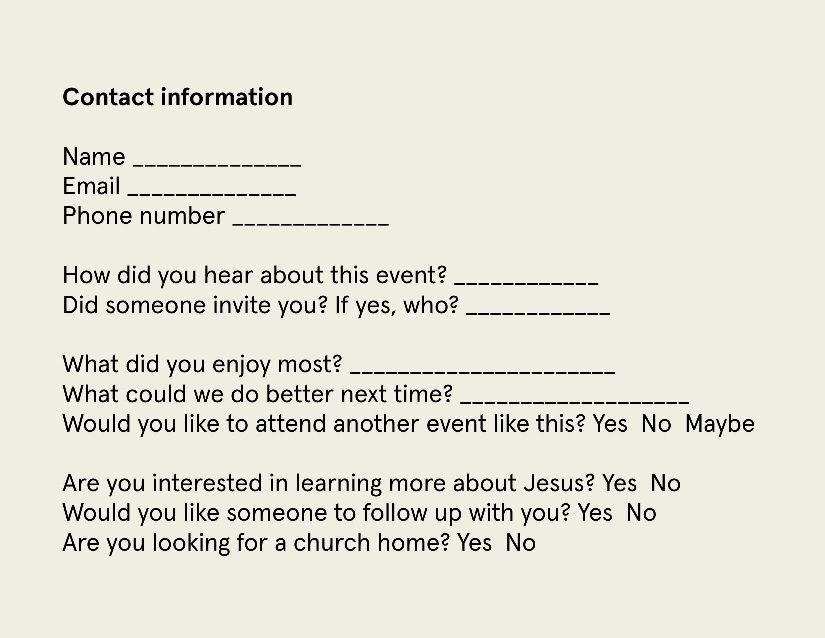
Remember that understanding the community’s response helps refine the approach and can enhance the effectiveness of your evangelism efforts.
Real-Life Examples of Successful Church Evangelism
Church evangelism takes many forms, and real-life examples showcase its effectiveness across different contexts.
My daughter invited her friend Britt to join my family and I at church. Britt’s mom wanted to attend as well, to be sure the church was acceptable. After several months of them coming, they both chose to follow Christ and be baptized. They invited Britt’s grandmother, dad and sister to the event. The whole family showed up! The baptism service was outdoors and included a barbecue dinner. This fostered relationships for Britt and her mom and led to new friendships. God has moved in their hearts through our welcoming church community. This story underscores the power of community engagement in spreading the gospel.
Innovative evangelism approaches are making waves.
A mid-sized church in Tampa, Florida, embraced technology and began to host virtual Bible studies. Leaders of the Bible studies then used social media to invite people to the studies and broadcast them live in order to reach a broader audience. This strategy brought together existing members in a common outreach program, but it also attracted newcomers who were seeking spiritual guidance online.
By adopting new methods and tools, churches can expand their reach and effectively share Jesus’ message.
A Final Note on Church Evangelism
The relationship between the church and evangelism is vital because the church equips believers to share the gospel well.
Church evangelism is an amazing journey of faith. It’s a platform that helps congregations share the life-changing message of the gospel. Let’s get the basics right, use smart strategies, and create a culture of reaching out. Our churches can make a difference.
Don’t forget, sharing our faith is a team effort. Prayer, connections, and trusting in God bring the team closer together. Take these ideas to heart to boost your church’s evangelism and see more lives changed by Jesus’ love.

About the Author