
Mass Evangelism Today—Helping Refugees in South Sudan Meet Jesus

Related Posts


Subscribe To Our Weekly Newsletter
Sign up for our weekly newsletter, Jesus Film Project News, to receive encouraging stories, videos and resources in your inbox.
Hoping to catch a glimpse of my favorite speaker, I fixed my eyes on the main platform in the stadium. Would I spot him just beyond the stage or catch Crystal Lewis, microphone in hand, ready to sing Come Just As You Are?
Growing up, my parents took my brothers and me to Christian evangelistic crusades whenever they came into town. If that wasn’t possible, we were tuned in to a rerun of an old Billy Graham crusade. And once in a while, we watched our television in awe as evangelist Reinhard Bonnke shared the gospel with a crowd of thousands in Africa.
Most people would call these evangelistic events a form of mass evangelism from the past. But mass evangelism is still a great evangelism tool for today. And it’s not reserved for big-name evangelists, Christian crusades or street evangelism.
Mass evangelism is being done today, and with special care for the people hearing the message.
That’s what Tafari and local believers in South Sudan have shown us. They use the JESUS film to reach families, and people like Samir, living in refugee camps.
You can skip ahead to read the South Sudan refugees’ full story.
Read on to learn more about what mass evangelism is, dive into mass evangelism strategies and what to consider if you’re thinking of practicing mass evangelism locally or globally.
What Is Mass Evangelism?
Mass evangelism is large-scale evangelism. Mass evangelism means we invite a mass of people to gather together at an event where they have the opportunity to hear about the love and forgiveness of Jesus.
The people may be a people group who share a cultural background or who happen to be gathered in one community. Tafari ministers to refugees from a people group who have fled to South Sudan and now live in tents in a refugee camp.
What does mass evangelism look like today?
Mass evangelism, popularized in recent decades by Billy Graham and others, has sparked spiritual revivals throughout history—though in the past it has garnered some negative connotations. And although some would say it’s on the decline, mass evangelism is still being used effectively today, with a positive effect, in many parts of the world.
At Jesus Film Project, we see mass evangelism happening every day when ministry teams around the world hold “JESUS film showings.” In fact, showings of JESUS are a prime example of what mass evangelism is.
Using portable film equipment and Jesus Film Project media (available on our free mobile app and website), Christians everywhere show the JESUS film to hundreds, even thousands of people, living in the most remote places of the world, in their languages.
Why does mass evangelism matter today?
If you’re reading this and have cable TV and internet access in your home, needing to use portable equipment to show a film may seem strange. But in some of the most remote regions—even in the 21st century—screens and projectors offer the only way to watch gospel media.
We show gospel media because the people groups in these areas don’t have the Bible in their local language or can’t or won’t read the Bible. They also lack access to the internet, and in some cases, modern technology. Finally, there are few or no churches within walking distance, nor are there gospel materials available in their languages.
Jesus Film Project exists to help meet this need.
This ongoing lack of access to the gospel is the major reason mass evangelism is still one of the best options for sharing the gospel in many parts of the world today.
Examples of Mass Evangelism in the Bible
The best examples of mass evangelism in the Bible come from Jesus.
Consider the Sermon on the Mount (Matthew 5-7). Jesus regularly performed His miracles, like the feeding of the 5,000, before massive crowds (Matthew 14:13-21). His greatest act of evangelism, the Crucifixion, didn’t happen in secret but in plain view of the crowds of Jerusalem (Luke 23:27, 44-49).
- Peter preached to the crowds at Pentecost (Acts 2:14-21). The Bible says 3,000 people became followers of Christ that day!
- Philip proclaimed Christ in Samaria and crowds listened intently (Acts 8:4-8).
- In Athens, Paul addressed philosophers and thinkers in a public forum at the Areopagus (Acts 17:22-34).
Mass Evangelism vs. Personal Evangelism
Don’t think mass evangelism vs. personal evangelism (one-on-one evangelism). We don’t pit one against the other, and one is not better than the other. These evangelism strategies work in tandem.
In Why We Do Mass Evangelism, the writer makes a case for how God uses both mass evangelism and personal evangelism to get the gospel out. His team’s research found that 85% of people who made a decision to follow Christ at their events were brought by a friend. This would’ve been a personal invitation.
- Personal evangelism may be a one-time occurrence, or it can happen regularly as we consistently share the gospel with family and friends. Personal evangelism works best one on one or in a small group.
- Mass evangelism is typically a one-time or limited event, and the attendance is large.
However, the local believers who share Jesus in South Sudan refugee camps through JESUS film showings prove that effective mass evangelism can be frequent and ongoing. Discipleship and personal follow-up strategies come at its heels to help these new believers grow in Christ and form healthy, thriving churches.
More About Mass Evangelism
Read our Mass Evangelism: A Quick Guide to learn more about mass evangelism, including:
- The advantages of mass evangelism
- Common misconceptions about mass evangelism (including insights from Dr. Scott Pauley of the Enjoying the Journey podcast)
- Cautions and criticisms of mass evangelism
- How to plan and prepare for a mass evangelism event
STORY: Refugees Meet Jesus in South Sudan
Our partner, Tafari, shared this story from South Sudan with us. This is Samir’s story.
In April 2023, Samir lived in a village in a nearby country. He worked as a shepherd on his family’s farm, but he was expected to follow in the footsteps of his father, the village witch doctor.
Around this time, by God’s grace, a JESUS film team traveled to Samir’s region to record the JESUS film in Samir’s language. They recruited Samir to become a voice actor for the recording.
In the clip of the Sermon on the Mount, Samir heard Jesus say that when someone slaps you on the cheek, you should give him your other cheek. He was taken aback because it contrasted with everything he knew about returning violence.
Samir felt an electric feeling over his body. He said, “I want to know this man.”
The team led him to the Lord.
In the middle of the recording, civil war broke out about 15 miles away from where the team was recording. They continued to record until the film version was completed.
When the team returned home, due to the war, Samir had no choice but to flee to a neighboring country. The area houses many of the major refugee camps that give shelter to people fleeing the war.
Near the refugee camps, a ministry worker started a small Bible study group, which Samir and his friends, Lucas and Moses, who had come to know Christ before arriving in the refugee camp, attended.
There, at the camp, they were discipled. Today Samir is a vibrant church leader for the area. He’s discipling new believers and training them to share the gospel.
(The names in this story were changed to protect identities.)
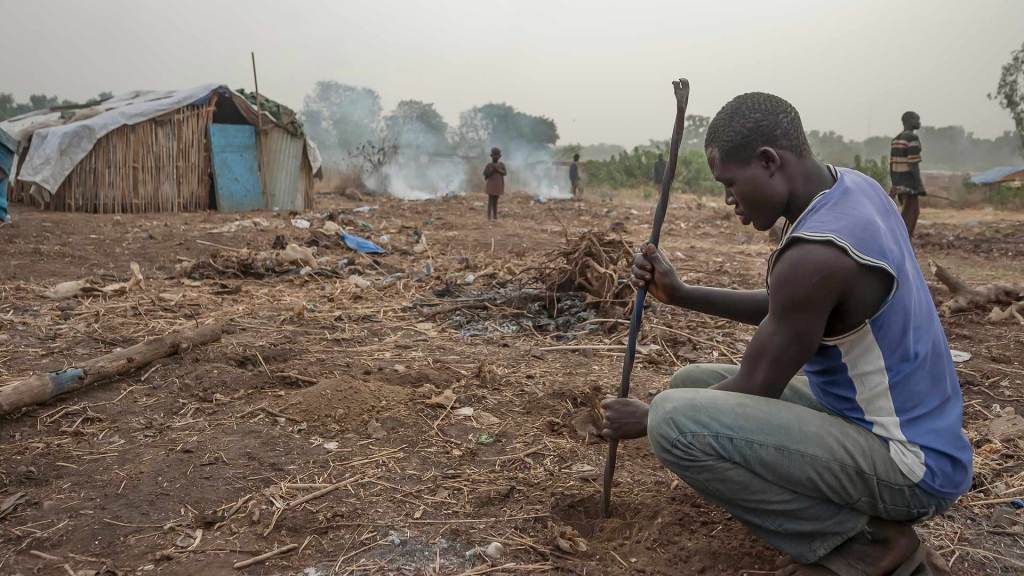
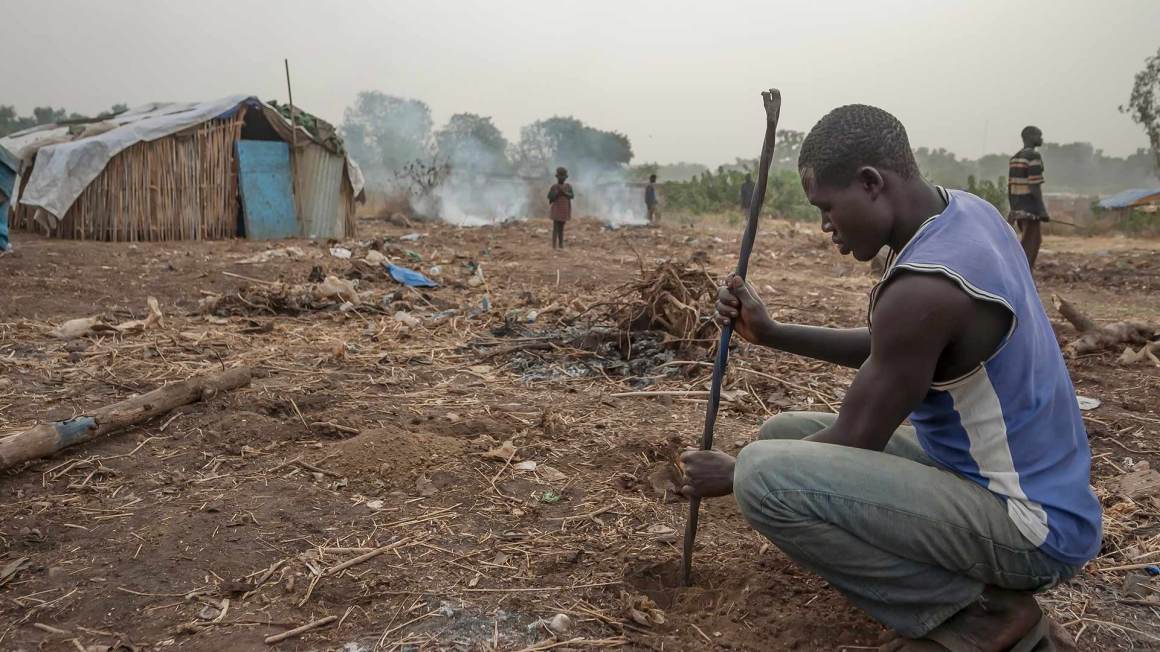
World Relief estimates that nearly 123 million people around the world have been forced to flee their homes due to conflict. Many arrive in refugee camps weak and malnourished. Thankfully, in South Sudan they are being provided food and clothing.
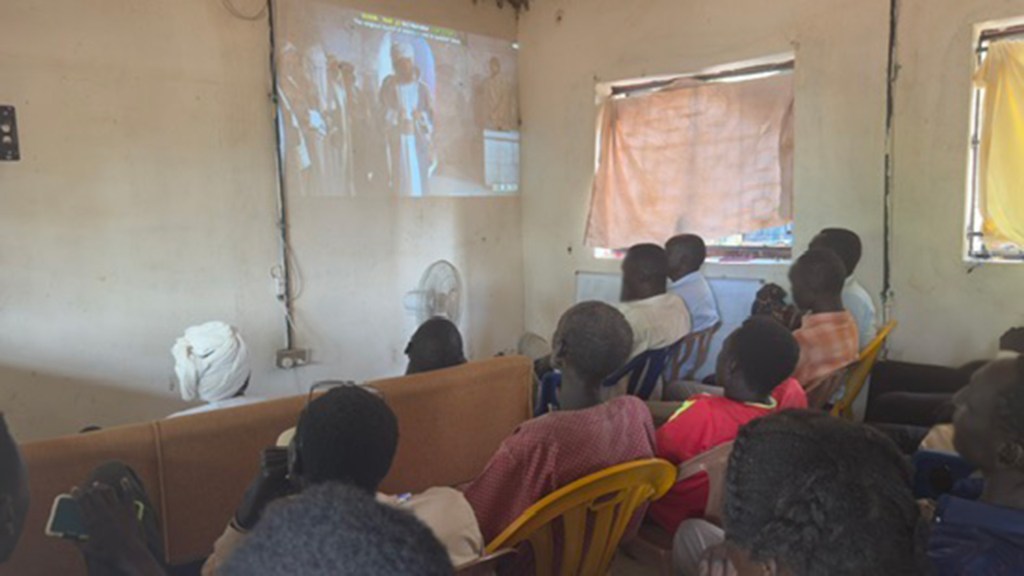
At one refugee camp, there are 30,000 people. There, Tafari and his team show the JESUS film weekly and sometimes daily.
“Seeing is believing. Hearing is believing,” Tafari told us.
Among the people groups watching the film in their native or “heart” language at these regular showings are the “Oompa-speaking people,” a pseudonym used here for security purposes. Most Oompa speakers follow the dominant religion of the region, while a very small percentage are animists.
Many are witch doctors like Samir’s father. But they are meeting Jesus after watching the JESUS film in their own language. “Seeing is believing. Hearing is believing,” Tafari told us.
“They have never seen something like that in their entire life. Nowadays we have mobiles and social media, but for most people, watching the JESUS film on screen in the field … that experience is unique for them. For weeks they talk about it. They talk about it because that is new. They have never seen that.”
Nearly half a century ago, the people group spoke their own language but since then another trade language has been established as the primary language. By showing the film in their native tongue, Tafari and his team are helping the people group redeem and preserve their language.
You see, for Oompa speakers, the experience of watching JESUS is personal, because watching it in their language tells them it was made just for them. Displaced as they are, it might seem to Oompa speakers that no one cares about them or their language. But someone does care.
When they see the JESUS film, they realize that strangers from far away do. God cares for them. “Our language is known. It is written. It’s on a website!”
The ministers also show the JESUS film in a regional trade language almost every day for other people groups from the region. Tafari told us, “They are hungry for God, for a true God, for meaning. … That hunger, that gap, that void is still there. The JESUS film is addressing those gaps in a meaningful way.”
Regarding the showings, Tafari shares: “It is a huge risk in that environment, in that context, for somebody to come with the JESUS film and show it outside on the field in their village. But there are people who are willing to take that risk. They are not waiting for them to come to the church, they are taking it.”
Mass-Evangelism Strategies
We recommend two basic mass-evangelism methods, with a strategy anchored in sharing the gospel in the local language and through contextualized means.
- Gospel media in the people’s heart language
Tafari told us: “The JESUS film has been one of the greatest tools in the area for them to know more about Christ and Christianity.”
He noted that many Oompa speakers, because they can’t read or write, need someone to read to them. They may recite the religious book of the area from childhood (in a language that’s not their first language), but they don’t understand what it means.
The JESUS film is in their language and they can hear it and understand it for themselves. “It means a lot to them [to have] a film they understand. The gospel is being preached to them [in] the language they understand.”
- A clear gospel presentation. The JESUS film includes a portion where a clear gospel presentation is made. It’s available in every language translation.
Tafari told us, “They (Oompa speakers) don’t have any other means, to be frank. We have all kinds of resources (in the West), maybe too many. We have everything. But for them, it’s just the JESUS film. They don’t have any other resources for Bible study, for discipleship. Most can’t read or write—the only means, the only option they have is a tool like the JESUS film.”
Follow-Up Strategies for Mass Evangelism
Measuring success and impact
If you’re hosting a mass evangelism event yourself, be sure to log attendance and how many people made decisions for Jesus. Stay in touch. Did anyone get baptized in the days after? Did they seek out and attend a local church? Tracking church engagement after mass evangelism is just as important as planning the event. You’ll want to make sure the people who attended your event can get plugged into a small group or at least connect with one Christian believer to guide them on their journey with Christ.
Above all, don’t discount any of the results. God is at work!
When it comes to impact, Tafari highlights:
“Intention matters. Everything counts. This is not just a movie. … God honors the intention itself. … Even if there is one person who’s going to say yes, whatever risks we took, whatever sacrifice we’ve paid, if there is one person who says yes, that would be worth it.”
Discipleship and follow-up
You should always go equipped with discipleship resources and discipleship pathways. Here are a few discipleship resources from our website:
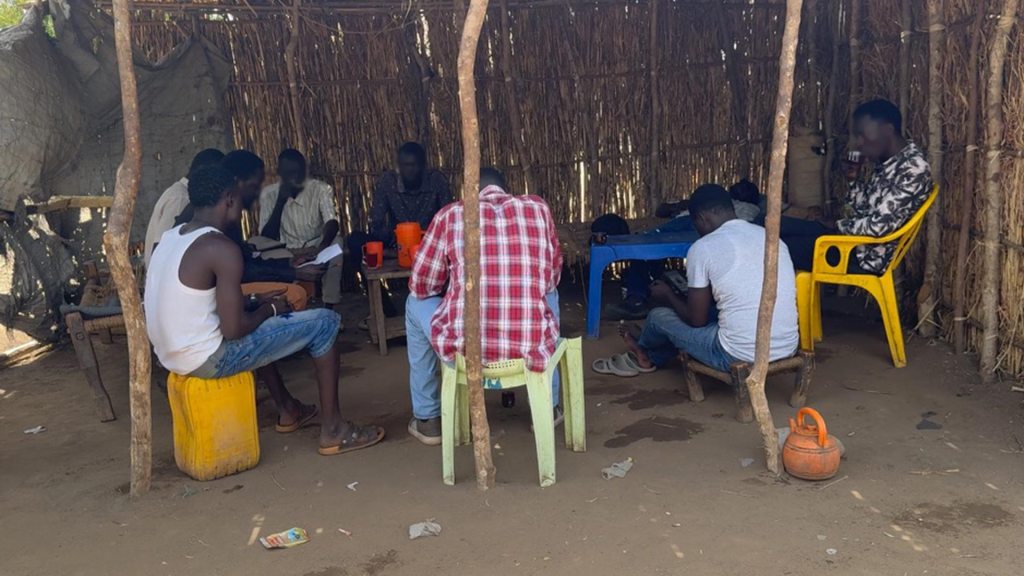
Tafari shared: “The JESUS film has been one of the greatest tools in the area for people to know more. It’s not just been an encounter. Their lives are really touched. It was a life transformation. They’re hungry for someone to disciple them.”
Multiplying believers and church planting
Knowing Jesus is an excellent way to plant, multiply and grow faith communities after showing the JESUS film.
Samir, his friends Lucas and Moses, and other church leaders are training new believers among Oompa speakers to share the gospel with their people.
The team and Tafari have sent evangelists to other refugee camps within the country and in nearby countries. At least 3,000 people, vibrant new Christians, are worshipping Christ every Sunday in these churches. Many are coming to know Christ when they visit the churches.
For more evangelism follow-up strategies, read Evangelism Follow-Up Strategies. Are there refugees in your community? Explore our refugee resources.
Final Thoughts
I pray you’ve come away with a more informed and balanced picture of mass evangelism, which can be personal and is grounded in the gospel. Consider how you might share the gospel through mass evangelism in your context. If you’re looking for more resources, explore our resources and strategies page.
Mass evangelism may seem like a big mission that has to produce a large result, but it doesn’t. And hopefully that takes the pressure off.
“Millions may not come to Christ, but one might,” Tafari told us. “For me, that person would be enough. Jesus came to seek the one lost sheep among the hundred. He left the 99 and came to seek the one that was lost.”
Tafari and his team plan to translate more languages for unreached people groups in the region this year and will record more versions of the JESUS film. Combined, the number of people who speak the languages is 1 million.
But they are facing challenges. They need translators, and some translations are stalled and haven’t moved on to their next phase. Pray for the translations and for Tafari’s safety as he travels across South Sudan and Africa to produce other JESUS film translations.
If you’re inspired by the stories you’ve seen and read in this post, know that you can be part of the story and the mission when you give. Visit jesusfilm.org/give.

About the Author